
Last updated September 21, 2026
Level 1 sweep and inspection to the NFPA 211 annual standard - flue, crown, cap, and flashing checked and photographed
Chimney sweep logs do not sweep chimneys. They loosen some creosote - which then falls where a brush and vacuum still have to collect it.
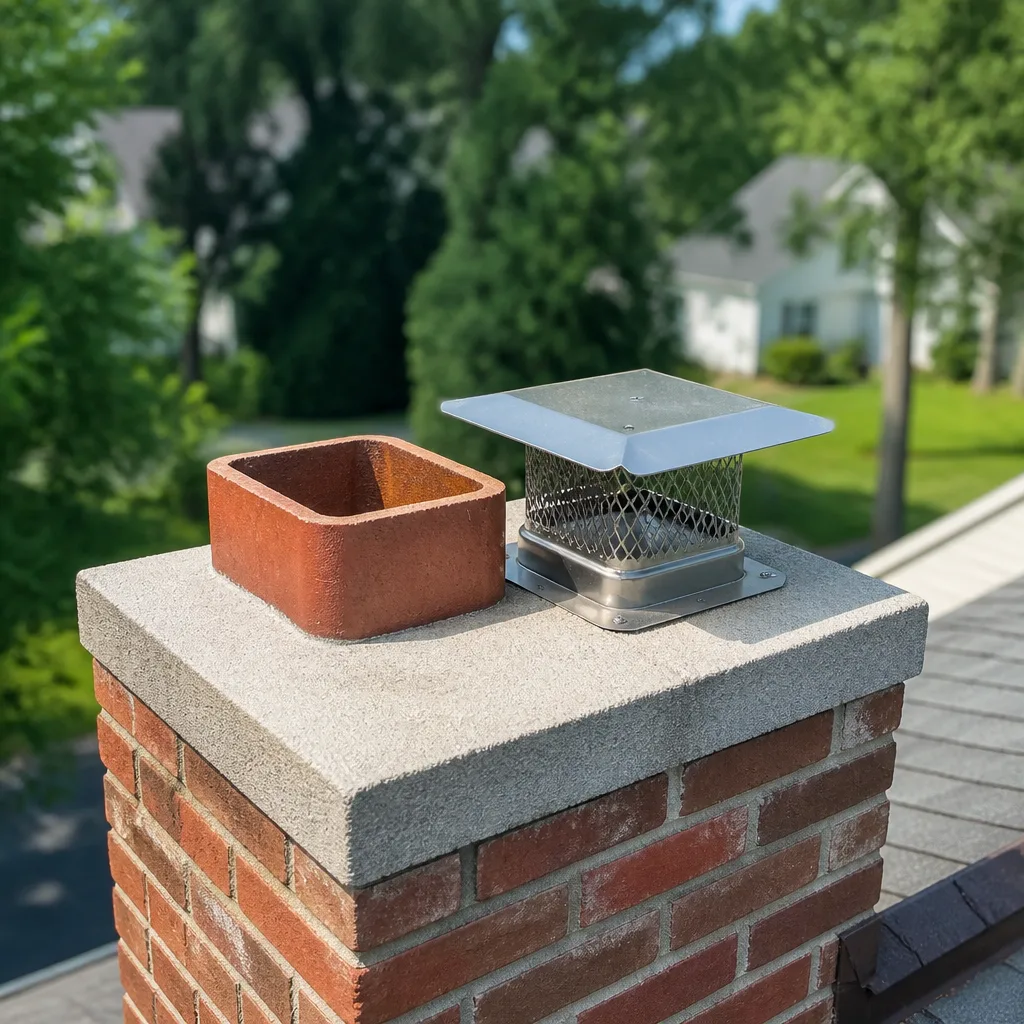
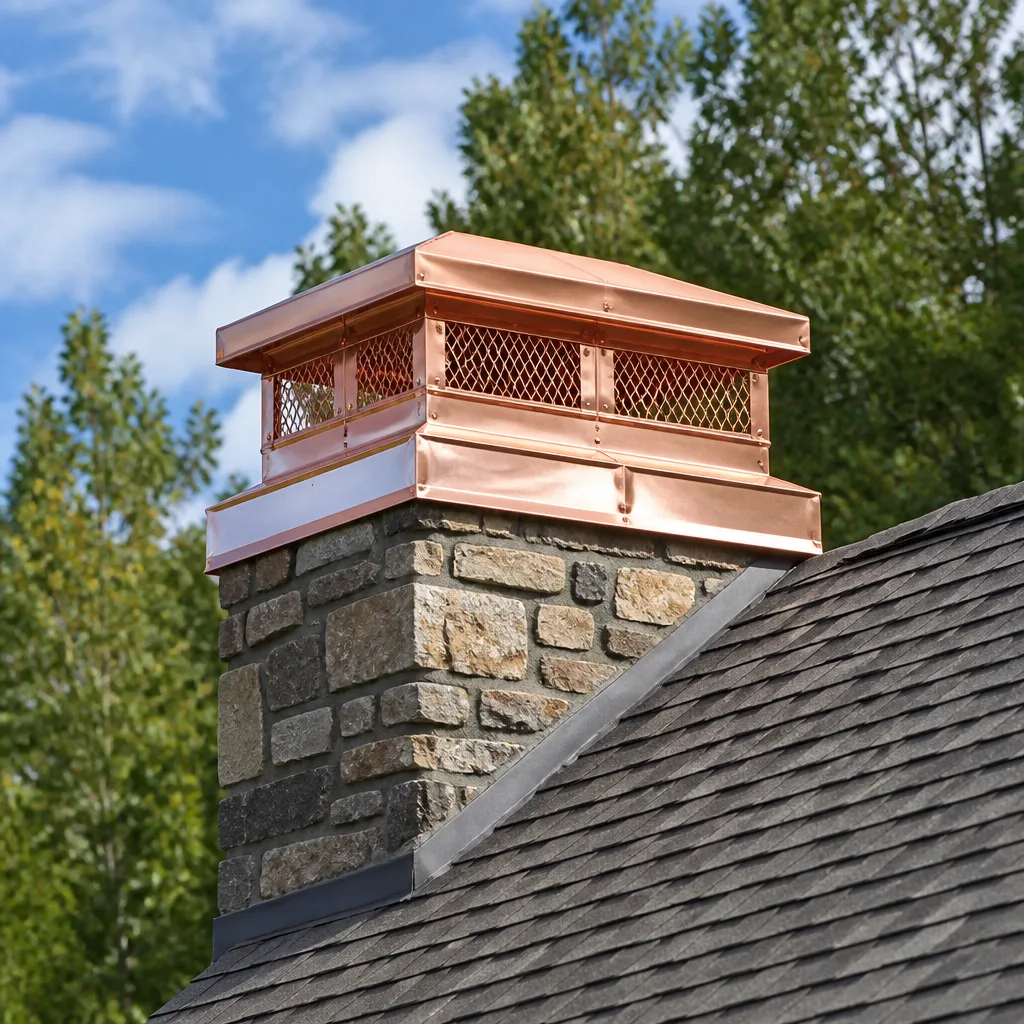
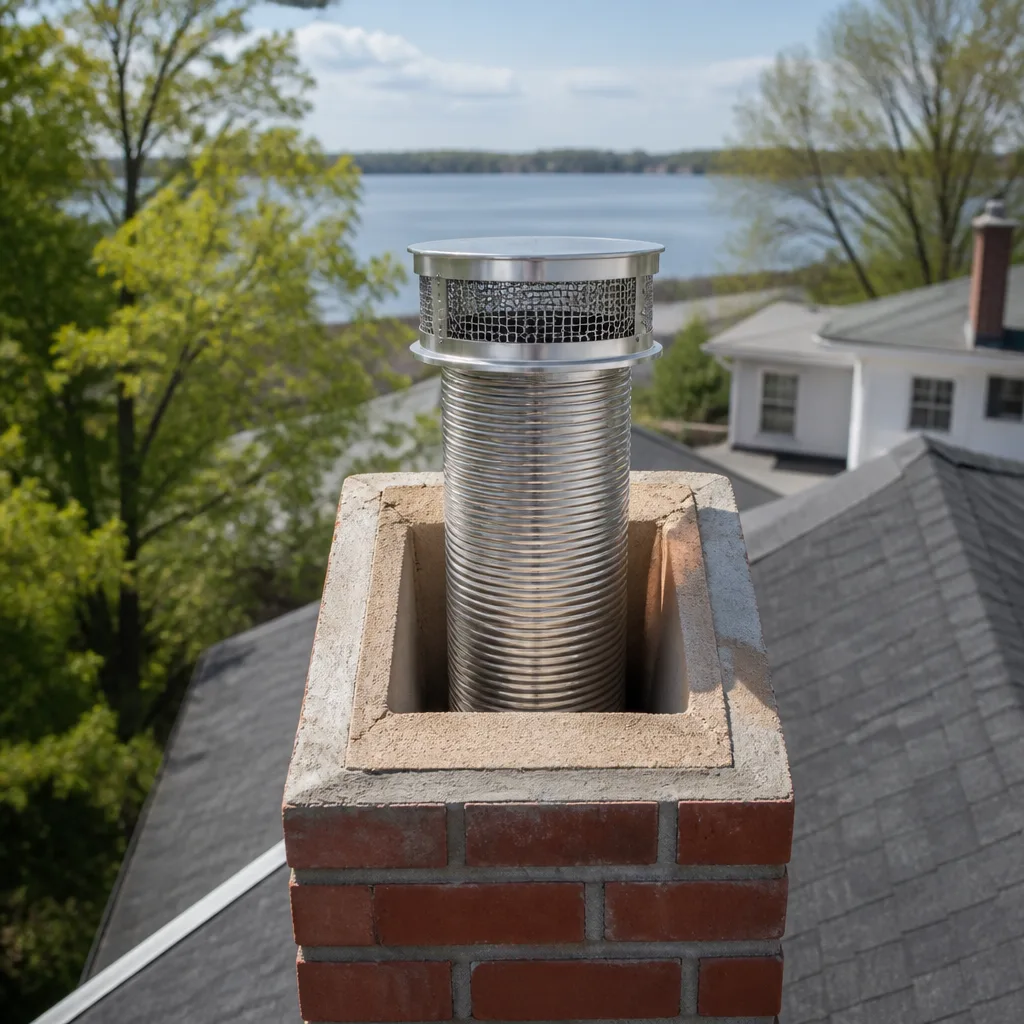
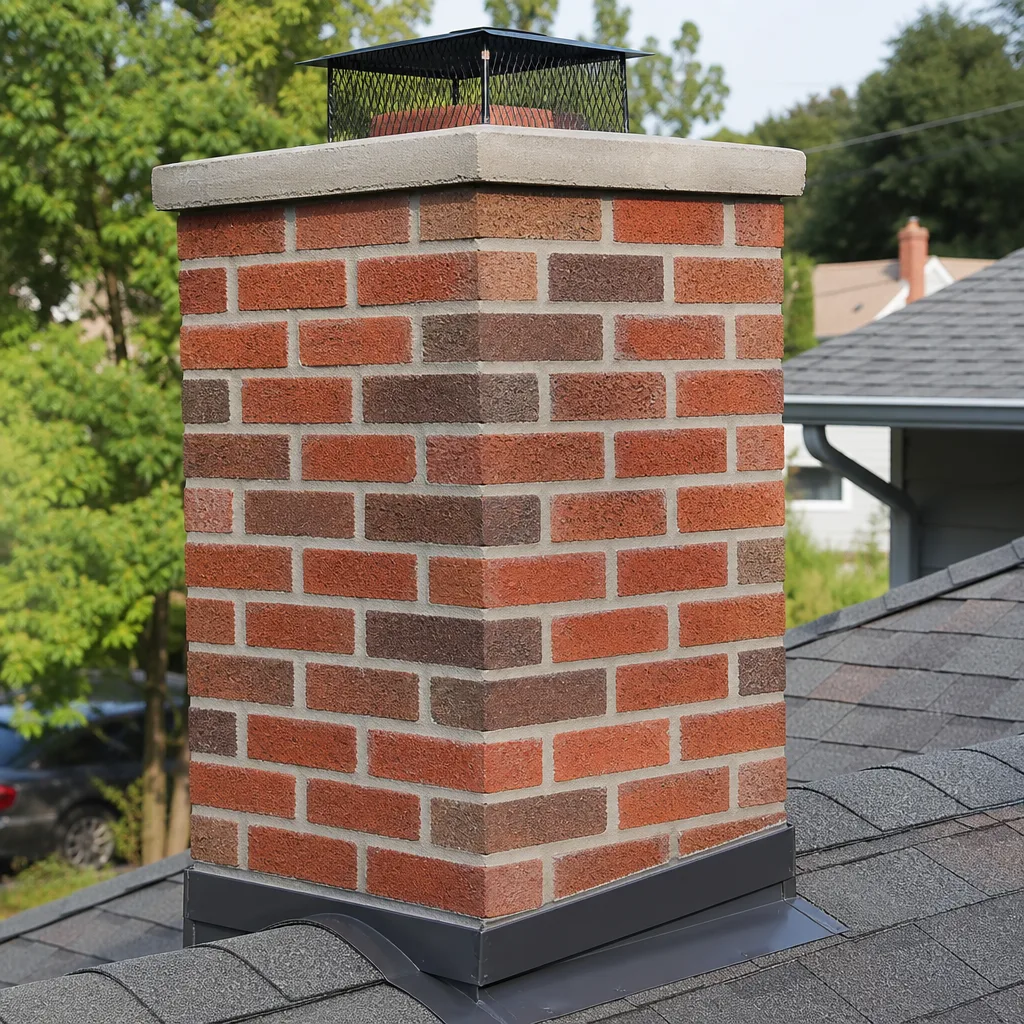
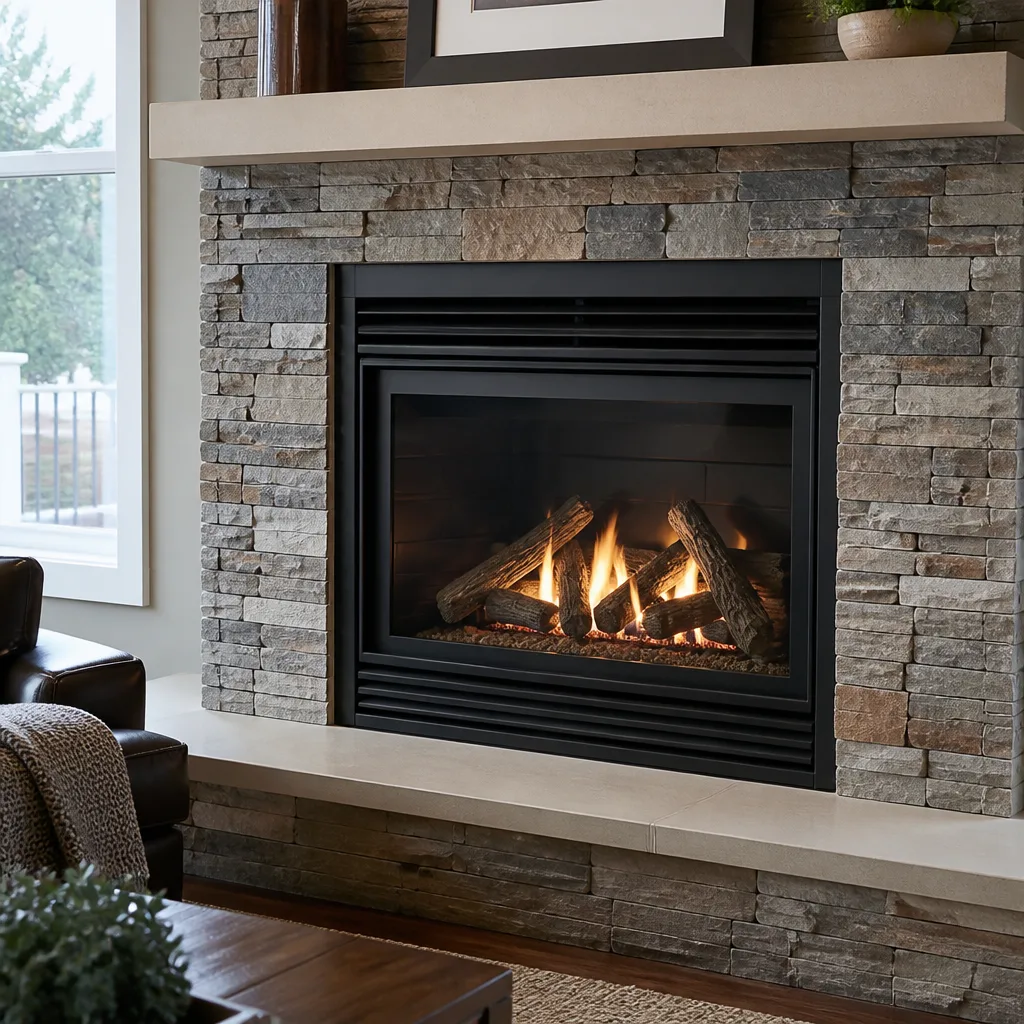
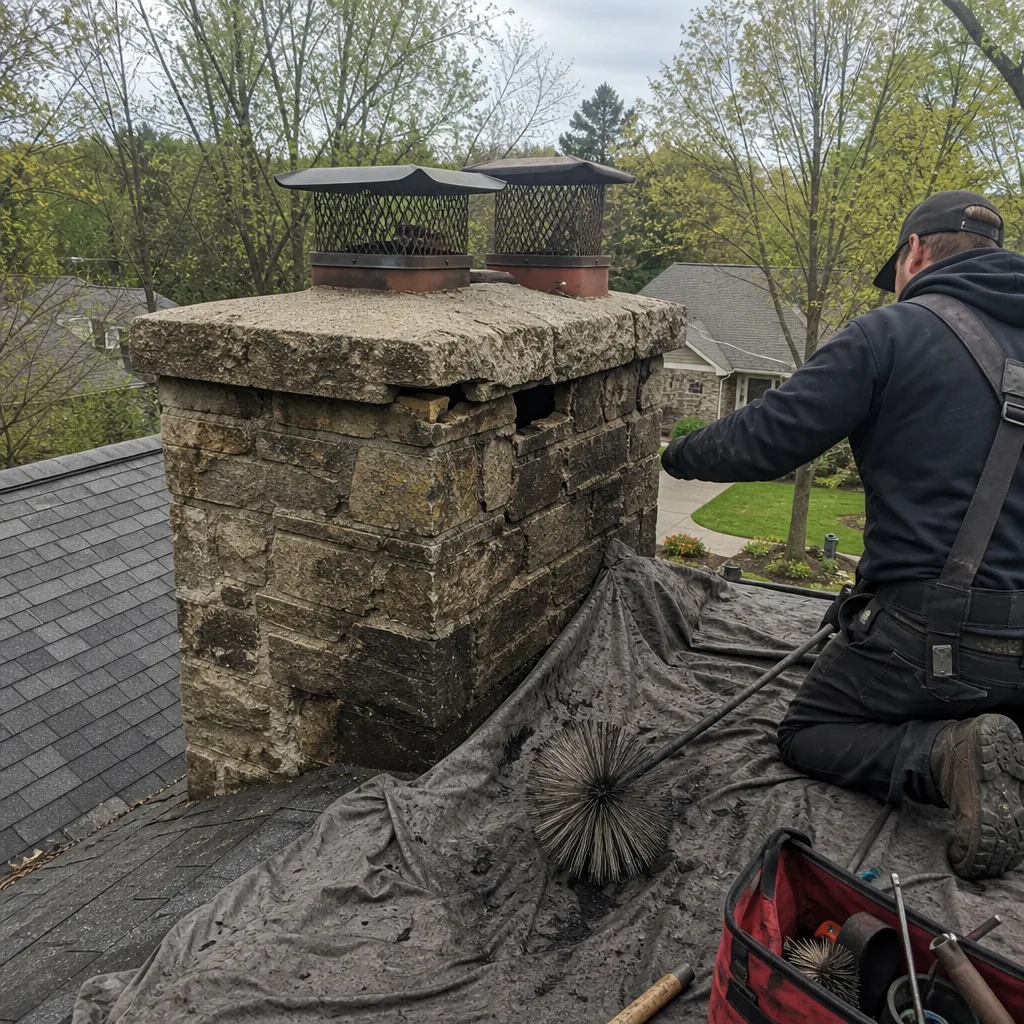 Before
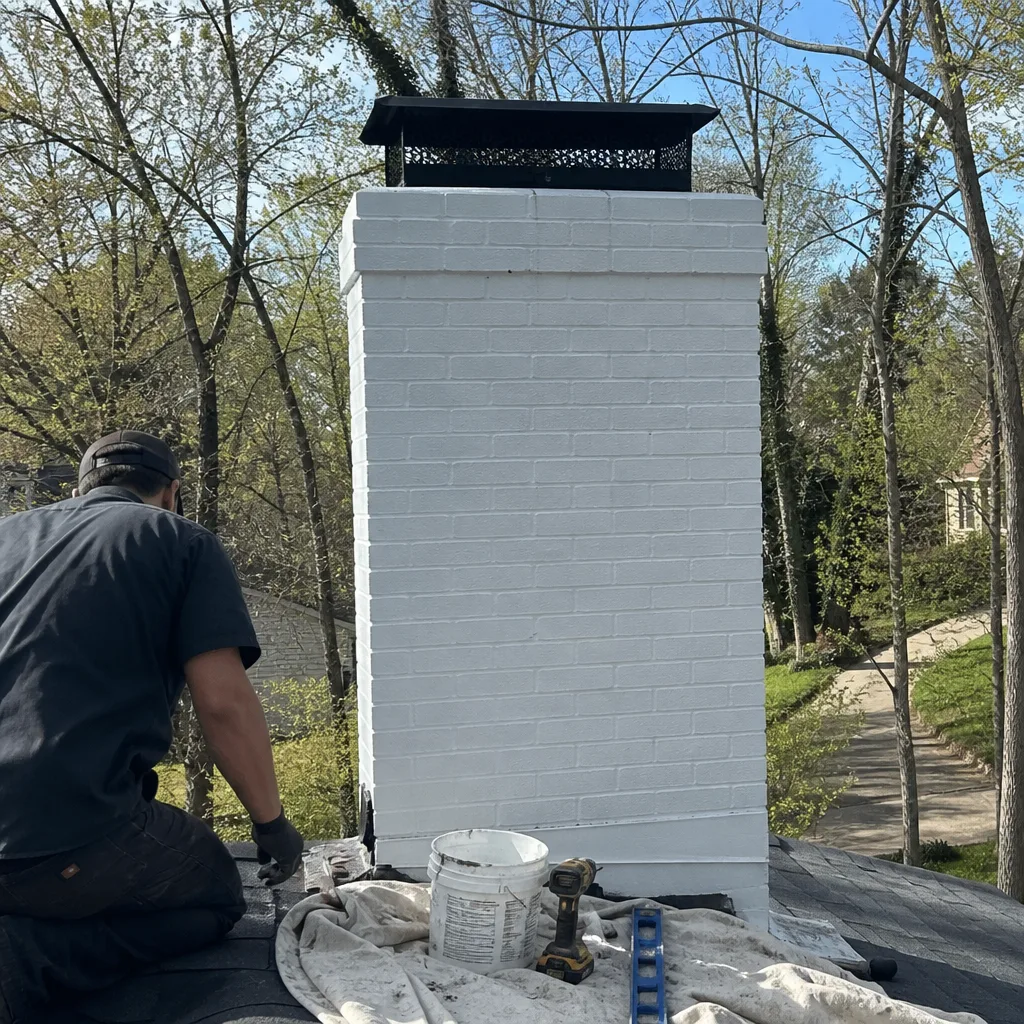 After
After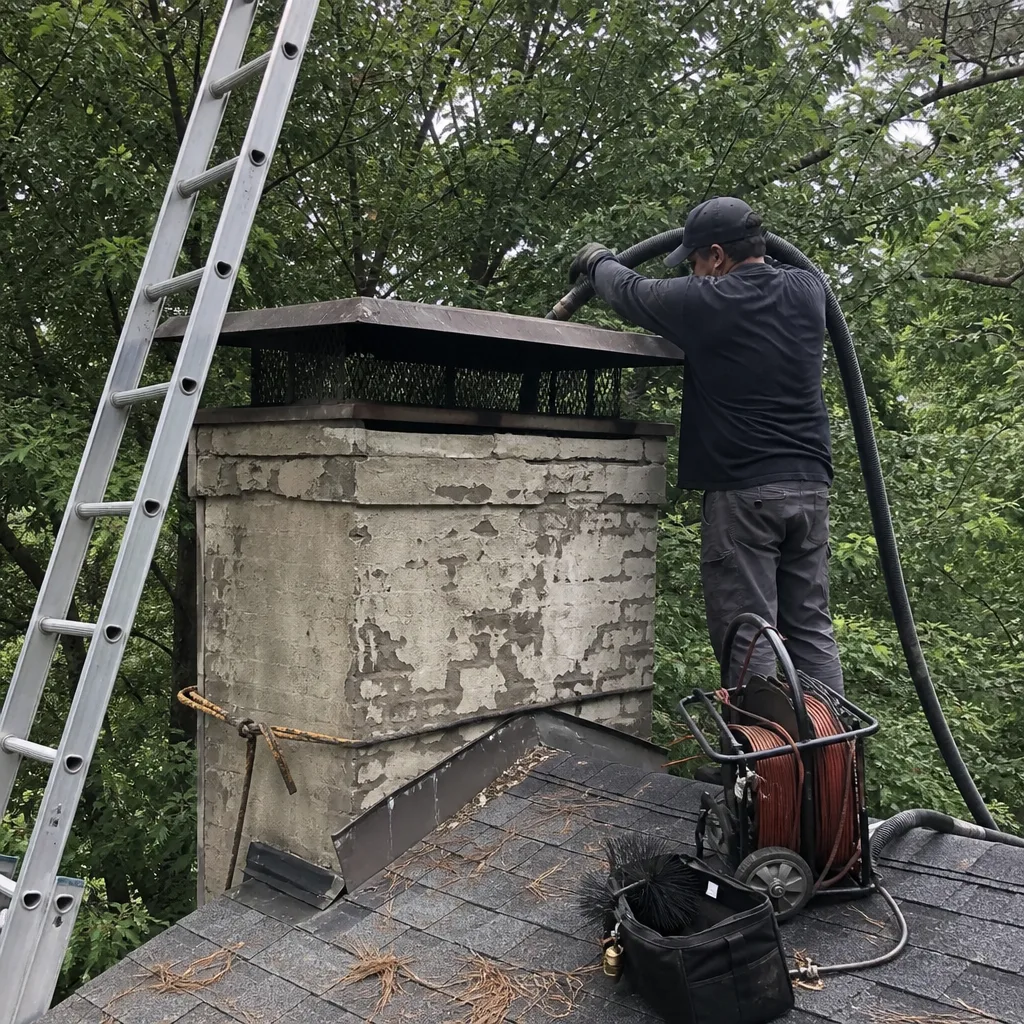 Before
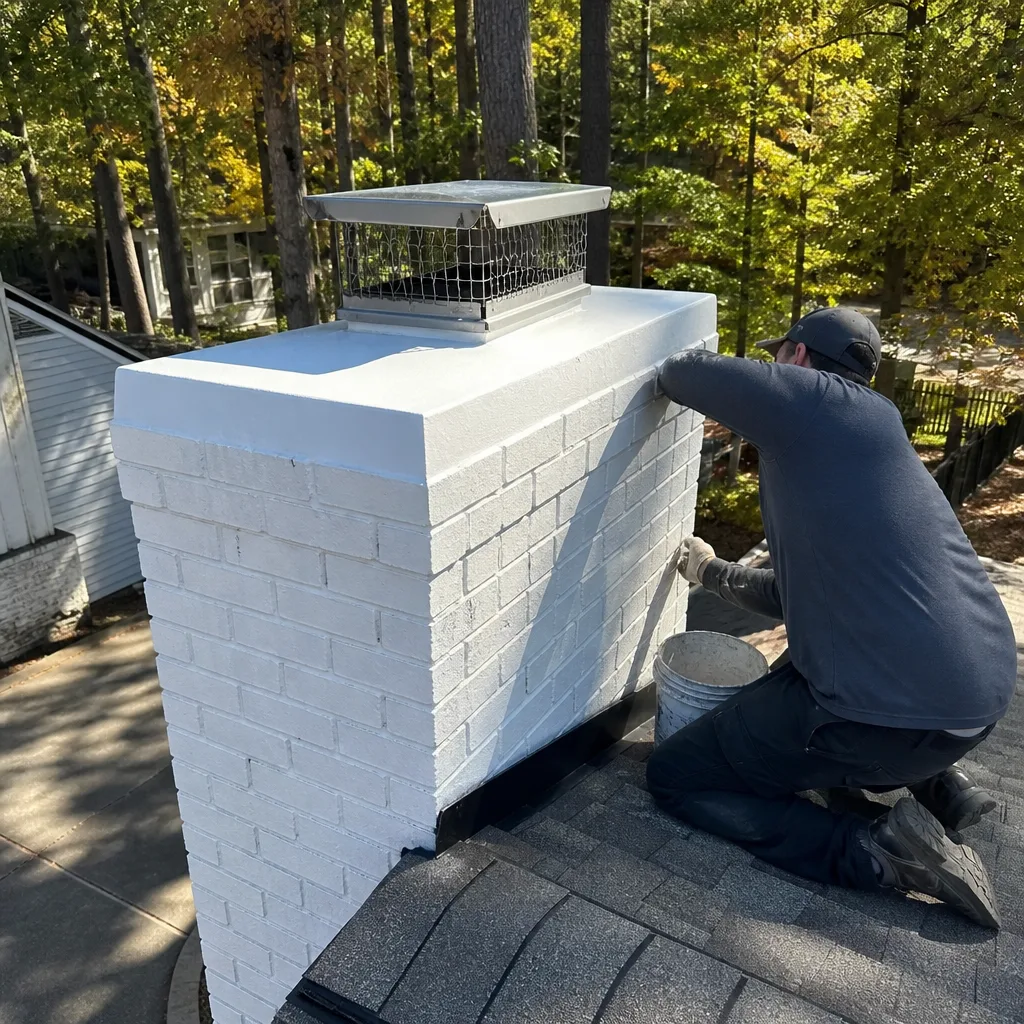 After
AfterThe Complete Guide to Chimney Cleaning in Sandy Springs
Last winter, a homeowner in Sandy Springs’ Riverside neighborhood filed a fire-loss claim after a chimney fire damaged their living room. Their insurer denied it. The couple had paid for a “chimney cleaning” the previous October, but they had no photos, no written scope of work, no technician license number, and no standard referenced on the receipt. Just a credit card slip for $149. In Sandy Springs, where many homes sit under mature oak canopy that keeps flues cool and damp, that paperwork gap is more common than you’d think. This guide explains what chimney cleaning actually accomplishes in our climate, why the documentation matters more than the sweep itself, and how to read a report so you know whether you’re protected or just out $200. For more guides & resources, see our full blog.
Quick Answer
A proper chimney cleaning in Sandy Springs removes combustible creosote deposits from the flue liner and smoke chamber, includes a camera-scan inspection to document liner condition, and delivers a written record with photos that satisfies NFPA 211 and most homeowner insurance requirements. If you’re weighing whether to do it yourself, read our DIY vs Professional Chimney Cleaning: The Sandy Springs Homeowner’s Decision Guide first. In Sandy Springs’ humid subtropical climate with heavy oak and pine debris, we recommend annual cleaning for wood-burning fireplaces and Level 2 inspections at every real estate transaction. Expect to pay $189-$329 for a standard sweep with camera documentation in the Sandy Springs market.
Table of Contents
- Why Documentation Beats the Broom
- Georgia Red-Clay Creosote: Why Sandy Springs Is Different
- What Happens During a Level 2 Chimney Cleaning
- How to Read Your Post-Cleaning Report
- Cleaning Receipt vs. Cleaning Record: Know Which You Have
- When to Schedule: Sandy Springs Burn Season Timing
- What Emberly Chimney Cleaners Delivers
- Cost and Pricing in Sandy Springs
BeforeAfterWhy Documentation Beats the Broom
The chimney sweep industry has a documentation problem. Most homeowners cannot produce evidence of what was actually done during their last cleaning. A 2023 industry survey found that 67% of chimney service receipts nationwide lack four basic elements: technician identification, standard referenced, scope of work, and photographic evidence. In Sandy Springs, where homeowner insurance premiums run 12-18% above the Georgia median due to higher property values, that gap gets expensive fast.
Here’s why the paper trail became the product. In 2009, Emberly Chimney Cleaners made camera-scan documentation the default on every job. Not optional. Not an upsell. Every flue got a camera, every customer got photos, and every file got archived. That practice eventually became Clause 4 of the Haven Standard, which we operate under today. Insurance adjusters and fire marshals now expect this level of documentation. When a claim lands on a desk, the first question is whether the homeowner maintained the appliance per NFPA 211. The second question is whether they can prove it.
Without a written record referencing NFPA 211, showing pre- and post-cleaning liner condition, and identifying the technician by name and license, you have a receipt. You do not have a defense. Sandy Springs sits in Fulton County, where building codes adopt NFPA 211 by reference for all solid-fuel appliances. Your policy likely does too, in language you never read.
The five fields that must appear on any record you keep:
- Standard referenced - NFPA 211 Level 1 or Level 2, stated explicitly
- Technician identification - name and state license number
- Scope of work performed - sweep, inspection, or both, with areas accessed
- Photographic or video documentation - dated images of liner condition
- Written condition assessment - specific findings, not boilerplate “chimney okay”
We have seen Sandy Springs homeowners in the Dunwoody Panhandle and Heards Ferry districts produce receipts that say nothing beyond “chimney sweep - $175.” That document protects no one.
Georgia Red-Clay Creosote: Why Sandy Springs Is Different
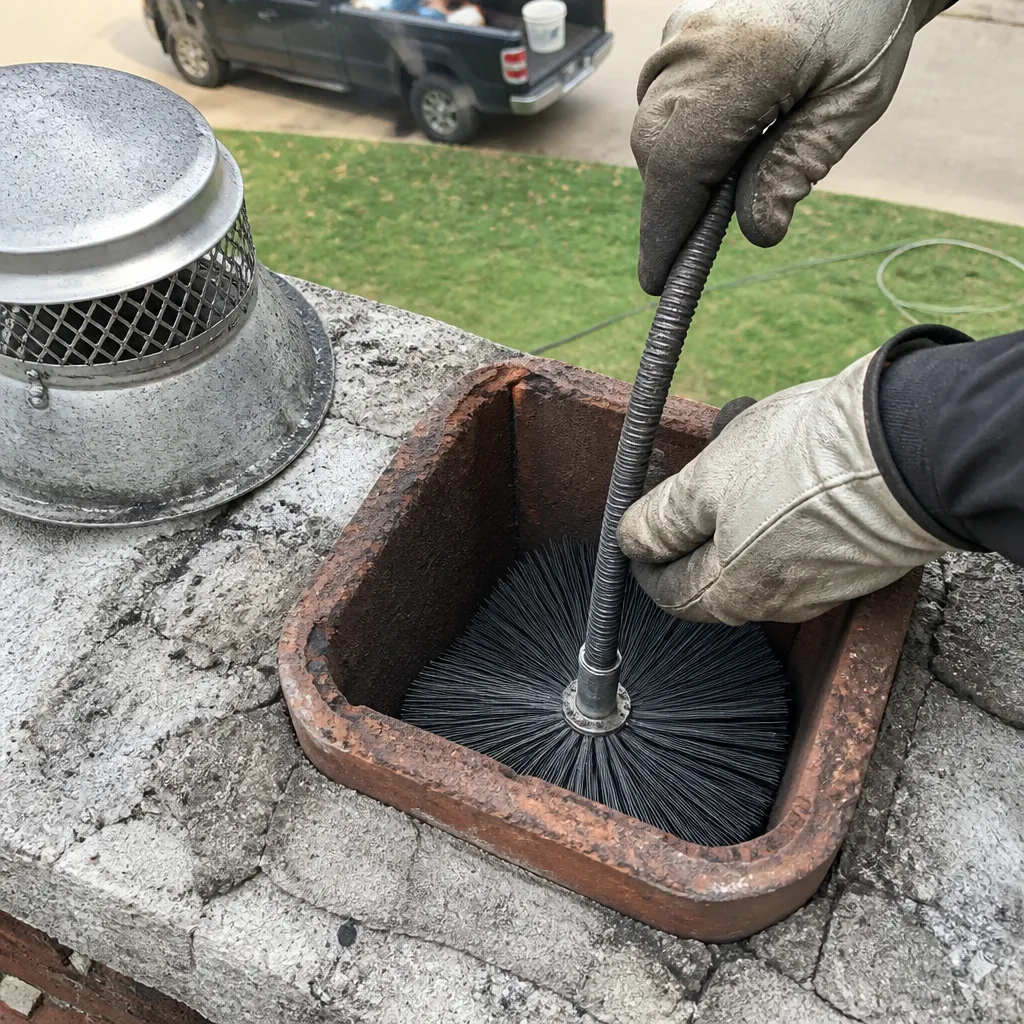
National chimney associations publish broad sweep frequency guidelines: annually for wood-burning appliances, every cord of wood burned, or when creosote reaches 1/8 inch. Those numbers assume a continental climate with cold, dry winters that pull flue gases upward rapidly. Sandy Springs does not have those winters.
Our location on the Piedmont plateau, 1,000 feet above sea level and 250 miles inland from the moderating Atlantic, creates a specific combustion environment. Winter temperatures rarely stay below freezing for consecutive days. Flues stay warmer than they should, slowing draft and allowing creosote to condense in liquid form before it reaches the cooler upper sections. That liquid phase, combined with high humidity from our 50+ inches of annual rainfall, produces a distinctive creosote profile.
We call it red-clay creosote. The iron-rich Georgia clay that permeates our soil loads the local firewood supply with ferric compounds. When that wood burns incompletely, which it often does in our mild winters where homeowners build smaller, cooler fires, the resulting creosote carries a higher mineral content than the powdery black deposits found in New England or the Midwest. It hardens faster. It adheres more tenaciously to clay flue tiles. And it transitions from Class I (sooty, brush-removable) to Class III (glazed, requires mechanical removal) in fewer burn cycles than national averages suggest.
What this means for Sandy Springs homeowners:
- Annual sweeping is not conservative; it is the minimum for active wood-burning fireplaces
- Occasional users - those who light fires only on December weekends - still need inspection because moisture-driven deterioration happens regardless of burn frequency
- Pine and oak, our dominant canopy species, produce more spark and creosote load than the hardwood mixes burned in northern climates
- The 1/8-inch rule understates risk here; we find Class III glazing at 3/16 inch in Sandy Springs flues that would read as manageable elsewhere
In neighborhoods like Hammond Hills and North Springs, where homes from the 1970s and 1980s retain original clay flue liners, this accelerated creosote profile combines with aging infrastructure to create a higher-than-expected maintenance burden. The chimney may look fine from the hearth. The camera tells a different story.
What Happens During a Level 2 Chimney Cleaning
NFPA 211 defines three inspection levels. Level 1 is a visual examination of readily accessible portions - what you can see from the hearth or roof without tools. Level 2 adds camera-scan documentation of the full flue interior, accessible portions of the attic and basement, and a written report. Level 3 involves demolition of building components and applies only when hidden hazards are suspected.
Most Sandy Springs homeowners need Level 2, not Level 1, and certainly not because we want to sell more. The standard requires Level 2 at every real estate transaction, after any chimney fire or operational change, and when a Level 1 inspection suggests concealed damage. In practice, any flue that has not been camera-scanned within 24 months qualifies for Level 2 under the “change in condition” provision, because unobserved deterioration is itself a changed condition.
Here is what occurs during a Level 2 chimney cleaning at a Sandy Springs home:
- Exterior assessment - We examine the crown, cap, flashing, and masonry from roof level, documenting cracks, spalling (surface flaking), and water intrusion paths. In Sandy Springs, where thermal cycling between 30°F winter nights and 60°F days stresses mortar, we find crown separation in roughly 40% of inspections on homes built before 1995.
- Hearth and firebox inspection - We check firebrick condition, damper operation, and lintel integrity. We also look for smoke staining that indicates drafting problems, common in tightly sealed modern homes in neighborhoods like Spalding Woods.
- Smoke chamber evaluation - The area above the damper and below the flue liner, often corbeled brick, is where many chimney fires begin. We measure wall smoothness and check for exposed mortar joints that can trap creosote.
- Camera-scan of full flue length - A high-resolution camera travels the entire flue, recording liner condition, joint alignment, creosote class and thickness, and any obstructions. This is Clause 4 of the Haven Standard: documented photo record on every job, archived and available to the customer on request. We have performed this on every one of our 38,000+ visits since 2009.
- Mechanical sweeping - Using rotary brushes sized to the flue diameter, we remove all accessible deposits. For Class III glazed creosote, we apply a chemical modifier first, then return for mechanical removal after the prescribed dwell time.
- Post-cleaning camera verification - We run the camera again to confirm liner cleanliness and document that no damage occurred during sweeping.
- Written scope, price, and warranty delivery - Before any work begins, you receive a written price and written scope. This is Haven Standard Clause 1: have it in writing. After completion, you receive the photo record, condition assessment, and our 365-Day Done Right Promise.
The entire process takes 90-150 minutes for a standard masonry fireplace in Sandy Springs. Factory-built metal chimneys run shorter; complex systems with multiple flues or significant creosote buildup run longer.
How to Read Your Post-Cleaning Report
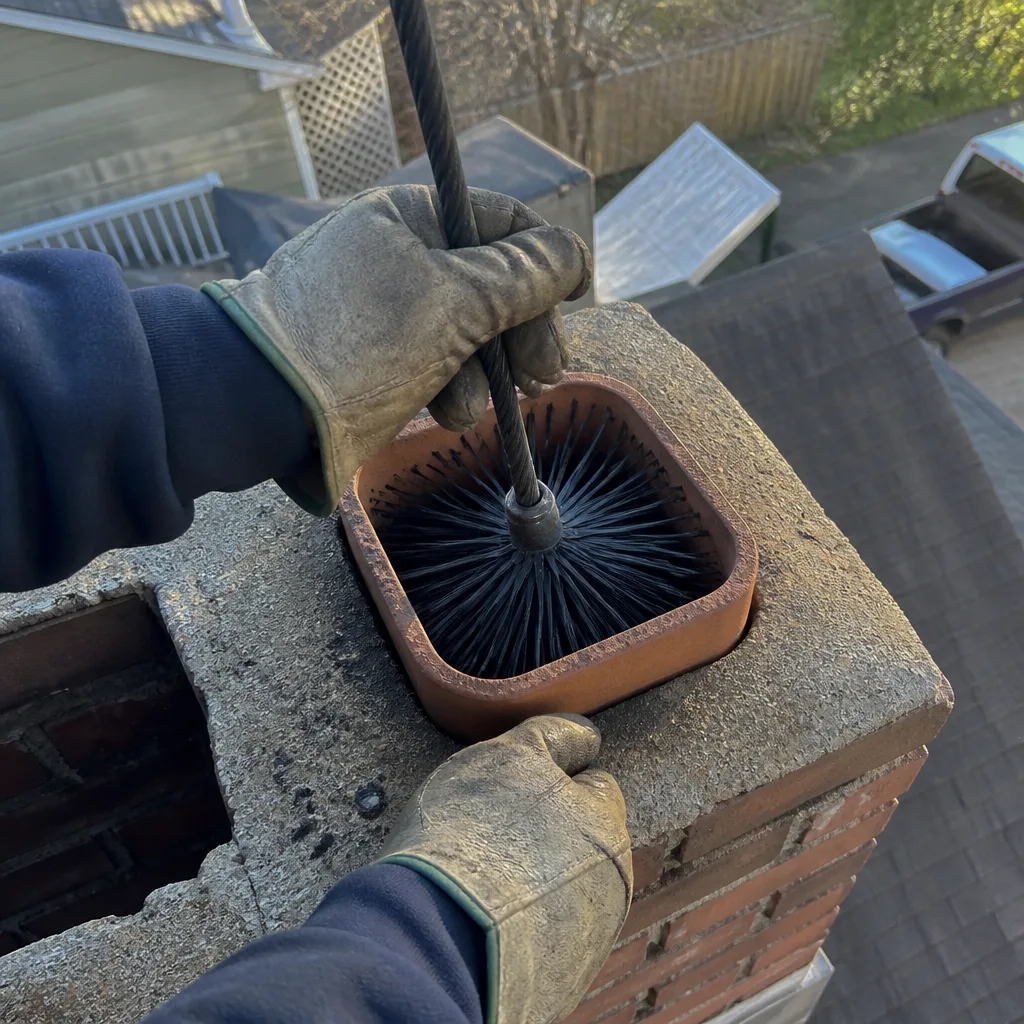
Most Sandy Springs homeowners file their chimney paperwork in a drawer and never look at it again. That is a mistake. The report is the only evidence that work was performed to a defensible standard. You should know how to read it before you need it.
A proper post-cleaning report contains five distinct sections. If any are missing, you do not have a complete record.
Section 1: Job and Standard Identification
Look for explicit reference to NFPA 211 and the inspection level performed. “Chimney cleaned” is not a standard. “NFPA 211 Level 2 inspection and cleaning per Clause 4 documentation requirements” is. The date, technician name, and license number must appear here. Our reports include the technician’s Georgia license number and a photo ID verification under Haven Standard Clause 3: verified crews.
Section 2: Appliance and Flue Specifications
The report should identify the appliance type (open masonry fireplace, factory-built fireplace, wood stove, insert), flue dimensions, liner material (clay tile, stainless steel, cast-in-place), and total flue height. This matters for Sandy Springs homes with additions or modifications; a flue sized for the original fireplace may be inadequate for a later-installed insert.
Section 3: Findings with Photographic Evidence
Every significant finding requires a dated photograph with measurement reference. “Creosote buildup” without a photo is an opinion. “Class II creosote, 3/16 inch thickness at 12 feet above damper, with photo reference L2-2024-0315-12” is evidence. We timestamp every image and archive the full-resolution files for seven years.
Section 4: Work Performed and Materials Used
The scope must specify what was cleaned (flue, smoke chamber, firebox, damper), what tools were used, and whether any chemical treatments were applied. If liner repair or crown sealing was recommended, the report should state whether it was declined, deferred, or completed. Our reports specify materials by brand when applicable - Gelco caps, Olympia Chimney liner components, Famco dampers - so there is no ambiguity about what was installed.
Section 5: Recommendations and Warranty
This section states the next recommended service date, any outstanding deficiencies, and the warranty terms. Our 365-Day Done Right Promise appears here explicitly: if any covered element fails due to workmanship within 365 days, we repair it at no charge. No “call for details.” No “see website for terms.” The warranty is on the page you sign.
If your last chimney cleaning produced a one-page invoice with a single line item, you paid for a receipt. The difference matters when an adjuster asks to see your maintenance records.
Cleaning Receipt vs. Cleaning Record: Know Which You Have
The distinction is not semantic. A receipt proves payment. A record proves compliance. In Sandy Springs, where Fulton County building officials and insurance adjusters both reference NFPA 211, only one of these documents helps you in a dispute.
A cleaning receipt typically shows:
- Business name and contact
- Date of service
- Single line item: “chimney sweep” or “chimney cleaning”
- Price paid
- Payment method
A cleaning record includes everything above plus:
- Standard referenced (NFPA 211 Level 1 or 2)
- Technician identification and license
- Detailed scope of work with areas accessed
- Pre- and post-cleaning condition documentation
- Photographic or video evidence with timestamps
- Written assessment of appliance safety for continued use
- Customer signature acknowledging receipt of findings
We have reviewed competitor receipts from Sandy Springs homeowners who believed they were protected. One showed “chimney service - $199” with no date, no technician name, no standard, and no indication of whether an inspection occurred. Another listed “Level 2 inspection” but contained no photos and referenced no standard. Both are functionally useless in a claim dispute.
Your homeowner’s policy likely contains a maintenance clause requiring “regular service per manufacturer and applicable code.” NFPA 211 is that applicable code for solid-fuel appliances in Georgia. Without a record showing compliance, your insurer can argue that you failed to maintain the appliance, shifting liability to you even when the fire originated in a defect you could not have seen.
The record also protects you from unnecessary future work. A documented baseline from 2023 showing minor spalling on a crown lets you compare against 2024 findings and determine whether deterioration is accelerating or stable. Without that baseline, every technician who arrives sees the same crack for the first time and may recommend immediate repair that could safely wait two seasons.
We archive every record we produce. Sandy Springs customers from 2015 can request their complete file and receive it within 24 hours. That archive has resolved disputes, validated warranty claims, and prevented unnecessary repairs. A receipt cannot do any of that.
When to Schedule: Sandy Springs Burn Season Timing
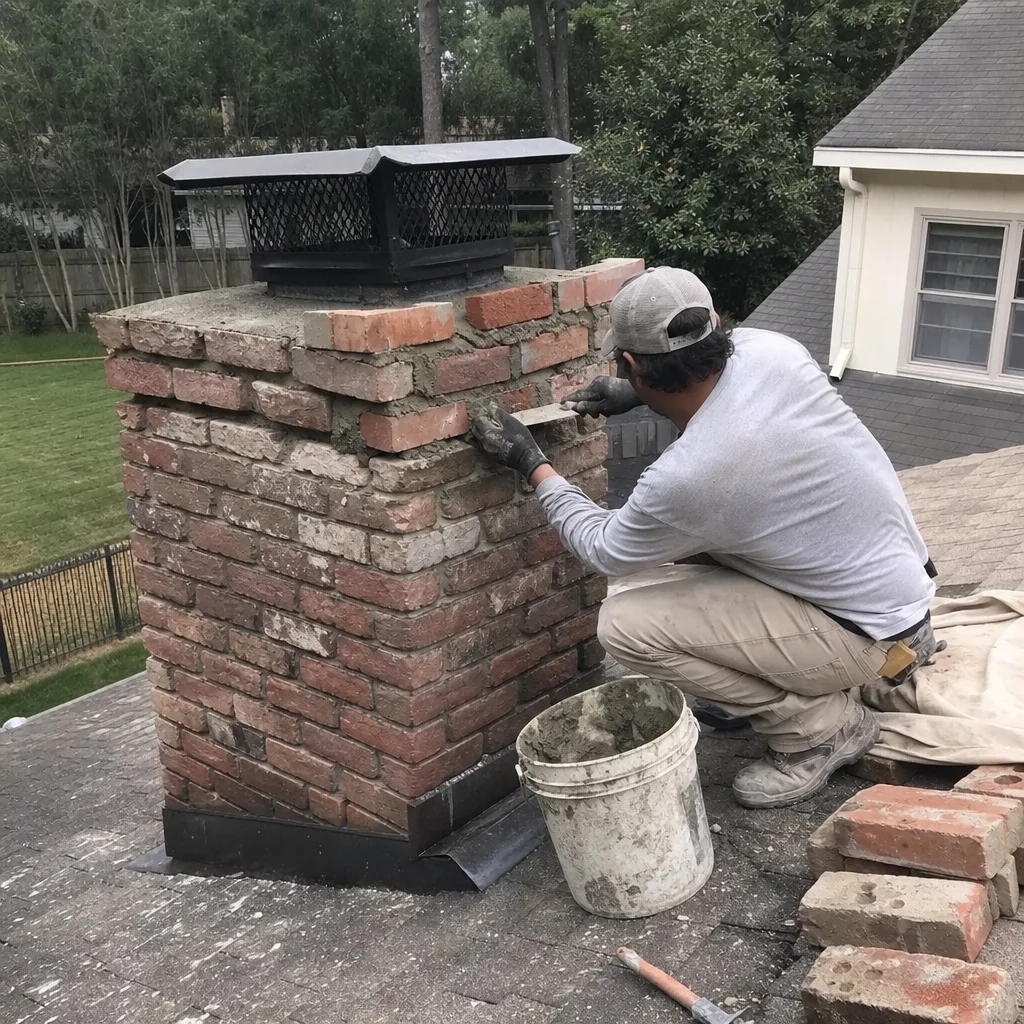
Chimney sweep demand follows a predictable curve. Most Sandy Springs homeowners call in October, after the first cold snap, or in December, when holiday guests are imminent. Both timing choices cost more and deliver less. For year-round guidance on timing and maintenance, see our Seasonal Chimney Cleaning Care for Sandy Springs: Year-Round Homeowner’s Guide.
October is the worst month to schedule. Demand spikes 200-300% above baseline as temperatures first drop into the 50s. Appointment availability compresses. Prices often rise to match. And if the inspection reveals needed repairs - a cracked crown, deteriorated liner, or damaged damper - there is insufficient time to complete work before consistent burning begins. We see this annually in neighborhoods like Indian Hills and High Point: homeowners who waited until October discover they cannot safely use their fireplace until Thanksgiving, and they are angry at us for telling them what the camera found.
December is nearly as problematic. By mid-December, our schedule and every competitor’s is fully committed through January. Emergency calls for smoke backup or suspected blockages command premium rates. And the psychological pressure of “Christmas is in ten days” leads homeowners to approve repairs they would otherwise research, because they want the fire lit for guests.
September outperforms both. Temperatures in Sandy Springs remain warm enough that most homeowners are not thinking about fires. Availability is wide. Pricing is at baseline. If you need help choosing a qualified professional, our How to Hire a Chimney Cleaning Contractor in Sandy Springs: A Step-by-Step Guide walks you through the process. If repairs are needed, there is ample time to complete them, cure materials, and schedule follow-up inspection before the first serious cold arrives. In our experience, September customers in Sandy Springs save 15-25% compared to October bookings and have 3-4x more appointment flexibility.
February and March offer a secondary window. Post-season cleaning removes accumulated deposits before humid spring weather accelerates corrosion. It also establishes documentation for spring real estate listings, when Fulton County transactions require current Level 2 inspection reports.
For the 2024-2025 burn season in Sandy Springs, we recommend:
- Active wood burners: Schedule before September 15 for optimal availability
- Occasional users: February-March cleaning prevents spring moisture damage
- Home sellers: 60 days before listing to allow repair completion
- Home buyers: Immediately after closing, before first use, to establish baseline documentation
The cost difference between September and December scheduling in our market is typically $40-$80 for equivalent service, based on 2023-2024 pricing data. The documentation value is identical. The stress level is not.
What Emberly Chimney Cleaners Delivers
We operate under the Haven Standard, a set of operational requirements we helped develop and have followed since 2009. It is not marketing language. It is a checklist that governs every customer interaction. Here is how it applies to chimney cleaning in Sandy Springs.
Haven Standard Clause 1: Have it in writing
Every job receives a written price, written scope, and written warranty before work begins. Not after the technician arrives. Not after inspection. Before. You know exactly what you will pay and exactly what you will receive. If additional conditions are found during work, we stop, document, and present a revised scope for your approval. No surprises.
Haven Standard Clause 2: Arrive on schedule
Your assigned technician texts when en route with an estimated arrival window. Background-checked, uniformed, license number displayed. We do not subcontract to unvetted crews or send technicians whose names we do not know.
Haven Standard Clause 3: Verified crews
Technician identification is verified and documented on every job. You know who entered your home, and we know who performed the work. This matters for insurance, warranty, and simple accountability.
Haven Standard Clause 4: Documented record
Every visit includes camera-scan inspection and a photo record, archived and available on request. We invented this practice in 2009, before regulators or insurers required it, because it is the only way to prove what was found and what was done. The archive now exceeds 38,000 documented chimney visits.
Haven Standard Clause 5: Done right promise
Our 365-Day Done Right Promise covers every element of our workmanship. If a repair fails, a seal leaks, or a cleaning was incomplete, we return and correct it at no charge. The promise is written, dated, and signed - not implied.
We also offer a Free Second Opinion on any competitor’s written estimate. Bring us their scope and price. We will review it against what the camera shows and tell you whether the work is necessary, whether the price is fair, and whether anything was omitted. No charge, no obligation.
Materials for repairs and installations come through our Haven buying network: DuraFlex and Olympia Chimney for liner systems, HeatShield for crown and smoke chamber repair, Gelco and Famco for caps and dampers, Copperfield for specialty flashing. We specify brands because generic “stainless steel liner” descriptions hide quality differences that affect longevity.
Our Chimney Cleaning & Sweep in Sandy Springs page details current availability and scheduling. For repair needs beyond cleaning, see our Chimney Repair in Sandy Springs page. Fireplace-specific services are covered on our Fireplace Services in Sandy Springs page.
Cost and Pricing in Sandy Springs
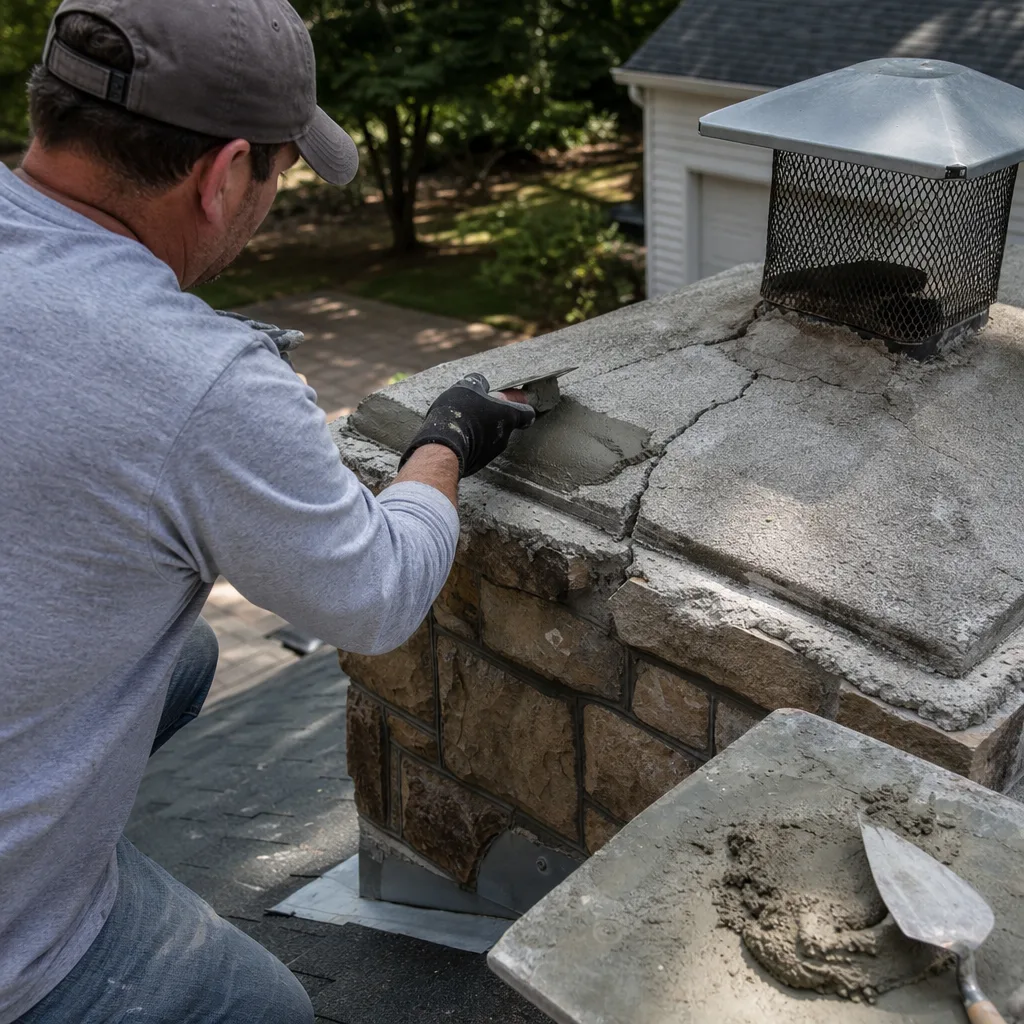
Chimney cleaning prices in Sandy Springs vary by service level, accessibility, and appliance type. The table below shows our current pricing structure. All prices include the documented photo record required by Haven Standard Clause 4. We do not offer a “sweep only” option without documentation, because that product protects no one.
| Service | Price Range | What’s Included |
|---|---|---|
| Level 2 Cleaning & Inspection - Standard Masonry Fireplace | $189-$249 | Full camera-scan, rotary sweep of flue and smoke chamber, firebox assessment, written report with photos |
| Level 2 Cleaning & Inspection - Factory-Built Fireplace | $169-$229 | Camera-scan of metal flue, chase inspection, cap and termination assessment, written report with photos |
| Level 2 Cleaning & Inspection - Wood Stove or Insert | $209-$289 | Full system sweep including connector pipe, baffle removal and inspection, camera-scan of full flue length, written report with photos |
| Class III Creosote Removal (Chemical + Mechanical) | $329-$479 | Chemical modifier application, return visit for mechanical removal, post-treatment camera verification, written report with photos |
| Multi-Flue System (2+ flues) | $149-$199 per additional flue | Camera-scan and sweep of each additional flue, consolidated written report |
| Real Estate Transaction Inspection | $249-$349 | Full Level 2 per NFPA 211, written report formatted for closing documentation, 48-hour turnaround guarantee |
Factors that increase price within these ranges:
- Steep roof pitch or limited access requiring additional safety equipment
- Heavy creosote buildup requiring extended cleaning time
- Obstructions (bird nests, collapsed liner sections) requiring removal before cleaning
- After-hours or weekend scheduling
We do not charge separately for the photo record, the written report, or the warranty documentation. These are components of the service, not add-ons. A competitor quoting $129 for a “basic sweep” that excludes camera documentation is not selling a comparable product. They are selling a receipt.
Payment is due on completion unless prior arrangements are made. We accept all major payment methods. Financing is available for repair work exceeding $1,000 through our partnership with a national home improvement lender.
Common Mistakes to Avoid
- Accepting a verbal quote - In Sandy Springs, as everywhere we work, a price given over the phone without inspection is a guess, not a quote. Insist on written pricing before work begins, per Haven Standard Clause 1.
- Assuming all sweeps include inspection - Many low-price competitors separate “sweeping” from “inspection” as distinct line items. A sweep without inspection is maintenance theater; you have no documentation of what was found.
- Ignoring the smoke chamber - The area above the damper is where chimney fires often start, yet it is frequently omitted from basic cleaning scopes. Confirm your sweep includes smoke chamber access and cleaning.
- Scheduling based on calendar alone - “Every two years” or “when it looks dirty” ignores Sandy Springs’ specific creosote profile. Burn frequency, wood species, and firebox temperature all matter more than elapsed time.
- Discarding documentation - Your chimney record belongs with your homeowner’s insurance policy, not in the recycling bin. Store it where you would store a roof warranty or HVAC service contract.
- Skipping inspection after a chimney fire - Even a small, self-extinguished fire can crack clay flue tiles or damage mortar joints. A visual check from the hearth cannot detect these defects. Camera documentation is mandatory after any fire event.
- Hiring unlicensed operators - Georgia does not require a state-specific chimney sweep license, but Fulton County requires a home services business license, and legitimate operators carry general liability and workers’ compensation insurance. Ask for license numbers and verify them.
When to Call a Professional
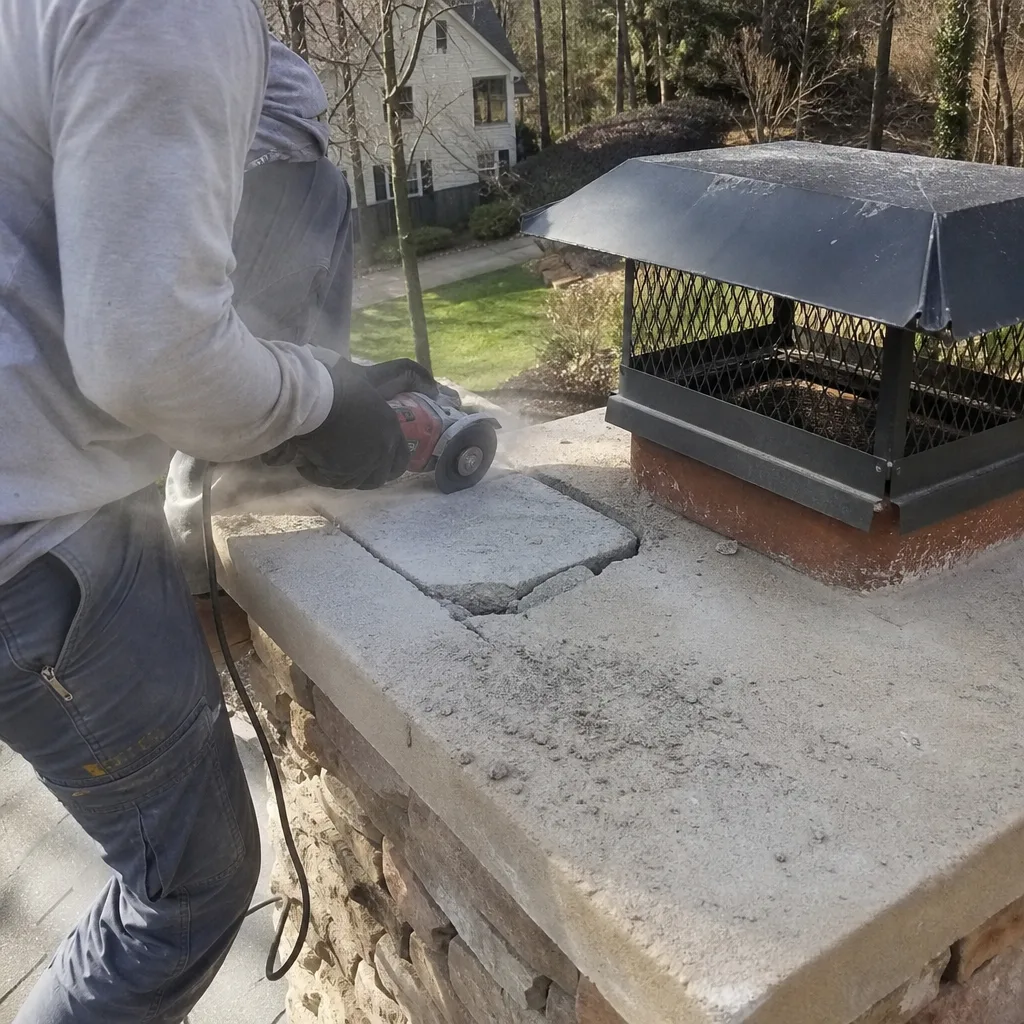
Call a certified chimney professional when you notice smoke drafting into the room, a persistent tar-like odor from the fireplace, visible creosote flakes in the firebox, or any evidence of water intrusion on the chimney breast. After any chimney fire, regardless of apparent severity, a Level 2 inspection is required before further use. If you are buying or selling a home in Sandy Springs, Fulton County transaction standards effectively require current documentation.
Emberly Chimney Cleaners Sandy Springs offers free estimates throughout Sandy Springs and surrounding Fulton County communities. We do not charge to inspect, document, and provide a written scope with pricing. Call (470) 480-0885 to schedule. Our phone is answered by a live person 24 hours a day, 7 days a week - not a voicemail system, not a callback queue. You can also start at our Emberly Chimney Cleaners Sandy Springs home page to review our full service range.
Frequently Asked Questions
A standard Level 2 chimney cleaning and inspection in Sandy Springs costs $189-$249 for a masonry fireplace, $169-$229 for a factory-built unit, and $209-$289 for a wood stove or insert. All our prices include camera-scan documentation and a written photo record. Call (470) 480-0885 for an exact quote - estimates are free.
Active wood-burning fireplaces in Sandy Springs need annual sweeping due to our humid climate and accelerated creosote buildup. Occasional users still need annual inspection because moisture-driven liner deterioration occurs regardless of burn frequency. Real estate transactions require a current Level 2 inspection regardless of elapsed time since last service.
Not always. A clay flue tile with minor cracking may remain serviceable with monitoring. A liner with significant spalling, multiple cracks, or gaps at mortar joints requires replacement or relining for safe use. We never recommend liner replacement without camera evidence you can see yourself, and we will tell you plainly when a condition can be monitored rather than repaired. Our Free Second Opinion service lets you verify any competitor’s liner recommendation against independent documentation.
Skipped cleaning allows creosote to accumulate beyond safe thickness, increasing chimney fire risk and accelerating liner deterioration. In Sandy Springs’ humid environment, moisture combines with acidic combustion byproducts to attack mortar and metal components even when the fireplace is not in use. Insurance claims after fires in unmaintained chimneys are frequently denied. The documented annual cleaning is what protects you financially, not just physically.
Level 1 is a visual examination of readily accessible areas without tools. Level 2 adds camera-scan documentation of the full flue interior, accessible portions of attics and basements, and a written report with findings. Level 2 is required at real estate transactions, after chimney fires, and when any operational change occurs. In Sandy Springs, we perform Level 2 as our default because unobserved deterioration in our climate makes Level 1 insufficient for reliable safety assessment.
We do not recommend DIY chimney cleaning. Proper cleaning requires roof access, specialized rotary equipment sized to flue diameter, and camera documentation to verify completeness. More critically, most homeowners cannot assess liner condition or identify structural defects that affect safety. The cost of professional service includes documentation that protects your insurance coverage; DIY cleaning provides no such protection. For safety-critical components like flue liners and chimney structure, trained professional assessment is the appropriate standard.
The Bottom Line
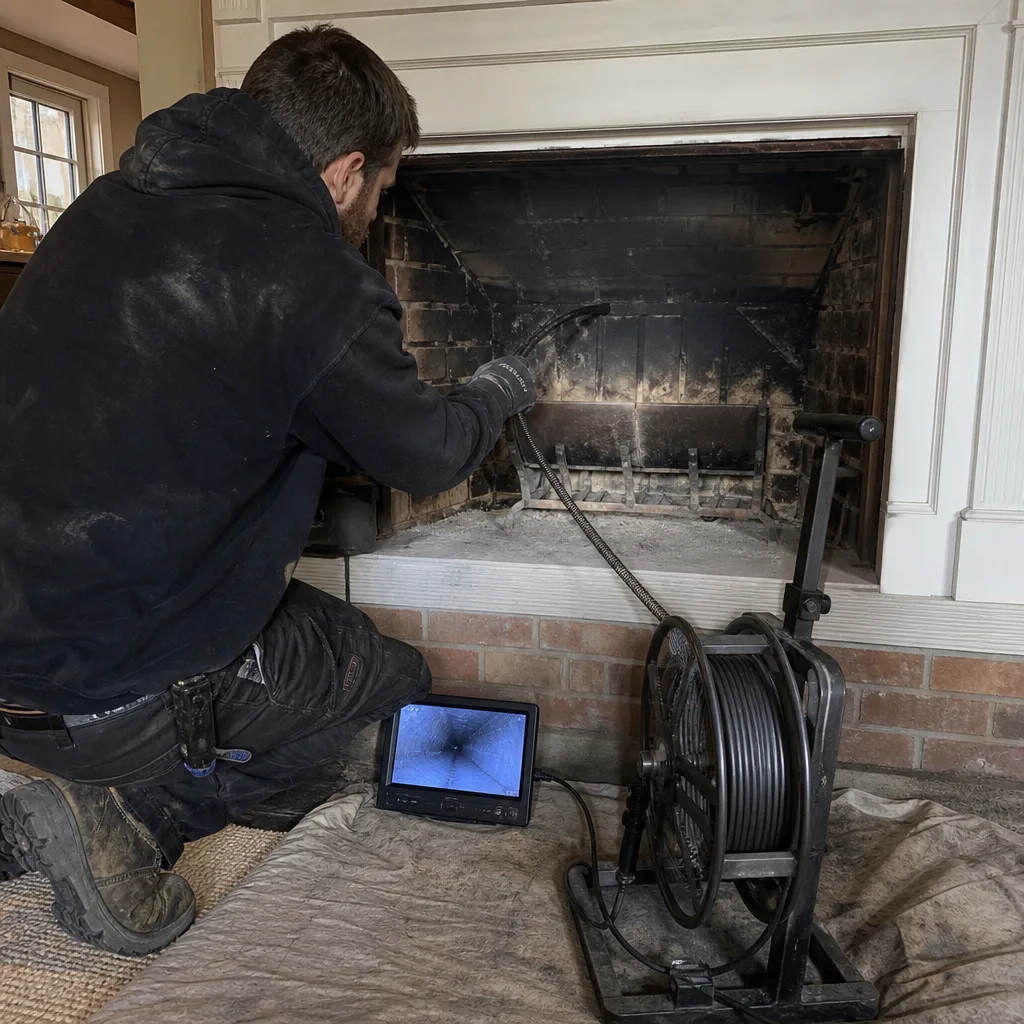
A chimney cleaning in Sandy Springs is not a commodity service. The sweep itself is necessary but insufficient. What protects you - from fire, from claim denial, from unnecessary repair costs - is the documented record of what was found, what was done, and who did it. That record must reference NFPA 211, identify the technician, include dated photographs, and present a written condition assessment. Without those elements, you have paid for a receipt, not a service.
Schedule before September for best availability and pricing. Insist on camera documentation. Keep your records with your insurance documents. And when a technician arrives, ask to see their license number before they enter your home. These habits cost nothing and separate protected homeowners from those who discover their coverage gap too late.
Written by Corrine Halstead, Owner at Emberly Chimney Cleaners Sandy Springs, serving Sandy Springs since 2009.