
Last updated September 21, 2026
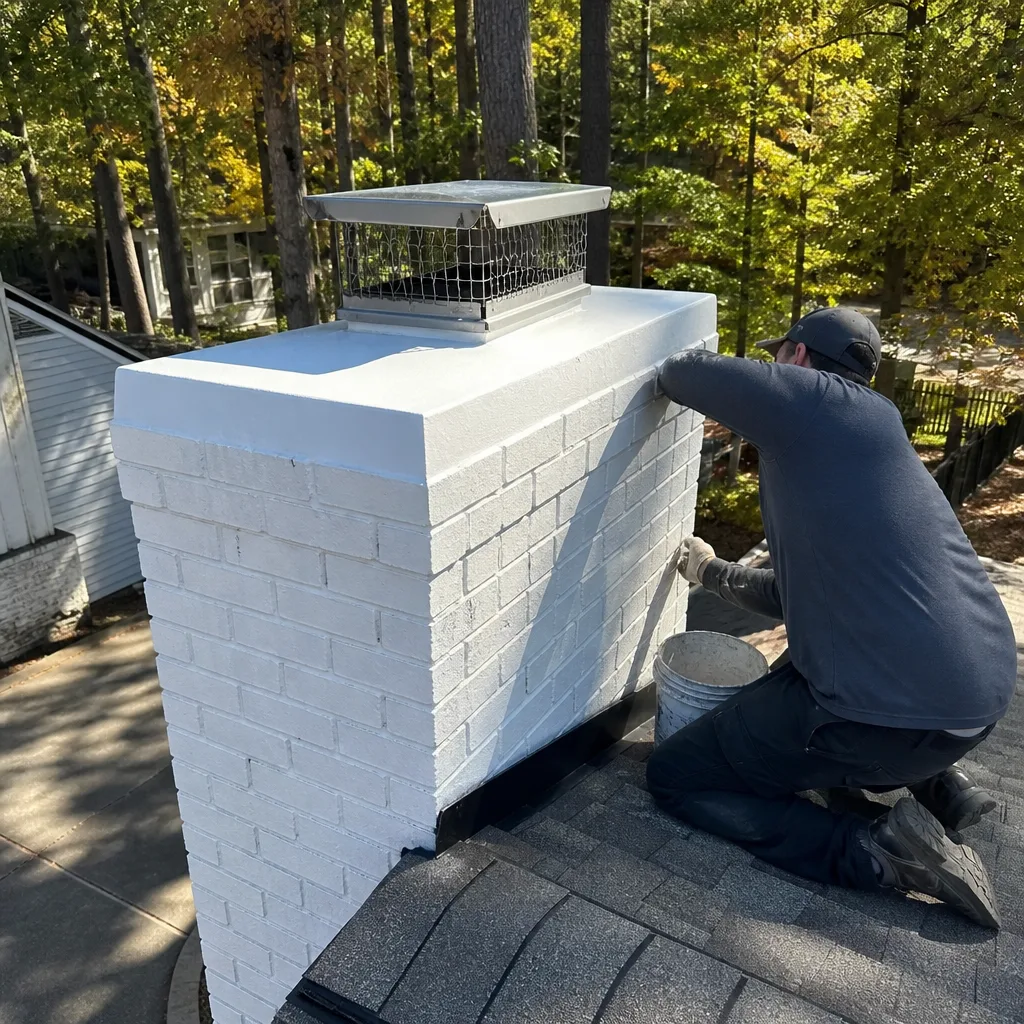
Level 1 sweep and inspection to the NFPA 211 annual standard - flue, crown, cap, and flashing checked and photographed
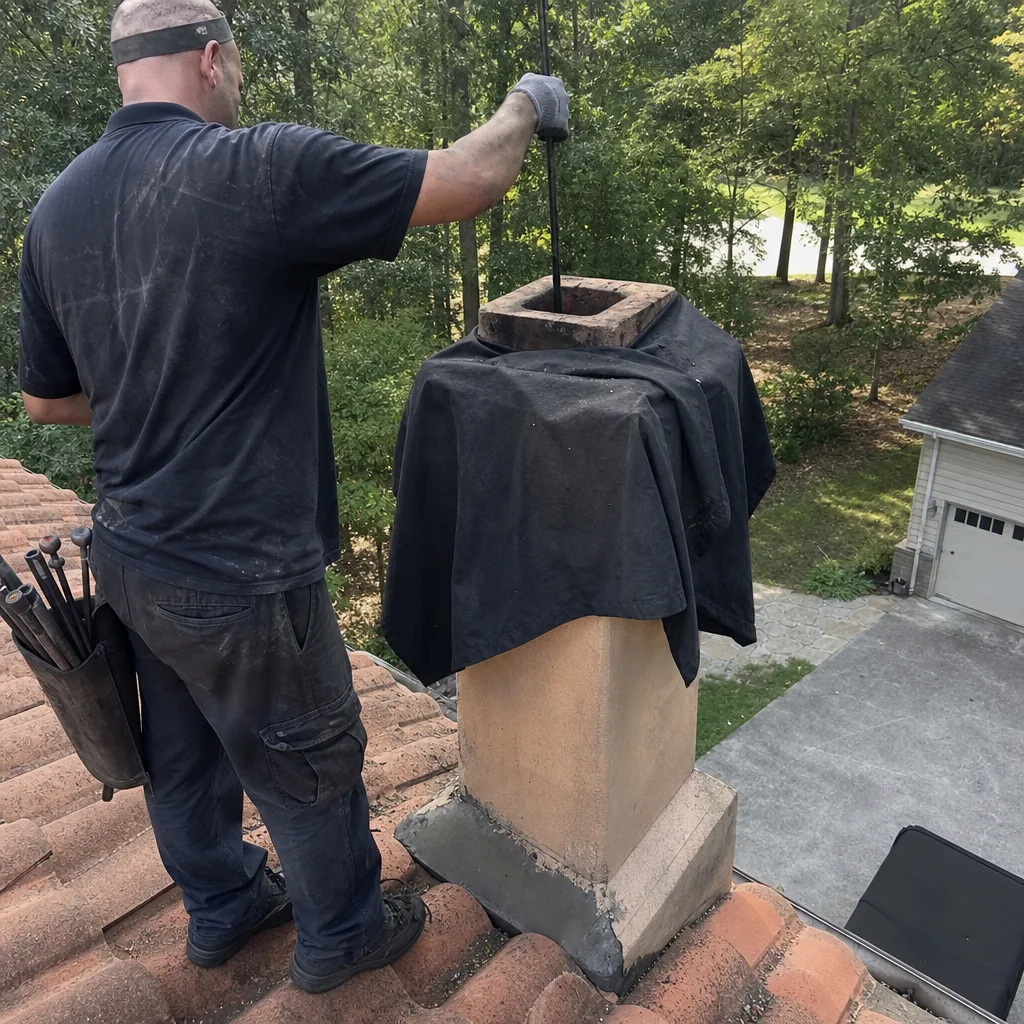
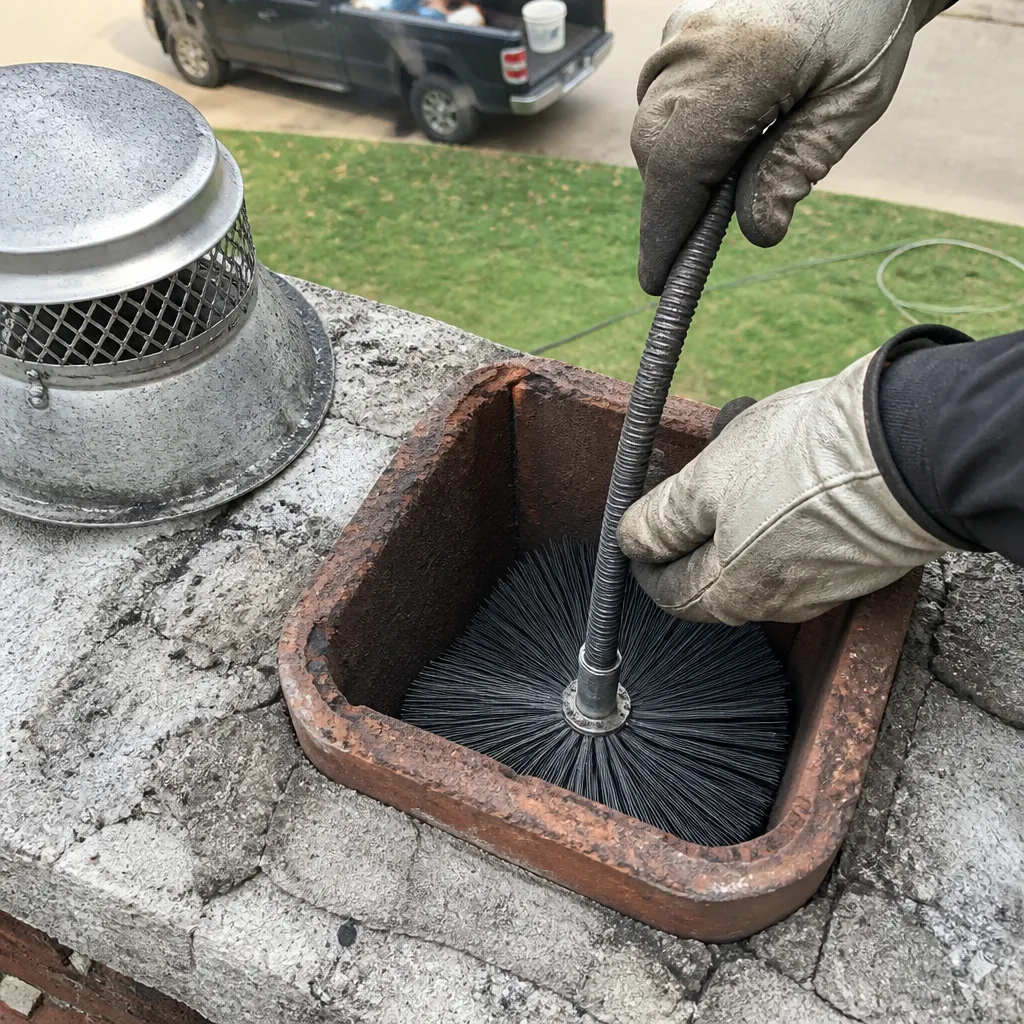
Chimney sweep logs do not sweep chimneys. They loosen some creosote - which then falls where a brush and vacuum still have to collect it.
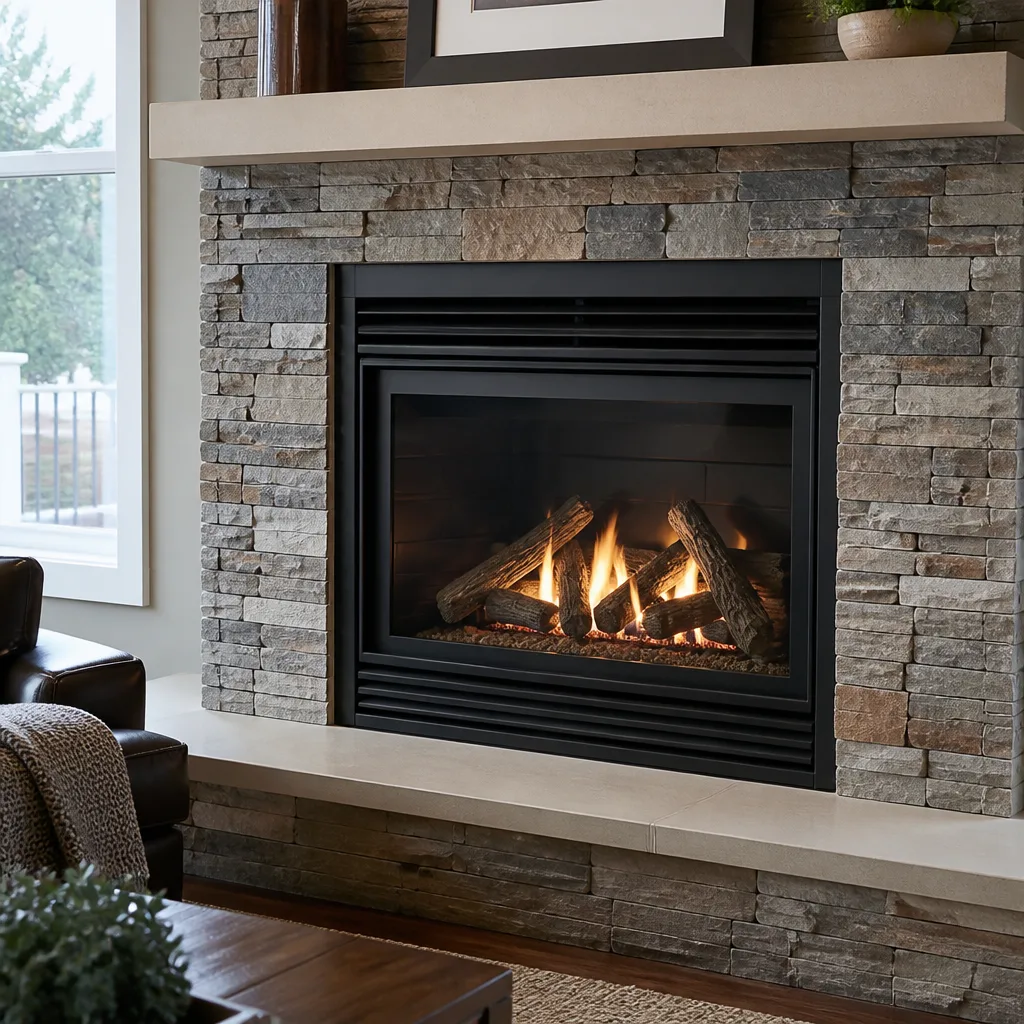
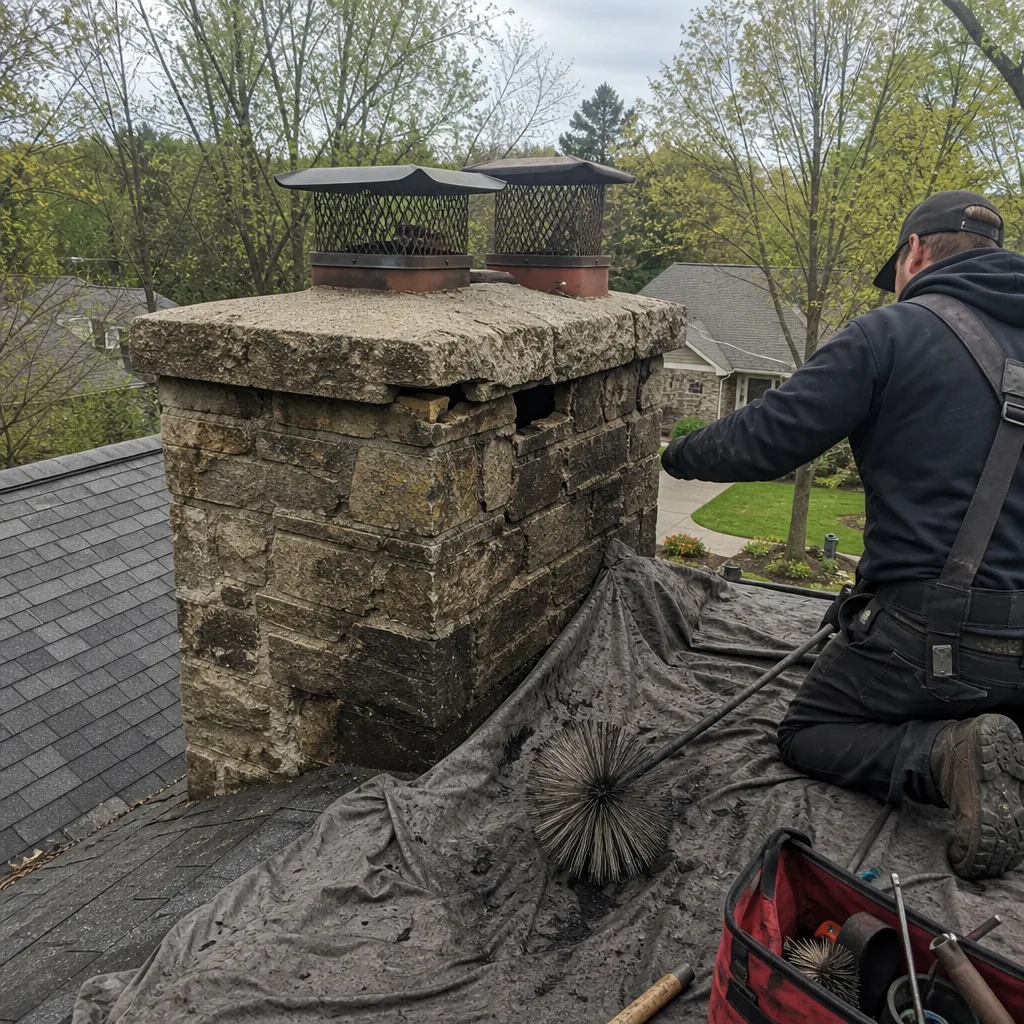 Before
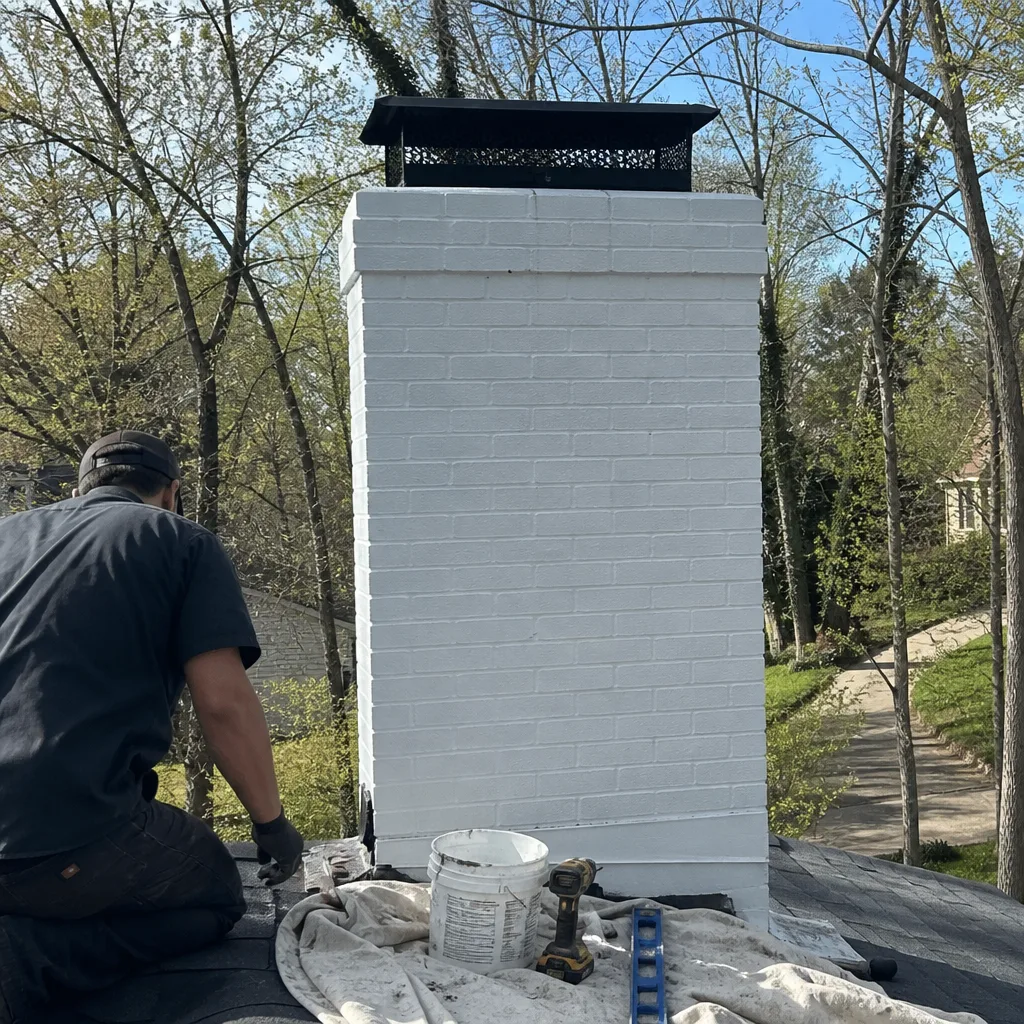 After
After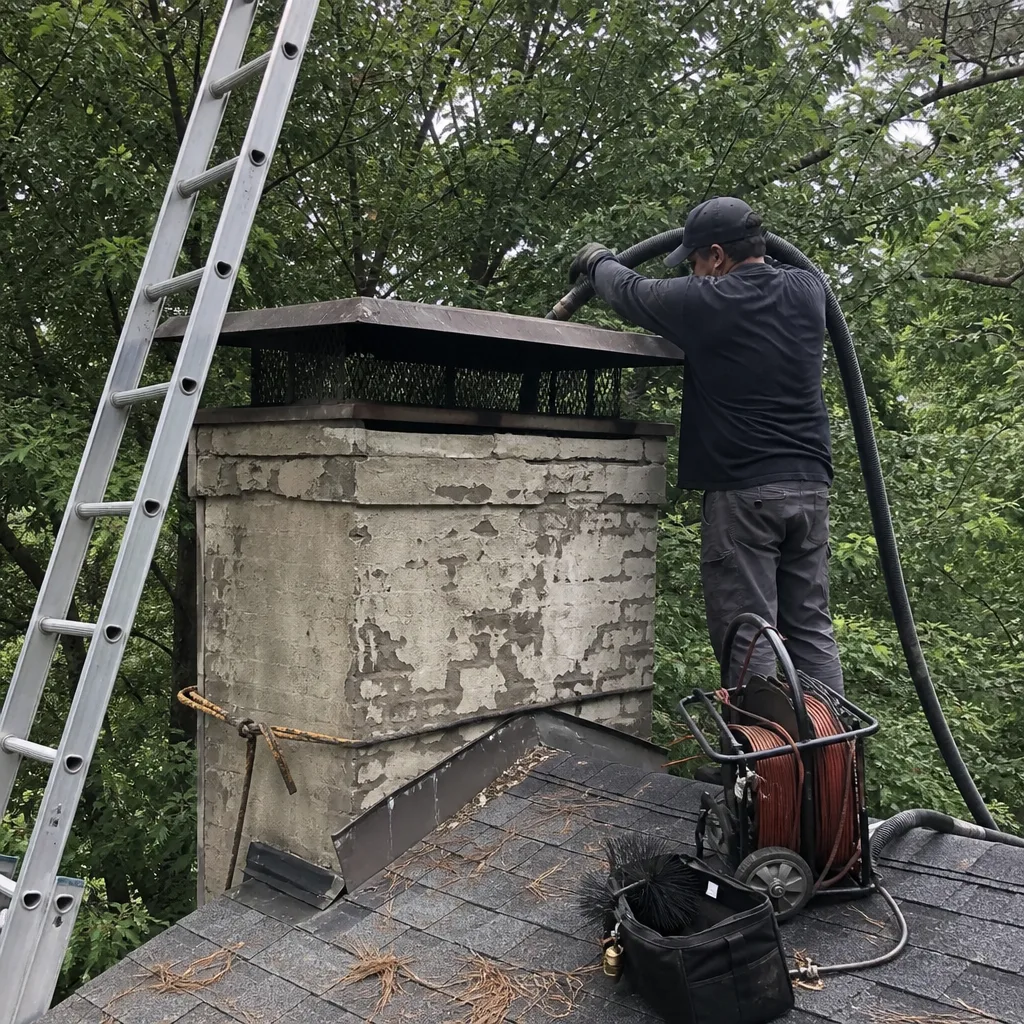 Before
 After
AfterChimney Sweep Maintenance Checklist for Sandy Springs Homeowners
The most common chimney fire in Georgia is not caused by a missed annual sweep. It is caused by a homeowner who noticed the smell, the staining, or the slow draft and assumed it would wait until next season. In Sandy Springs, where our humid summers accelerate masonry deterioration and our mild winters encourage sporadic burning, that assumption is especially costly. This guide gives you the exact observable conditions, measurements, and document checks you can perform yourself between Chimney Sweep visits to know whether a problem is developing. Not generic reminders. Specific signals.
Quick Answer
A complete chimney maintenance checklist for Sandy Springs homeowners includes monthly visual inspections of the exterior crown and cap, seasonal damper function tests, quarterly creosote checks during burn season, annual NFPA 211 Level 2 inspection with camera documentation, and proper record retention for insurance and resale. Between professional visits, monitor for three critical Chimney Cleaning Warning Signs: A Sandy Springs Homeowner’s Reference Guide signals: black tar-like deposits above the firebox, persistent smoky odors when the fireplace is not in use, and draft reversal on mild days above 50 degrees.
Table of Contents
- Monthly Exterior Checklist: What to Look For From the Ground
- Seasonal Tasks Calibrated to Sandy Springs Climate
- The Three Homeowner-Observable Creosote Signals
- The Four-Minute Damper Function Test
- Documentation Checklist: What to Keep and For How Long
- How to Verify Your Last Sweep Met NFPA 211 Standard
- Common Mistakes to Avoid
- When to Call a Professional
- Frequently Asked Questions
- The Bottom Line
BeforeAfterMonthly Exterior Checklist: What to Look For From the Ground
You do not need a ladder to catch most developing chimney problems. From your driveway or yard, five minutes of observation once a month reveals conditions that worsen rapidly in Sandy Springs’ climate.
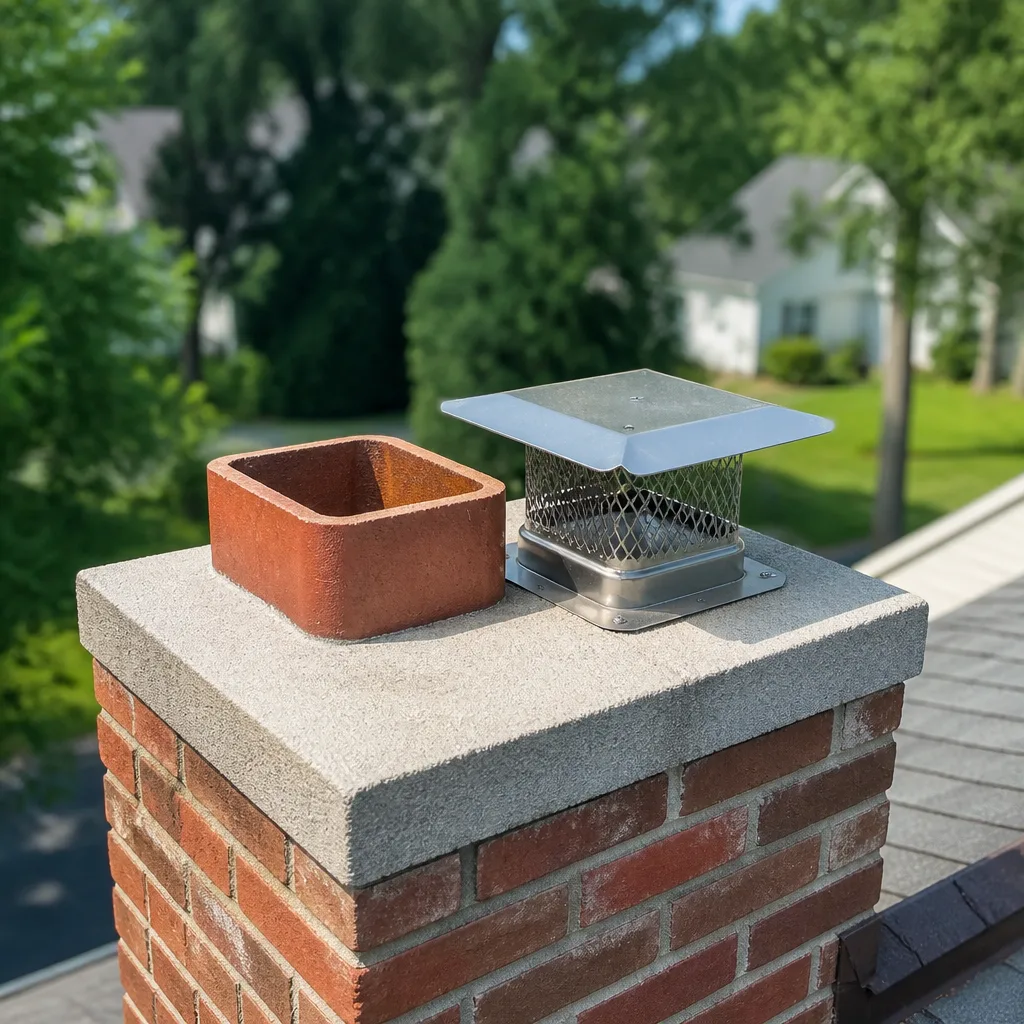
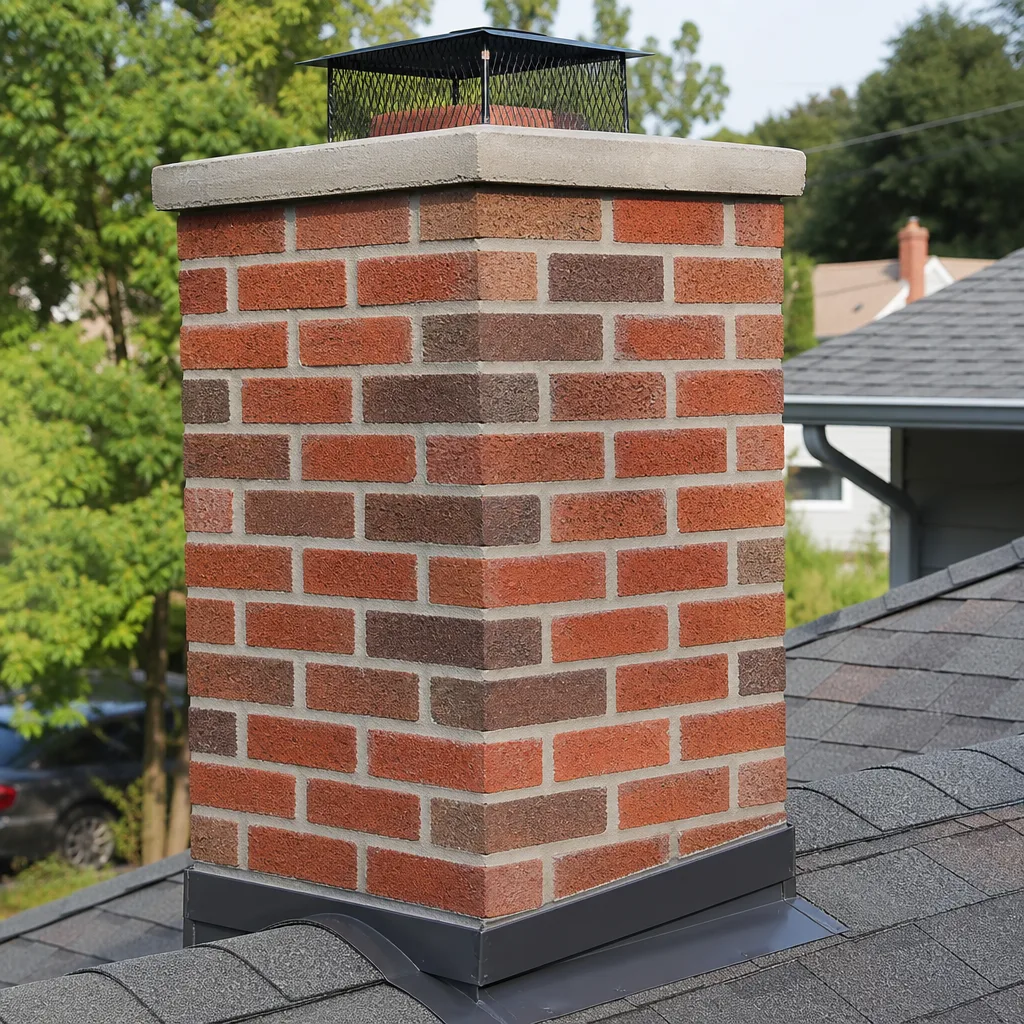
Check the crown for pooling water or fresh cracks. The crown is the concrete slab topping your chimney, sloped to shed water. In July and August, when Sandy Springs humidity stays above 75% and afternoon thunderstorms dump heavy rain in short bursts, water that pools on a flat or cracked crown seeps into the masonry below. Freeze-thaw cycles are rare here, but the relentless wet-dry cycling causes spalling, flaking, and crumbling of brick faces. Look for white efflorescence streaks on the exterior brick. That is mineral salt left behind as water evaporates. It signals water intrusion.
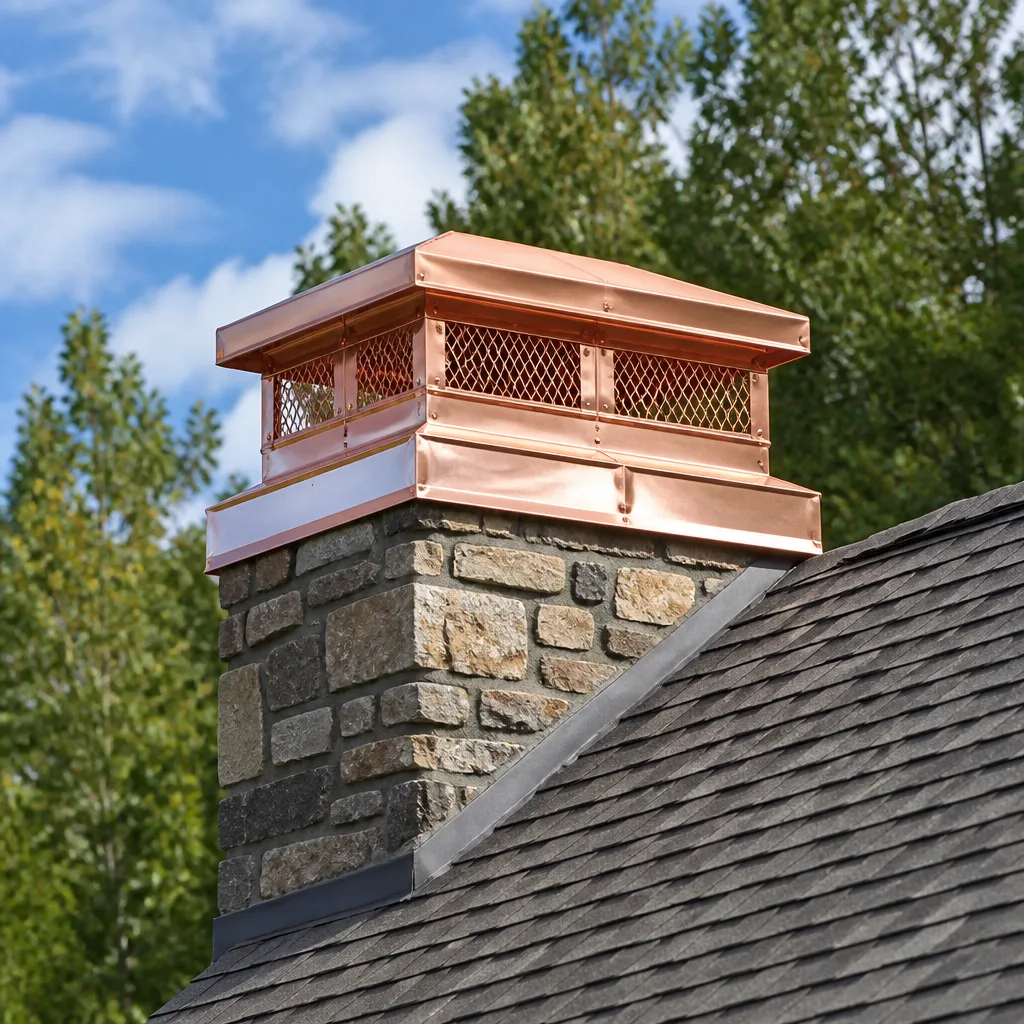
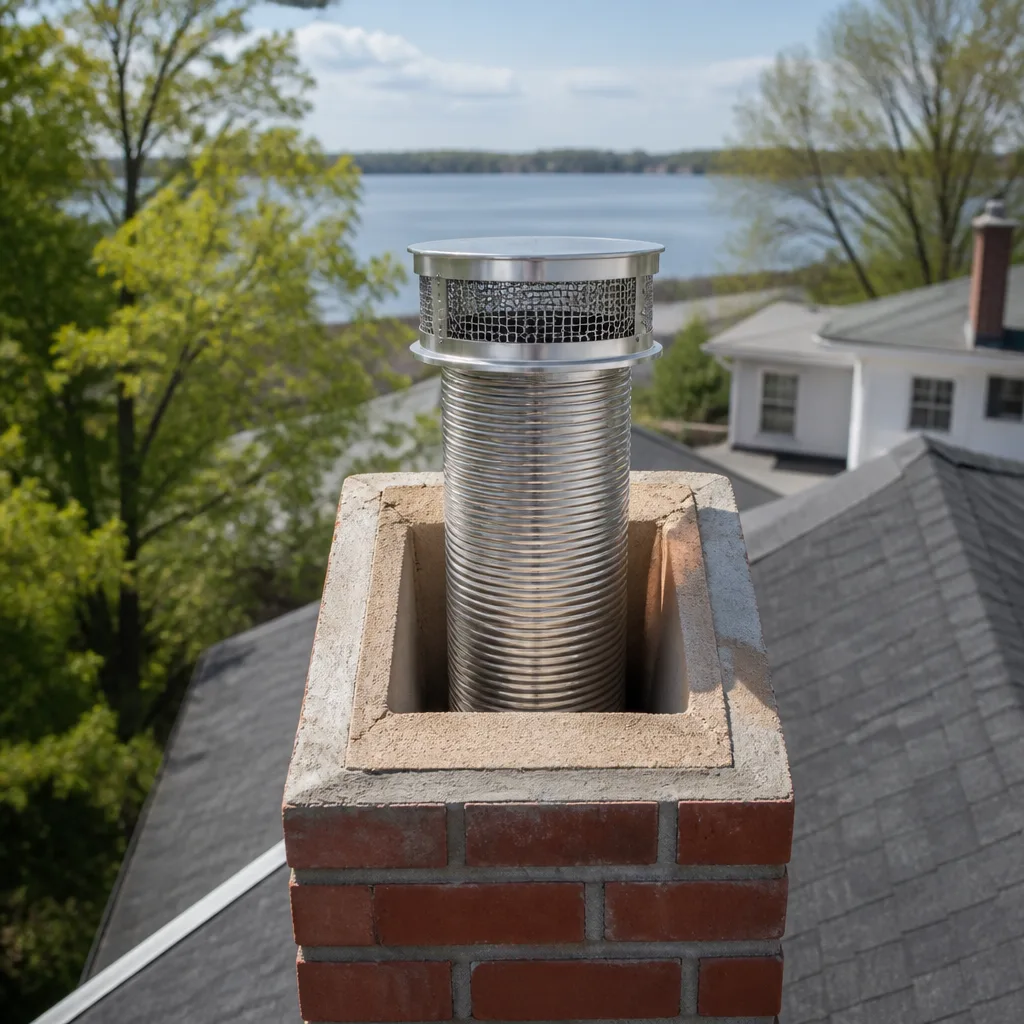
Inspect the cap and screen. A proper cap has mesh sides to block animals and a solid top to deflect rain. In neighborhoods near the Chattahoochee River corridor, squirrels and raccoons are persistent. A cap knocked askew or screen torn at the corner invites nesting material that blocks the flue. From the ground, binoculars help. The cap should sit level. No gaps visible between cap base and flue tile.
Scan the flashing where chimney meets roof. This metal joint is the most common leak point we document in Sandy Springs homes built between 1985 and 2010. Look for lifted corners, rust streaks on shingles below, or caulk that has pulled away. Water stains on your ceiling near the chimney breast inside confirm a flashing failure.
Look for leaning or separation from the house. Even slight tilt indicates foundation settlement or deteriorated footing. This is not a wait-and-see condition.
Document what you see. Date-stamped photos on your phone create a timeline. Compare month to month. Changes that seem gradual in memory are obvious in photographs.
Seasonal Tasks Calibrated to Sandy Springs Climate
Sandy Springs’ climate demands a shifting checklist. Our summers are not merely hot; they are persistently humid, with soil moisture that affects chimney footing stability. Our winters are mild enough that many homeowners burn only occasionally, which creates its own problems.
July through September: Pre-Season Preparation
Schedule your professional inspection now. Not October. Chimney companies in Sandy Springs book heavily by mid-September. More importantly, summer humidity has done its damage. You want to identify crown cracks, liner deterioration, or water intrusion before you first fire.
- Run your hand along the firebox back wall. Dampness or a musty smell indicates water entry through a compromised crown or missing cap.
- Check the smoke chamber (the area above the damper and below the flue) with a flashlight from below. Look for blackened or eroded mortar joints. HeatShield refractory mortar is one material we use to restore deteriorated smoke chambers, but only after camera inspection confirms the full extent of damage.
- Verify your firewood supply is seasoned below 20% moisture. In Sandy Springs, wood stored outside through our humid summer will not dry further. It reabsorbs moisture. Buy or split in early spring, stack with air circulation, cover the top only.
October through March: Active Burn Season
This is when most chimney fires occur. Not because homeowners are careless, but because they do not recognize the conditions that make a fire likely.
- After every third fire, check the glass doors or fireback for black, tar-like residue that smears when touched. This is Class III creosote, glazed and highly combustible. It cannot be removed with standard brushing. Professional intervention is required.
- Monitor draft performance. A properly drafting chimney pulls smoke up immediately. If smoke lingers in the firebox or enters the room on startup, the flue may be partially obstructed by creosote buildup, a bird nest, or thermal reversal caused by a chimney too cold for its height.
- Listen for unusual sounds. A roaring or freight-train noise from the chimney during burning indicates a chimney fire in progress. Call 911, then evacuate.
April through June: Post-Season Assessment
After your final fire, perform a thorough inspection while conditions are fresh in memory.
- Document any performance issues you experienced: slow startups, smoke spillage, odor persistence. These details help your sweep diagnose problems next season.
- Inspect the firebox for cracked bricks or deteriorated mortar. The thermal cycling of burn season exposes weaknesses.
- Schedule any needed repairs now. Spring scheduling in Sandy Springs is more flexible, and materials from suppliers like Olympia Chimney and Gelco are readily available before summer demand peaks.
The Three Homeowner-Observable Creosote Signals
Creosote forms in three stages. Stage I is flaky soot, easily brushed. Stage II is crunchy chips, requiring more aggressive tools. Stage III is glazed, tar-like, and essentially waterproof. It is also the most combustible. You cannot distinguish these stages by looking up your flue from below. But you can observe three surface signals that indicate Stage III has developed and a sweep cannot wait.
Signal One: Black, Tar-Like Deposits Above the Firebox
Reach up past the damper with a flashlight and mirror, or photograph with your phone. If the flue walls show a shiny, black coating that looks like hardened syrup, this is glazed creosote. It reflects light. Standard soot is matte. The glazed surface forms when fresh creosote vapor condenses on a layer still hot from recent burning, then cools rapidly. In Sandy Springs, where homeowners often burn on cool evenings followed by warm days, this rapid temperature cycling accelerates glazing.
Signal Two: Persistent Smoky Odor When Fireplace Is Not in Use
A clean chimney smells like masonry, faintly. A chimney with significant creosote deposits emits a sharp, acrid odor, especially on humid days when moisture reactivates volatile compounds. In Sandy Springs summers, when humidity climbs above 80%, this odor becomes unmistakable. If you smell smoke in July, creosote is present in quantity. The odor is not merely unpleasant. It indicates sufficient combustible deposit to support a chimney fire if ignited by a stray spark or high temperature.
Signal Three: Draft Reversal on Mild Days Above 50 Degrees
Chimneys draft because warm air rises. On mild days, when outdoor temperature approaches indoor temperature, the stack effect weakens. A clean, properly sized flue still drafts adequately. A flue narrowed by creosote deposits cannot overcome the reduced pressure differential. Smoke spills into the room on startup, or the fire smolders and produces more creosote rather than less. If you find yourself waiting for a colder evening to burn comfortably, the flue likely needs professional cleaning.
Any one of these signals means schedule a sweep before your next fire. Two or more means do not burn until inspected.
The Four-Minute Damper Function Test
The damper is the metal plate that seals the flue when your fireplace is not in use, and opens it when burning. A failed damper wastes energy, admits animals, and can prevent proper draft. This test requires no tools.
- Visual inspection with flashlight. Open the damper fully. Look up the flue. The damper plate should sit parallel to the flue walls, not angled or dropped on one side. Note any rust, warping, or missing sections. A damper plate with a hole larger than a quarter allows significant air leakage.
- Full range of motion test. Close the damper completely. Open it fully. Close it again. The movement should be smooth, with consistent resistance. Grinding, catching, or a loose handle that rotates without moving the plate indicates mechanical failure.
- Seal test with tissue paper. Close the damper on a day with no fire. Hold a tissue at the firebox opening. Release it. If it drifts upward, the damper leaks. Significant leakage means heated air escapes in winter, and conditioned air escapes in summer. In Sandy Springs, where air conditioning runs eight months annually, this leakage is costly.
- Position memory check. Note whether the handle or chain position corresponds to open or closed. Many homeowners have burned with a closed damper, filling the home with smoke, because the linkage was reversed or unmarked.
Failure modes worth professional attention: A damper that will not fully open restricts flue area and causes smoking. A damper that will not fully seal wastes energy and admits downdrafts. A handle that operates the plate inconsistently may drop closed during a fire, a genuine hazard. Throat dampers in older Sandy Springs homes, especially those built before 1990, are often rusted in place from decades of moisture exposure. Replacement with a top-sealing damper, such as those from Famco, improves both seal and energy performance.
Documentation Checklist: What to Keep and For How Long
Your chimney maintenance records serve two purposes: insurance claims if fire or water damage occurs, and resale documentation when you sell your Sandy Springs home. Georgia law does not mandate chimney inspection records, but insurers and buyers increasingly request them.
Records to Retain Permanently
- NFPA 211 Level 2 inspection reports with photo documentation. These establish the condition of your chimney system at a specific date. If damage develops later, the prior report proves it was not pre-existing. Clause 4 of the Haven Standard requires a documented photo record on every job, and this is the documentation we mean.
- Repair invoices with written scope and warranty. The written scope defines what was done. The warranty defines how long the work is guaranteed. Keep both. Our 365-Day Done Right Promise is documented on every Emberly Chimney Cleaners Sandy Springs invoice.
- Product and material specifications. If your liner was replaced with DuraFlex stainless steel, or your crown repaired with HeatShield CrownSeal, the product spec sheet proves the material meets code requirements.
Records to Retain Seven Years
- Annual sweep and cleaning invoices. IRS guidelines suggest seven years for home improvement records. More practically, this covers the typical frequency of major chimney work and provides a maintenance timeline for buyers.
- Insurance correspondence related to chimney or fireplace claims. Even denied claims establish that you reported conditions promptly.
Records to Retain Until Sale
- Your personal monthly inspection photos. These demonstrate diligence to buyers and may support warranty claims if workmanship defects appear.
- Wood purchase receipts showing seasoned hardwood. If a chimney fire occurs, proof of proper fuel use supports your position with insurers.
Store digital copies in cloud storage with date-stamped filenames. Physical copies in a labeled folder. Do not rely on your sweep company to retain records indefinitely.
How to Verify Your Last Sweep Met NFPA 211 Standard
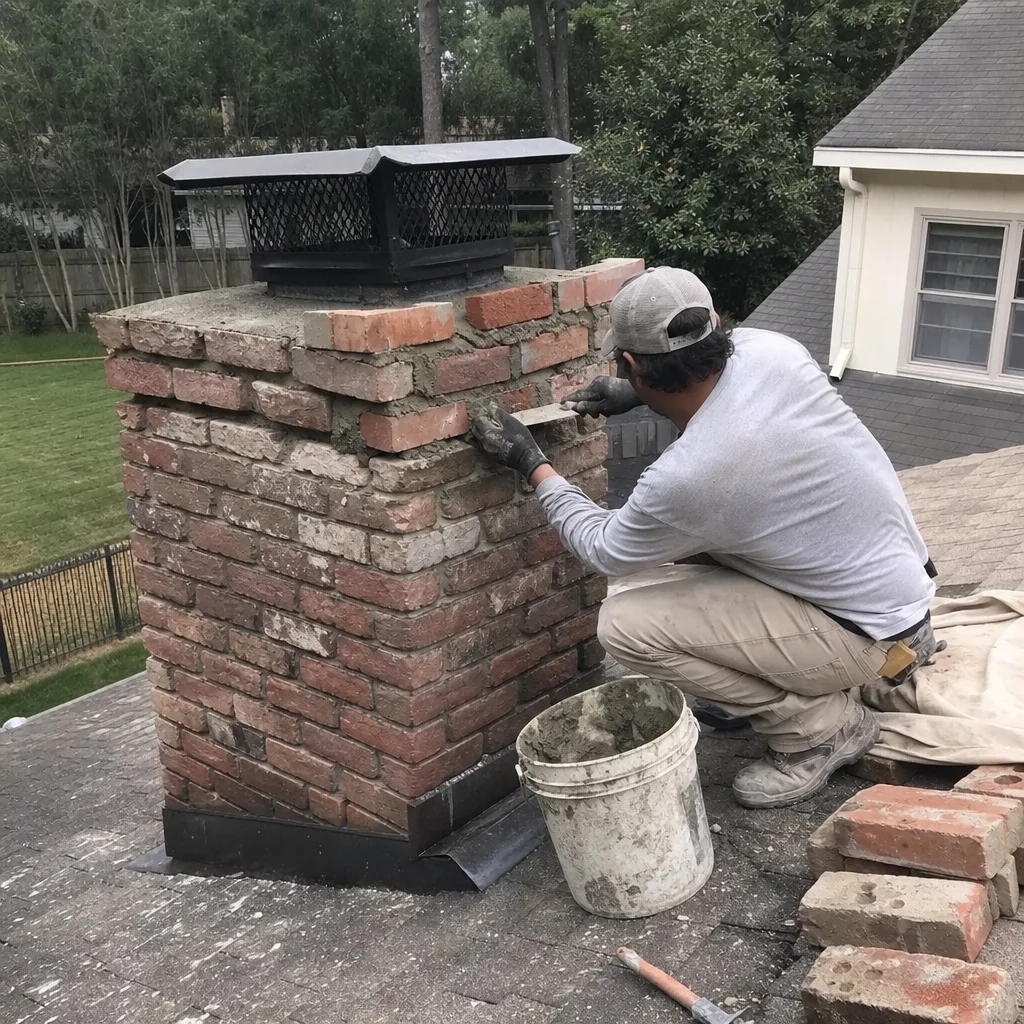
Not every company that advertises “chimney sweep” performs work that meets the National Fire Protection Association standard. NFPA 211 is the recognized standard for chimney construction, maintenance, and inspection in the United States. A sweep that meets this standard includes specific elements. You can verify compliance using only the paperwork left at your door.
Check for a written scope before work began. NFPA 211 requires that the technician document the condition found and the work to be performed before starting. A receipt generated after the truck is packed does not satisfy this. You should have received a written description of what was found during initial inspection and what cleaning or repair was recommended. Haven Standard Clause 1, H.A.V.E.N. “Have it in writing,” codifies this practice. We have delivered written prices before work starts on every one of our 38,000-plus jobs since 2009.
Confirm photo or video documentation of the flue interior. A flashlight look from below is not a flue inspection. NFPA 211 Level 2 requires a camera scan of the flue interior, with documentation of findings. The report should include images showing the flue walls, any creosote deposits, cracks, or gaps in the liner, and the condition of mortar joints. If your paperwork contains no images and no reference to camera inspection, the work did not meet Level 2 standard.
Verify the technician’s identification and credentials. The invoice or report should include a technician name, company license information, and ideally a license number. Background-checked, uniformed technicians should be identifiable. If your sweep arrived in an unmarked vehicle and left no identifying information, you have no recourse if problems develop.
Review the post-work documentation. After cleaning, the technician should document that the flue is clear of obstructions and creosote deposits, that the damper functions properly, and that no hazardous conditions were observed or that any observed hazards were communicated in writing. This is your proof of due diligence for insurance purposes.
Check for a written warranty or guarantee. The work should carry explicit warranty terms. Our 365-Day Done Right Promise is printed on every Emberly Chimney Cleaners Sandy Springs invoice. If your sweep offers no warranty, or a vague verbal assurance, that is a standard gap.
Common Mistakes to Avoid
- Assuming a clean firebox means a clean flue. The firebox is visible and easily brushed. Creosote accumulates in the flue, smoke chamber, and damper area where you cannot see it. A firebox that looks fine tells you nothing about flue condition.
- Burning pine or unseasoned wood because it is cheap and available. In Sandy Springs, fallen pine is common after storms. It burns fast, cool, and resinous, depositing creosote rapidly. Seasoned hardwood, burned hot, produces less creosote and more heat per cord.
- Ignoring water stains because they dry between rains. Water that enters through a cracked crown or failed flashing damages mortar from the inside. By the time exterior spalling is visible, interior damage is extensive. Address water entry at first observation.
- Scheduling sweeps based on calendar alone without observing burn frequency. NFPA 211 recommends inspection annually and cleaning when creosote reaches one-eighth inch. A homeowner who burns two fires monthly needs less frequent cleaning than one who burns daily. But the daily burner also notices performance changes sooner. Calibrate to your actual use, not a generic reminder.
- Accepting verbal estimates and post-work billing. In Sandy Springs’ competitive market, some operators lowball by phone, then discover “additional problems” with the truck running. A written price before work starts, with defined scope, prevents this. It is also Haven Standard Clause 1.
- Storing firewood against the house. This invites termites, which are active year-round in Sandy Springs, and traps moisture against foundation walls. Stack firewood at least 20 feet from structures, elevated 6 inches, with top cover only.
- Using the chimney as a vent for a gas appliance without professional evaluation. Gas water heaters and furnaces produce corrosive condensation that deteriorates flue liners designed for wood-burning temperatures. A liner suitable for wood may fail rapidly with gas exhaust. Separate flues or appropriate liner materials, such as DuraFlex AL29-4C for gas, are required.
When to Call a Professional
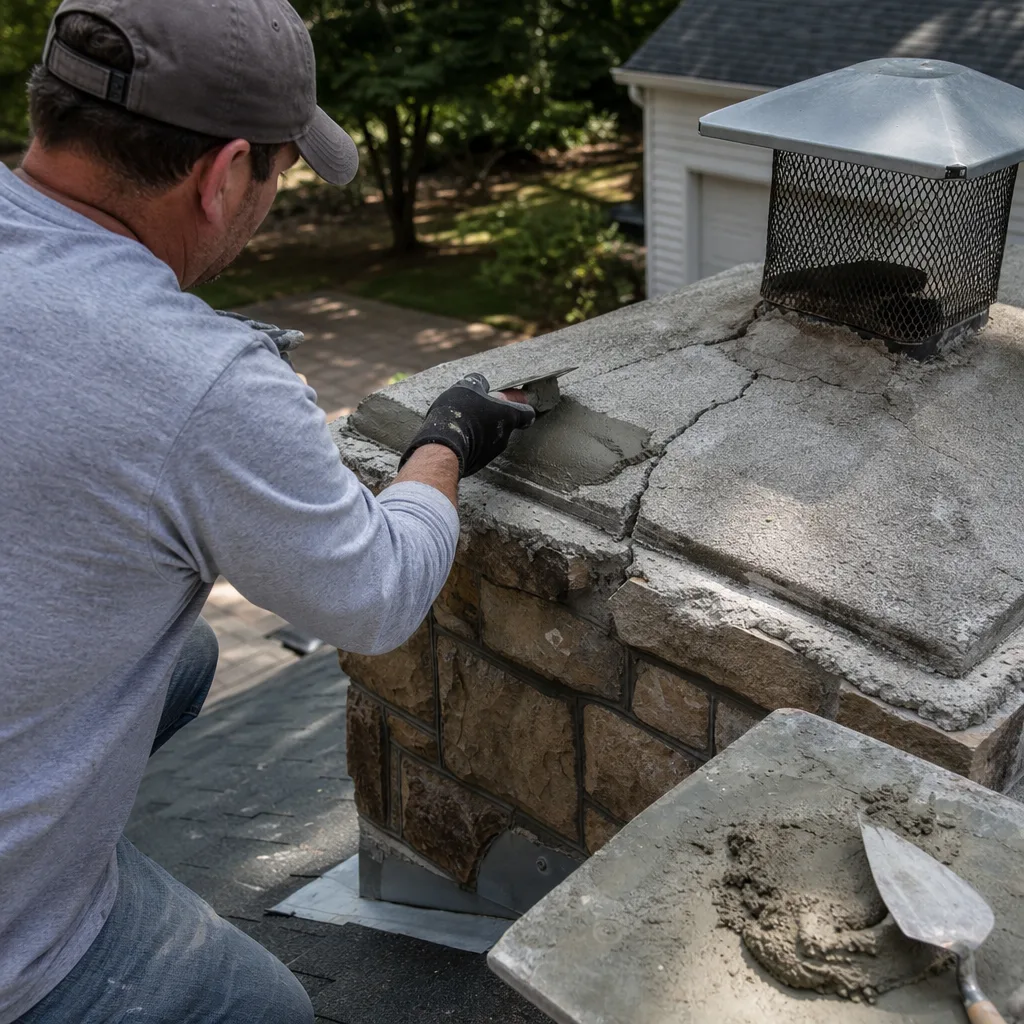
Call a professional sweep when you observe any of the three creosote signals described above, when your damper test reveals mechanical failure, when water entry is suspected, or when your documentation review shows your last sweep lacked NFPA 211 compliance. Call immediately if you experience a chimney fire, if bricks or mortar fall into the firebox, or if you smell gas near a gas log set.
Emberly Chimney Cleaners Sandy Springs offers free estimates in Sandy Springs. We perform NFPA 211 Level 2 inspections with camera documentation on every visit, provide written prices before any work starts, and back every job with our 365-Day Done Right Promise. Chimney Sweep in Sandy Springs is our core service, and we also handle Chimney Repair in Sandy Springs and Fireplace Services in Sandy Springs. Call (470) 480-0885 to schedule.
Frequently Asked Questions
A standard chimney sweep in Sandy Springs typically ranges from $175 to $325, depending on accessibility, flue condition, and whether the sweep includes a Level 2 camera inspection. Some companies quote a low base price and add charges for “heavy creosote” or roof access. We deliver a single written price before work starts that includes the camera scan and photo documentation. Call (470) 480-0885 for an exact quote. Estimates are free.
NFPA 211 recommends annual inspection and cleaning when creosote deposits exceed one-eighth inch. In Sandy Springs, where many homeowners burn sporadically on cool evenings rather than continuously through winter, the one-eighth inch threshold may take two seasons to reach. However, annual inspection remains essential because moisture intrusion, animal nesting, and liner deterioration occur regardless of burn frequency. Inspect yearly. Clean as needed based on measured deposit thickness, not calendar alone.
You need a new flue liner when inspection reveals cracks, gaps, or deterioration that allow combustion gases to reach combustible framing, or when the liner is improperly sized for your appliance. We do not recommend liner replacement without camera evidence you can see yourself. Many Sandy Springs homes built between 1960 and 1990 have unlined brick chimneys or clay tile liners that have cracked from thermal cycling. But some clay liners remain serviceable for decades. The determination requires documented inspection, not a flashlight guess. Our Free Second Opinion on any written estimate applies to liner recommendations specifically.
Skipped maintenance leads to three predictable outcomes: creosote accumulation to combustible levels, water intrusion causing structural deterioration, and undetected liner damage creating carbon monoxide or fire hazards. Chimney fires damage flue liners, which then fail to contain future fires. Water destroys mortar and rusts metal components. The cost of deferred maintenance is typically three to five times the cost of annual inspection and timely repair. In Sandy Springs’ humid climate, water damage accelerates particularly fast. Call (470) 480-0885 to schedule before problems compound.
Homeowners can perform the monthly exterior checks and damper tests described in this guide. Professional flue cleaning requires proper brushes sized to your flue diameter, a vacuum system to contain soot, and camera inspection to verify complete removal. More critically, roof work to access some chimneys involves genuine fall hazard. We do not recommend DIY flue cleaning. The risk of incomplete removal, damaged liner, or personal injury exceeds the cost of professional service. Our written price before work starts removes the uncertainty that drives some homeowners to attempt it themselves.
An NFPA 211 Level 2 inspection includes examination of accessible portions of the chimney exterior and interior, camera scan of the flue, inspection of the firebox, smoke chamber, damper, and hearth, and documentation of findings with photographs. At Emberly Chimney Cleaners Sandy Springs, every inspection also includes a written scope of any recommended work, a written price for that work, and a documented photo record delivered to you. This is Clause 4 of the Haven Standard, practiced continuously since 2009. Emberly Chimney Cleaners Sandy Springs home page has full service details.
The Bottom Line
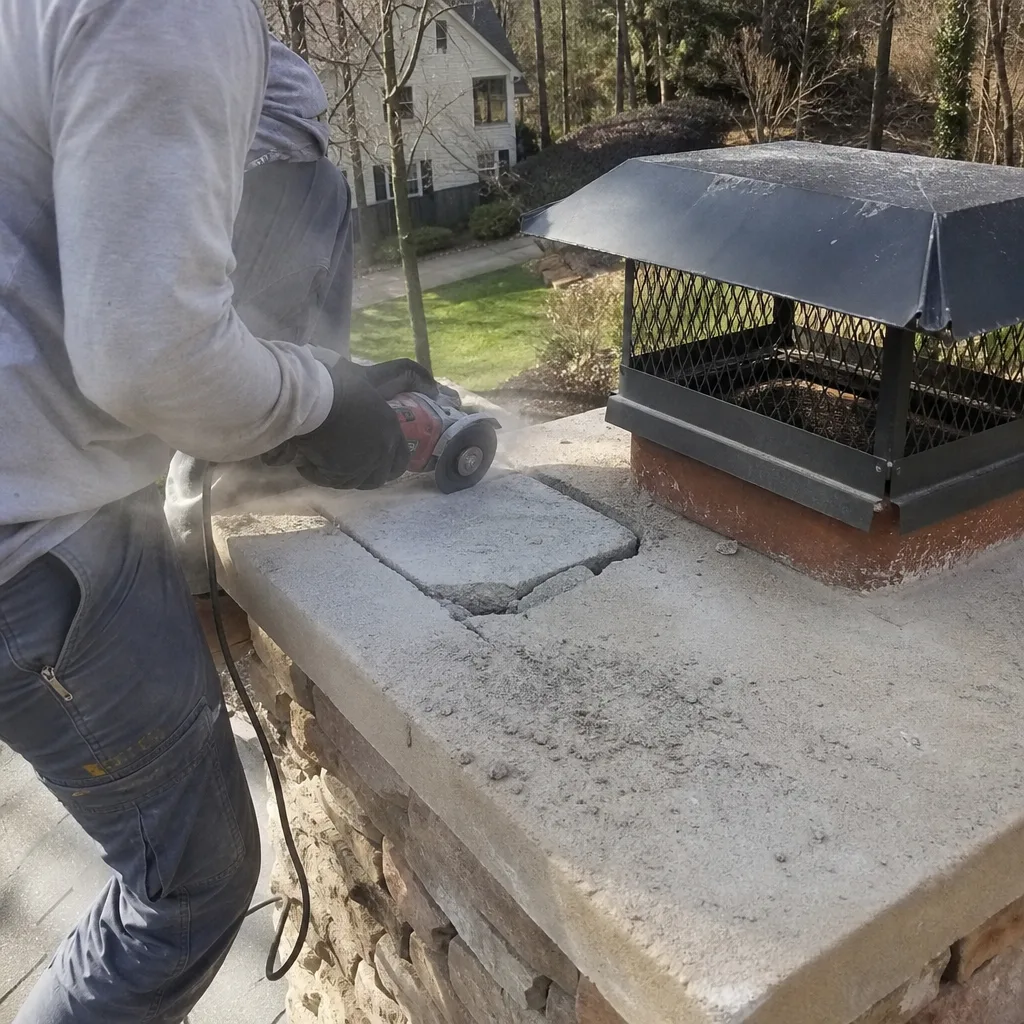
Effective chimney maintenance in Sandy Springs is not a calendar reminder. It is a set of specific observations you perform yourself, calibrated to our humid summers and mild winters, with clear thresholds for when professional intervention is necessary. Check your exterior monthly. Test your damper seasonally. Watch for the three creosote signals. Keep your documentation organized. And verify that any sweep you hire meets NFPA 211 standard with written proof, not verbal assurance. For more guides & resources, visit our blog. The homeowners who avoid chimney fires are not the ones who spend the most. They are the ones who notice earliest and act on what they see.
Written by Corrine Halstead, Owner at Emberly Chimney Cleaners Sandy Springs, serving Sandy Springs since 2009.