
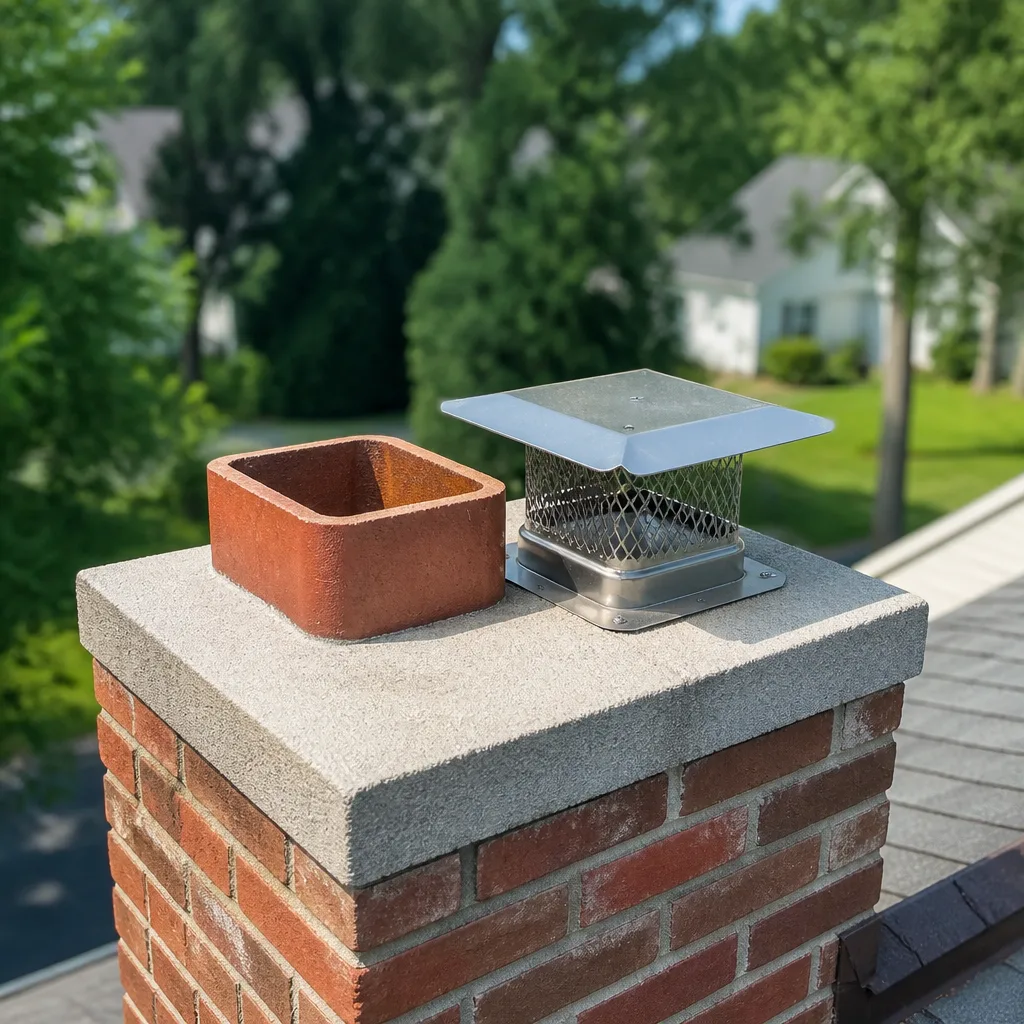
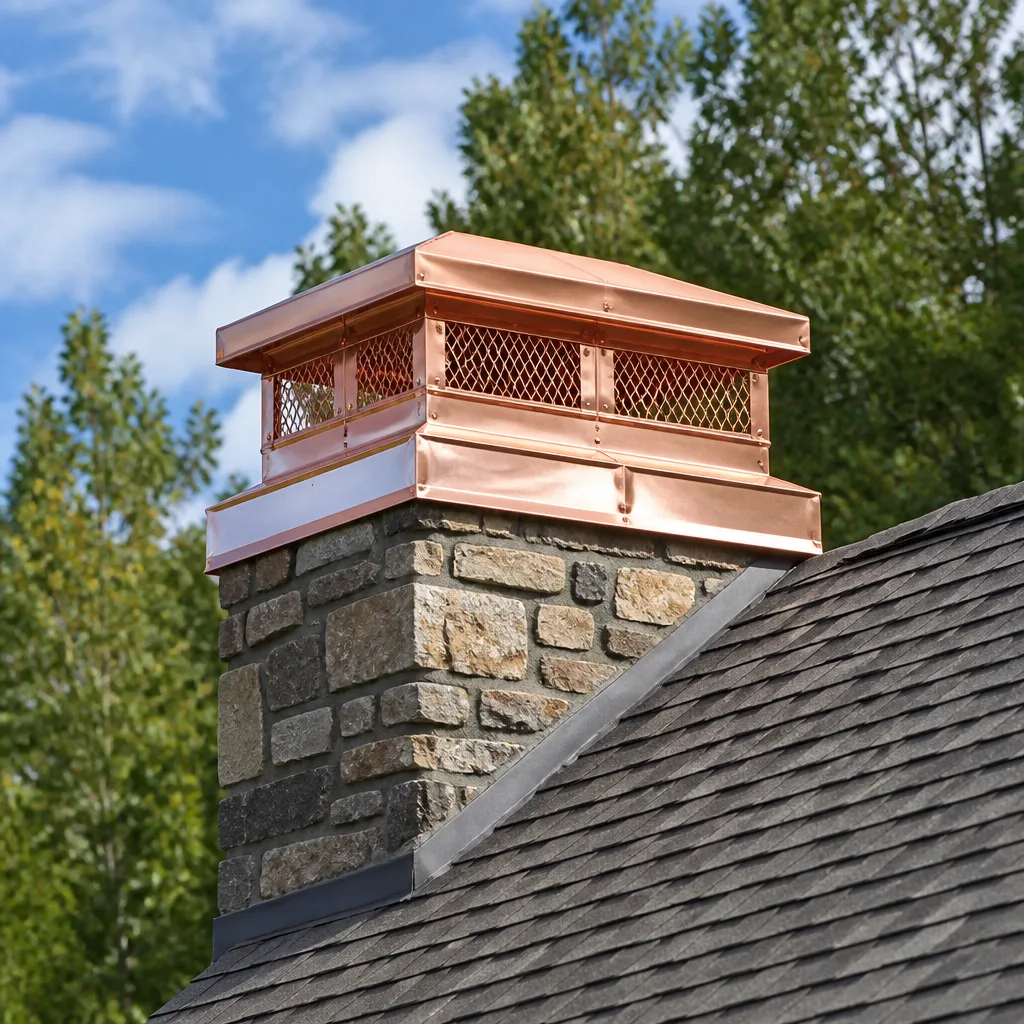
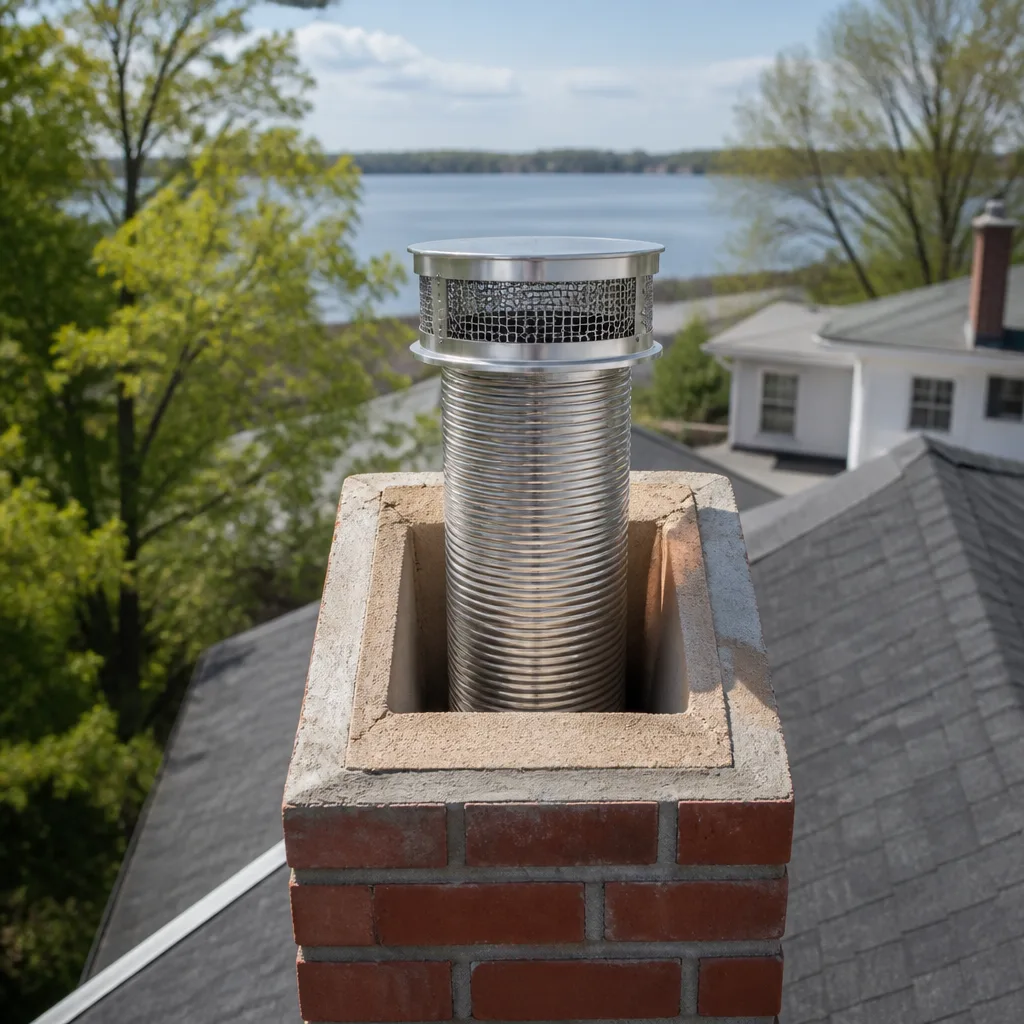
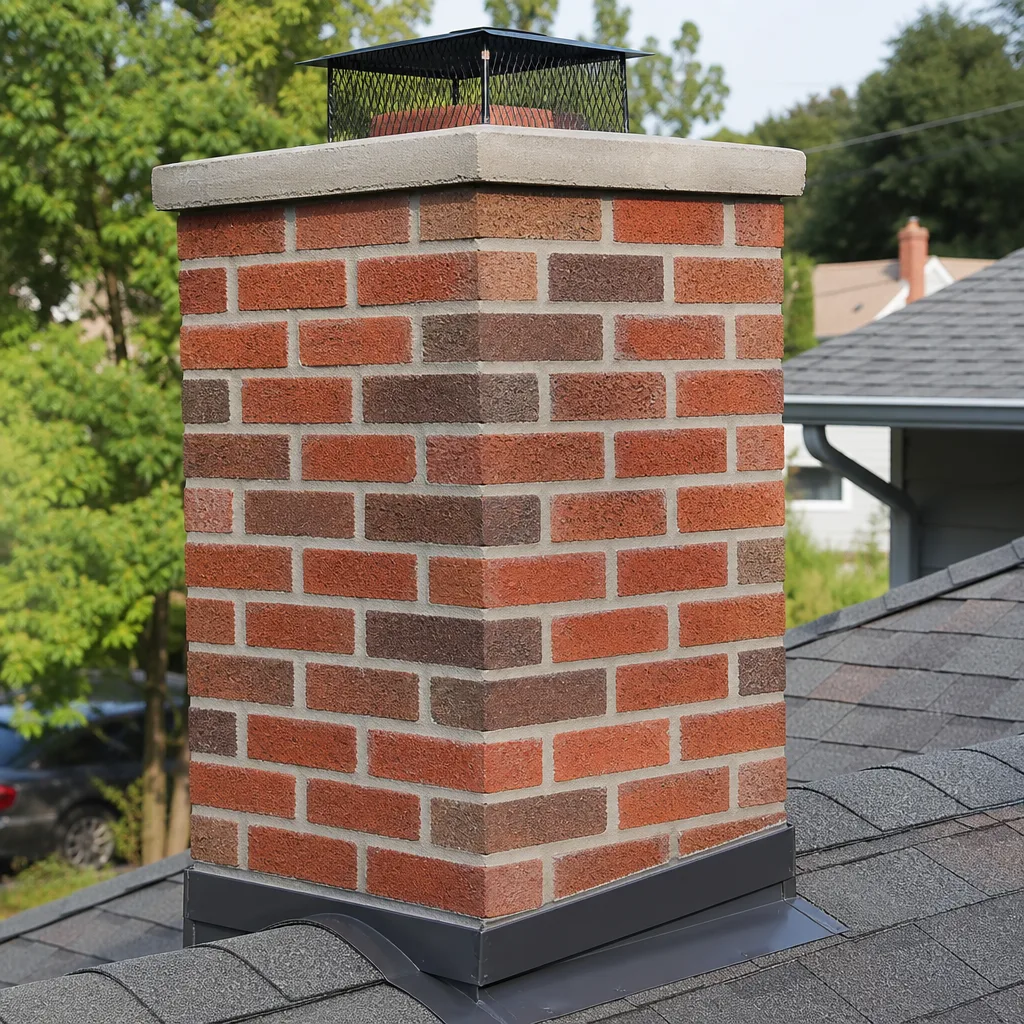
Level 1 sweep and inspection to the NFPA 211 annual standard - flue, crown, cap, and flashing checked and photographed
Chimney sweep logs do not sweep chimneys. They loosen some creosote - which then falls where a brush and vacuum still have to collect it.
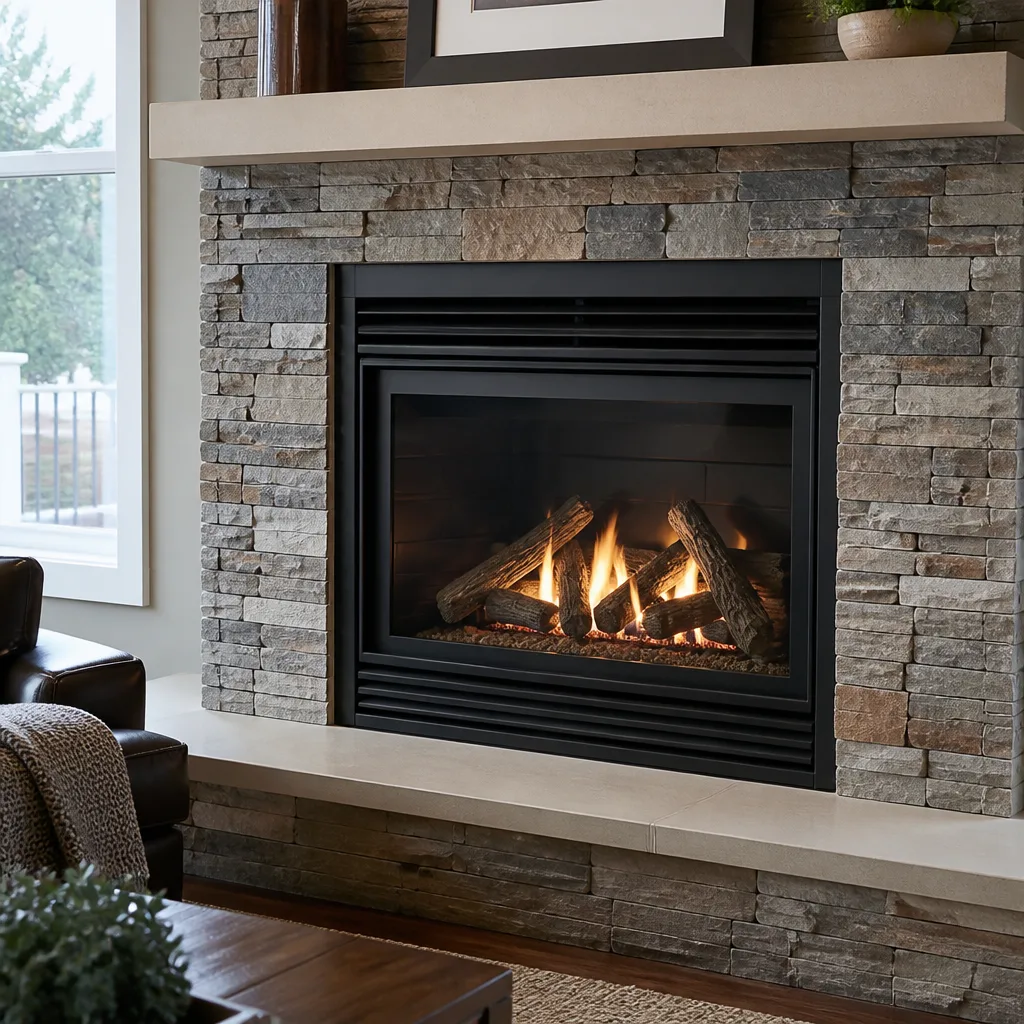
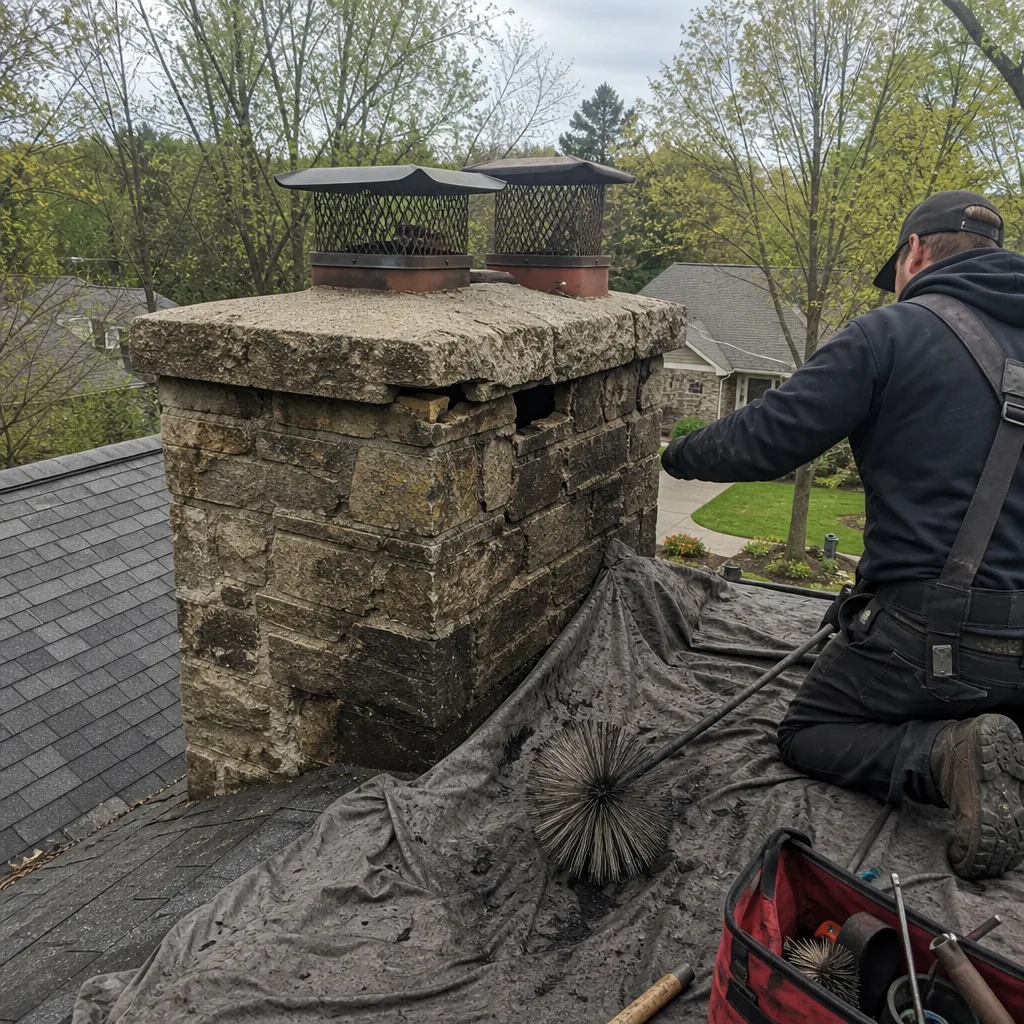 Before
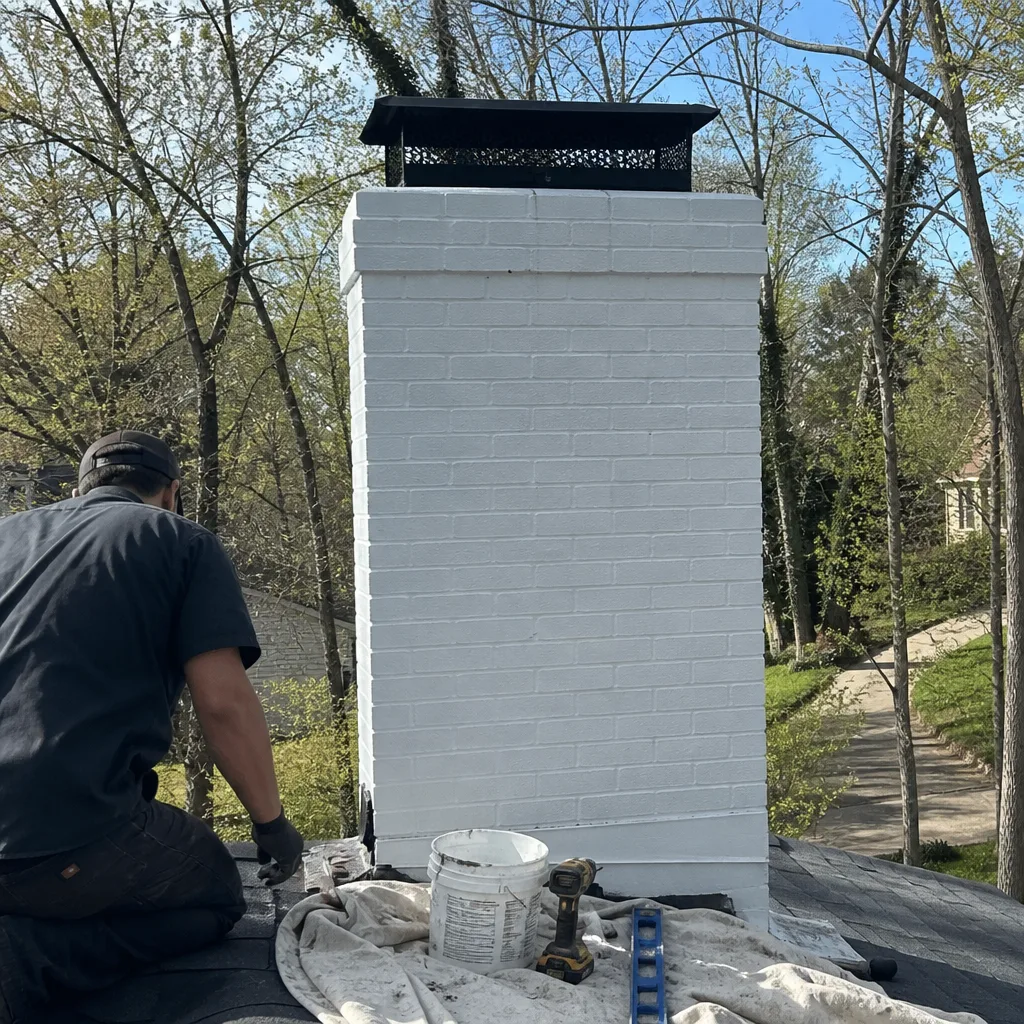 After
After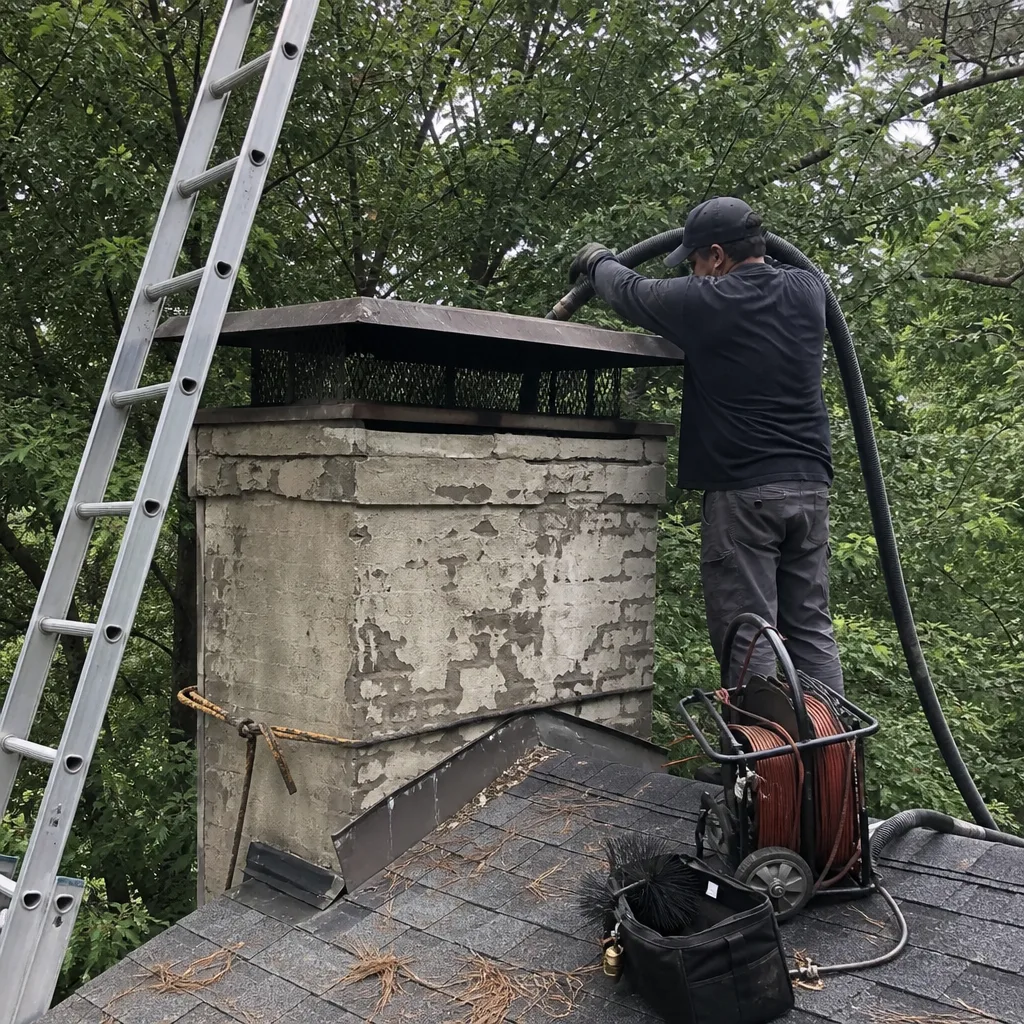 Before
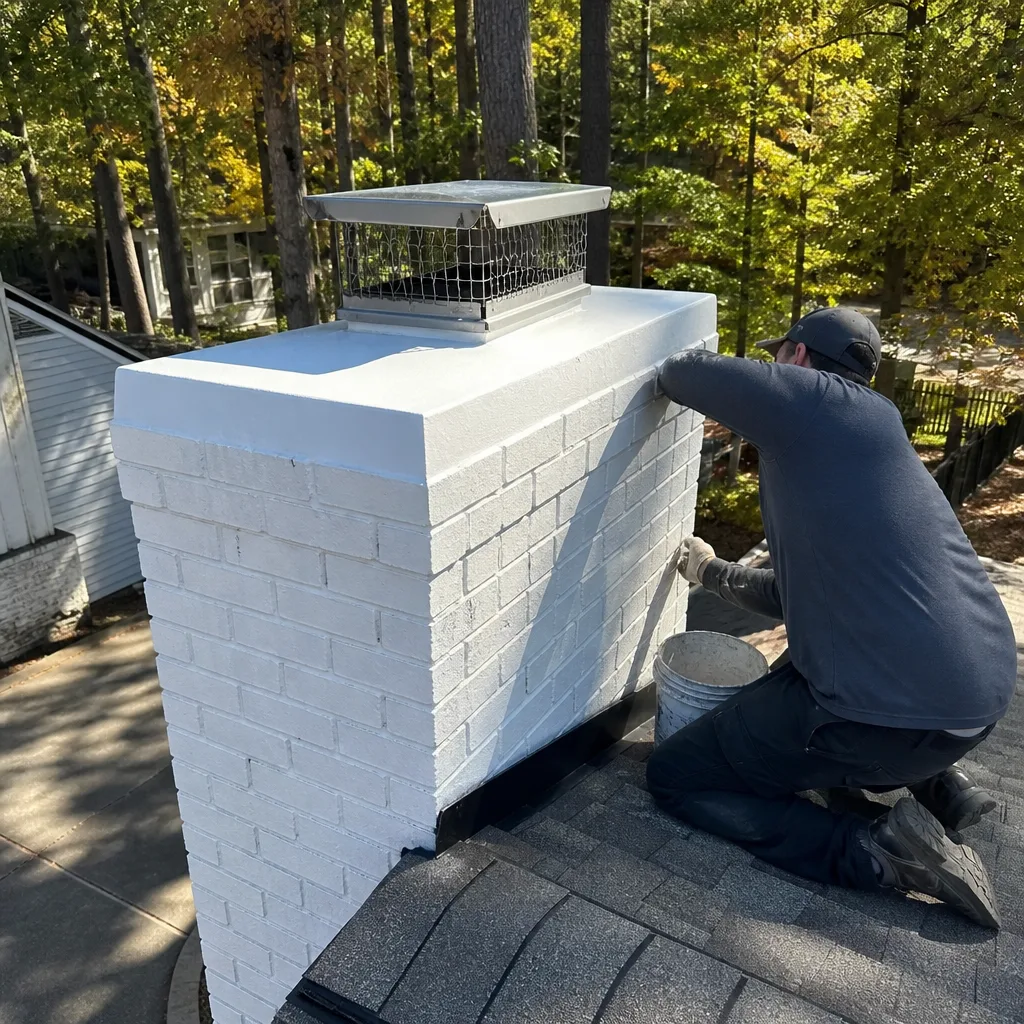 After
AfterSoot Removal in Sandy Springs, GA
For details on How Much Does Chimney Cleaning & Sweep Cost? (2026 Price Guide) - Sandy Springs, GA, soot removal in Sandy Springs typically runs $149 to $349, depending on how much buildup is present, how accessible the flue is, and whether the fireplace has gone a season or two without service. Most appointments are completed in a single visit, with a written price confirmed before the technician touches anything. If you’d rather talk it through first, call us at (470) 480-0885 – a live person answers, day or night.
Soot is the fine, powdery black residue that forms when wood or gas burns without complete combustion. It sounds minor, and a thin layer of it is normal. The problem is that soot builds up steadily, and once it starts combining with moisture inside the flue, it becomes mildly acidic – eating into mortar joints, degrading the flue liner, and eventually staining masonry that costs real money to restore. Left alone long enough, it also becomes a base layer on which creosote accumulates, and creosote is what starts chimney fires.
Emberly Chimney Cleaners Sandy Springs has completed more than 38,000 chimney inspections and cleanings since 2009. Soot removal is part of every standard chimney cleaning we do, documented with a photo record on completion under Clause 4 of the Haven Standard. This page covers what soot removal involves, what it costs in Sandy Springs, and how our process works. For the full picture of what a cleaning appointment includes, see our Chimney Cleaning & Sweep in Sandy Springs page.
When You Need Soot Removal
Soot doesn’t always announce itself with an obvious smell or visible stain. Sometimes the signal is subtle. Here’s what tends to send Sandy Springs homeowners our way:
- A persistent smoky smell in the house, especially in humid months. Sandy Springs summers are genuinely humid, and moisture causes soot deposits to off-gas more aggressively. If your living room smells like a campfire in July and no one has used the fireplace in weeks, accumulated soot is usually the cause.
- Black staining around the fireplace opening or on the firebox walls. A light gray dust coat on the firebox floor is normal. Oily black streaks creeping up the throat or spreading onto surrounding brick mean soot is moving – and that usually points to a draft problem compounding the buildup.
- It’s been more than a year since the chimney was last cleaned. The Chimney Safety Institute of America recommends annual cleaning for any actively used fireplace. In Sandy Springs neighborhoods like Riverside and Sandy Springs Estates, where older homes often have original clay-tile liners, even moderate soot accumulation adds moisture damage risk during the freeze-thaw window we get in January and February.
- You’ve moved into a home and have no inspection record. A surprising number of buyers in Sandy Springs – particularly in the Abernathy Road corridor and north of Hammond Drive – inherit fireplaces with no documented cleaning history. Soot and light creosote deposits can sit for years inside a chimney that “looked fine” during the home inspection flashlight walkthrough.
- Your gas fireplace pilot area is visibly dark or sooty. Gas burns cleaner than wood, but it still produces soot, especially if the burner is slightly misaligned or the logs are repositioned incorrectly. A sooty gas fireplace is also a flag for incomplete combustion, which has carbon monoxide implications worth taking seriously.
- Your chimney sweep found Class I creosote deposits on a prior visit. Class I is the powdery, loose form – the easiest to remove and the safest stage. If a previous report noted it and no cleaning followed, that Class I is now older and potentially transitioning toward the harder, tar-like Class II. Earlier is always easier and less expensive.
Our Soot Removal Process
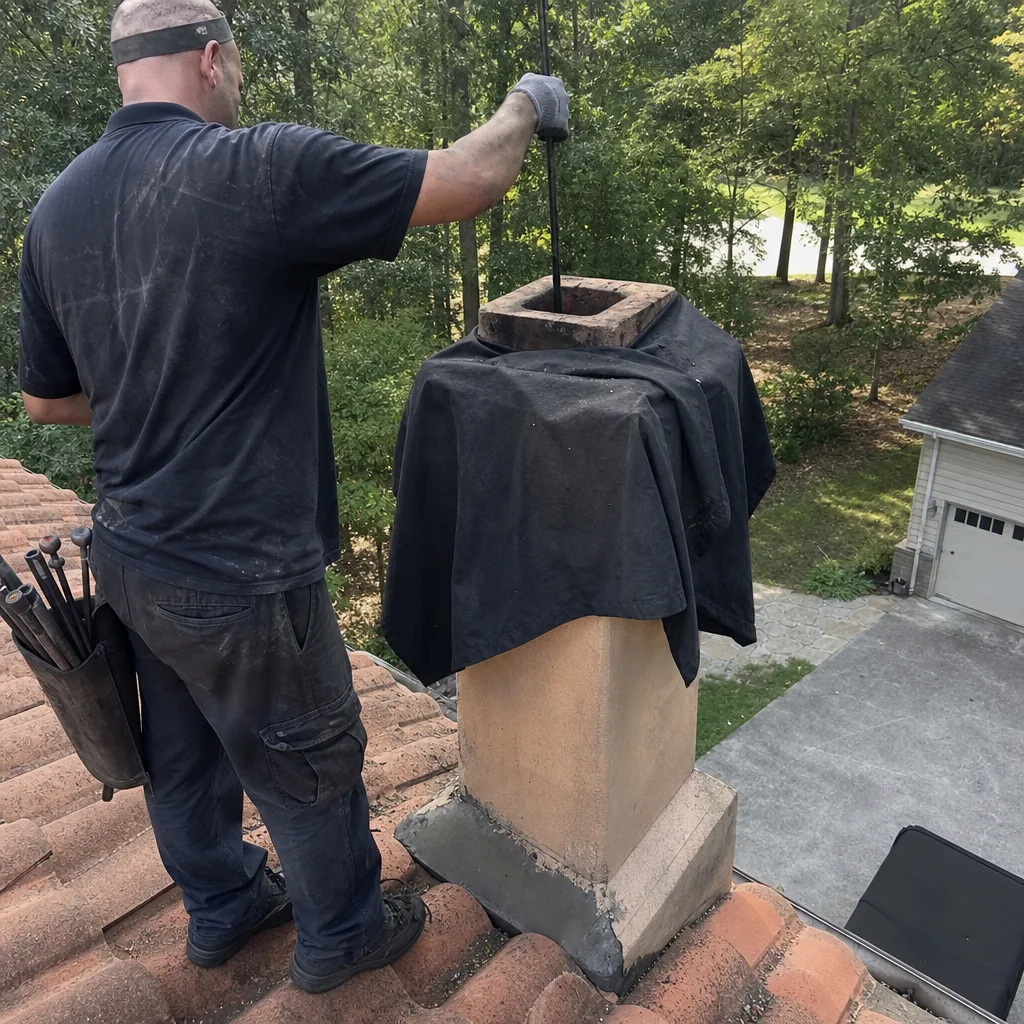
Every soot removal job at Emberly Chimney Cleaners Sandy Springs follows the same documented sequence. Nothing is improvised, and nothing starts until you have a written price in hand.
- Written price, scope, and warranty before any work begins. This is Haven Standard Clause 1 – H.A.V.E.N. stands for “Have it in writing” as its first principle. Your technician presents a written quote covering exactly what will be cleaned, what tools will be used, and what the 365-Day Done Right Promise covers on this specific job. You approve it. Work starts. There are no surprises on the invoice.
- Setup and containment. Soot is fine and travels. Before anything goes into the firebox, we lay drop cloths, seal the fireplace opening with a dust barrier, and set up a HEPA-filtered vacuum system. Sandy Springs homes often have open floor plans where the living area connects directly to the fireplace wall – containment isn’t optional, it’s the only way to leave the house cleaner than we found it.
- Camera inspection of the flue liner. We run a camera down the flue before we start brushing. This gives us a baseline image of the liner condition, lets us identify any cracks or spalling in the clay tile, and confirms where the soot deposits are concentrated. NFPA 211 Level 2 inspection standards call for this documentation – it’s not an upsell, it’s how we know what we’re actually cleaning and what we’re going to show you when we’re done.
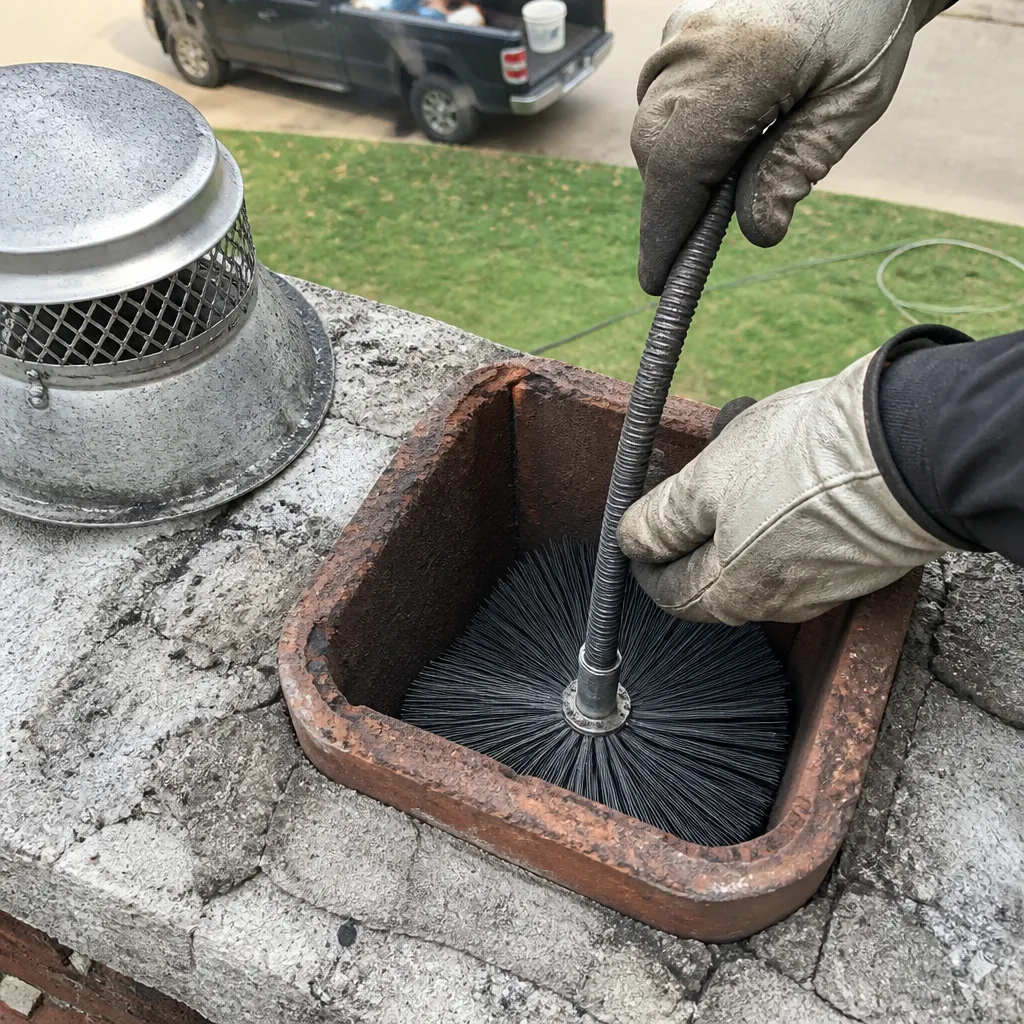
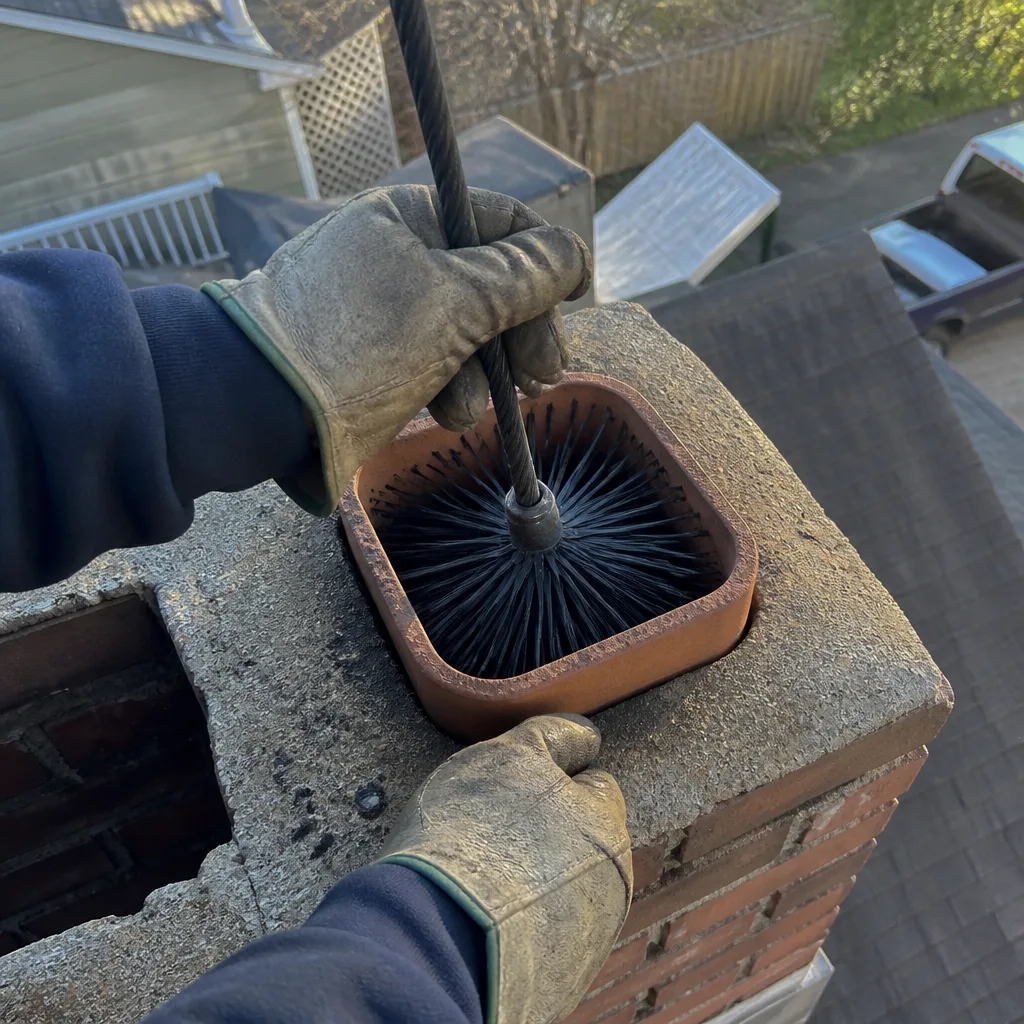
- Systematic brush-and-vacuum cleaning from crown to firebox. Using chimney brushes sized to your specific flue dimensions (round, square, or rectangular – older Sandy Springs homes frequently have rectangular terra cotta tile liners), we work methodically from the top of the flue downward, with continuous vacuum suction pulling dislodged soot into the collection system rather than letting it settle into the room. For heavier soot deposits, we use rotary cleaning systems with poly or wire brush heads, sourced through tools and materials from suppliers like Copperfield and Olympia Chimney, which is part of how we keep pricing honest.
- Smoke chamber and smoke shelf cleaning. The smoke shelf – the horizontal ledge just above the damper – collects more soot than almost any other part of the system because it catches falling debris from the flue above. A partially cleaned chimney that skips the smoke chamber is a chimney that’s still dirty in the place that matters most for draft performance. We don’t skip it.
- Documented photo record and written summary. Under Clause 4 of the Haven Standard, every job ends with a documented photo record. You receive images of the flue liner before and after cleaning, the smoke chamber condition, the damper, and the crown. If the camera found anything during the pre-clean inspection – a cracked tile, deteriorating mortar joints, a missing or damaged cap – it goes into a written summary with plain-language description and, if a repair is warranted, a separate written quote. Nothing is added to the bill without your approval.
BeforeAfterSoot Removal Pricing in Sandy Springs
Soot removal in Sandy Springs runs $149 to $349 for most residential fireplaces. The range reflects real variables – not vague “it depends” language, but specific factors your technician can assess on arrival and price in writing before starting.
| Scenario | Typical Price Range |
|---|---|
| Standard wood-burning fireplace, light soot (annual service) | $149 – $199 |
| Wood-burning fireplace, moderate soot buildup (2-3 seasons without cleaning) | $199 – $279 |
| Heavy soot with early creosote transition (Class I to Class II) | $249 – $349 |
| Gas fireplace soot cleaning | $149 – $219 |
| Two-sided or see-through fireplace (common in Sandy Springs new builds) | Add $75 – $125 |
What moves the number up: significant buildup in the smoke chamber, restricted flue access due to a narrow or offset liner, or soot that has combined with moisture into a harder, stickier deposit that takes longer to break down. What keeps the number down: regular Annual Sweep service, a clear straight flue, and a system where the damper and cleanout door are in good working condition.
Every estimate is free. If you have a written quote from another company, bring it to us for a free second opinion – we’ll review it line by line and tell you exactly what it covers and what it doesn’t. Call (470) 480-0885 to schedule.
FAQs – Soot Removal
Is soot removal the same thing as a chimney sweep?
Soot removal is one part of our Chimney Cleaning & Sweep services, but a full sweep covers more. Soot removal specifically addresses the fine carbon deposits left by combustion, while a complete chimney cleaning also covers creosote deposits, smoke chamber debris, and inspection of the liner, crown, cap, and damper. At Emberly Chimney Cleaners Sandy Springs, soot removal is always included as part of our standard cleaning – it’s not a separate line-item add-on. If your chimney has only minor buildup and was cleaned recently, a focused soot removal visit may be all that’s needed. Your technician will assess it and price it honestly before starting. Call (470) 480-0885 and we’ll help you figure out which scope applies to your situation.
How often does a Sandy Springs fireplace need soot removed?
For a wood-burning fireplace used regularly through the fall and winter season, once a year is the right interval – typically spring or early fall, before the next burning season starts. Sandy Springs gets enough cold weather between November and February that active fireplaces accumulate meaningful deposits in a single season. Gas fireplaces accumulate soot more slowly, but still warrant cleaning every one to two years, especially if you notice discoloration around the burner or a change in flame appearance. If the fireplace hasn’t been cleaned in over two years, assume soot has combined with moisture and schedule sooner rather than later – the longer it sits, the harder and more acidic it gets.
Can I remove soot myself, or does it require a professional?
Surface soot on a firebox wall – the area you can see and reach – can be cleaned with a dry chemical sponge or chimney cleaner product without much risk. The firebox interior is accessible and the cleaning method is straightforward. What you can’t safely or effectively clean yourself is the flue liner, smoke chamber, or smoke shelf. Those areas require brushes sized to your exact flue dimensions, proper vacuum containment to prevent soot from spreading through the house, and a camera to confirm the liner condition before and after. Attempting to brush a flue without proper containment typically results in fine soot coating everything in the room. And without a camera, there’s no way to confirm the liner is actually clean or to catch a crack that turns a soot problem into a liner problem. That’s where professional service earns its cost.
What happens if soot is left too long without cleaning?
Soot left in place does two things over time: it absorbs moisture, which makes it mildly acidic, and it provides a surface for creosote to bond to and harden. Acidic soot eats into mortar joints and clay tile liners – in Sandy Springs, where we get freeze-thaw cycles in January and February, moisture in the liner expands and contracts and accelerates that breakdown. Once soot transitions into Class II or Class III creosote, the cleaning cost increases significantly and the fire risk increases substantially. A chimney fire from heavy creosote burns at temperatures that can crack a liner, char the surrounding framing, and require a full liner replacement – costs that typically run $2,000 to $5,000 or more. Annual cleaning at $149 to $199 is the math that prevents that outcome.
Why Sandy Springs Homeowners Call Emberly
Sandy Springs is a city with a wide range of housing stock – mid-century ranches near Hammond Drive, late 1990s construction around the Perimeter, and newer builds in gated communities off Roswell Road. The chimney types vary just as much: rectangular clay tile liners in older homes, stainless steel liner inserts in renovated ones, and decorative gas fireplaces in newer builds that look clean until you look inside with a camera. One standard flashlight inspection doesn’t tell the same story across all of them.
The camera-scan documentation practice that Emberly Chimney Cleaners built into every visit starting in 2009 – which became Clause 4 of the Haven Standard – exists precisely because what you can’t see can still cause a problem. Soot and early creosote accumulation in the smoke chamber or upper flue are invisible from the firebox floor. The photo record we deliver at the end of every visit is the documentation that lets you know what was found, what was cleaned, and what the liner looked like afterward. It’s also the record your homeowner’s insurance may ask for if there’s ever a claim.
Corrine Halstead leads our team in Sandy Springs. Every technician is background-checked, arrives in uniform, and sends you a text when they’re on the way. You don’t get a different person each time and then a surprise invoice when the job is done. You get a written price before work starts, a photo record when it’s finished, and a 365-Day Done Right Promise that covers the work if anything isn’t right.
If you’d like to see how our full cleaning service is structured, our home page has an overview of everything we cover. For the complete scope of what a cleaning visit includes beyond soot removal, the Chimney Cleaning & Sweep in Sandy Springs page covers it in detail.
Key Takeaways
- Soot removal in Sandy Springs runs $149 to $349 depending on buildup level, flue access, and fireplace type – written price confirmed before work starts, always.
- Annual cleaning prevents soot from transitioning into harder, more expensive creosote deposits and protects clay tile liners from moisture-driven acid damage.
- Every visit includes a camera scan of the flue liner before and after cleaning, plus a documented photo record – standard under Haven Standard Clause 4, not an upsell.
- The 365-Day Done Right Promise covers every job: if it’s not done right, we make it right.
- Free second opinion on any written competitor estimate – call (470) 480-0885.
- Live phone support, 24 hours a day, 7 days a week – not a voicemail.
Ready to schedule Chimney Cleaning & Sweep Near Me in Sandy Springs, GA or just want to know what your fireplace needs before committing to anything? Call (470) 480-0885. A live person picks up, you’ll have a written price before anyone starts, and the estimate is free.
Written by Corrine Halstead, Owner at Emberly Chimney Cleaners Sandy Springs, serving Sandy Springs.