
Level 1 sweep and inspection to the NFPA 211 annual standard - flue, crown, cap, and flashing checked and photographed
Chimney sweep logs do not sweep chimneys. They loosen some creosote - which then falls where a brush and vacuum still have to collect it.
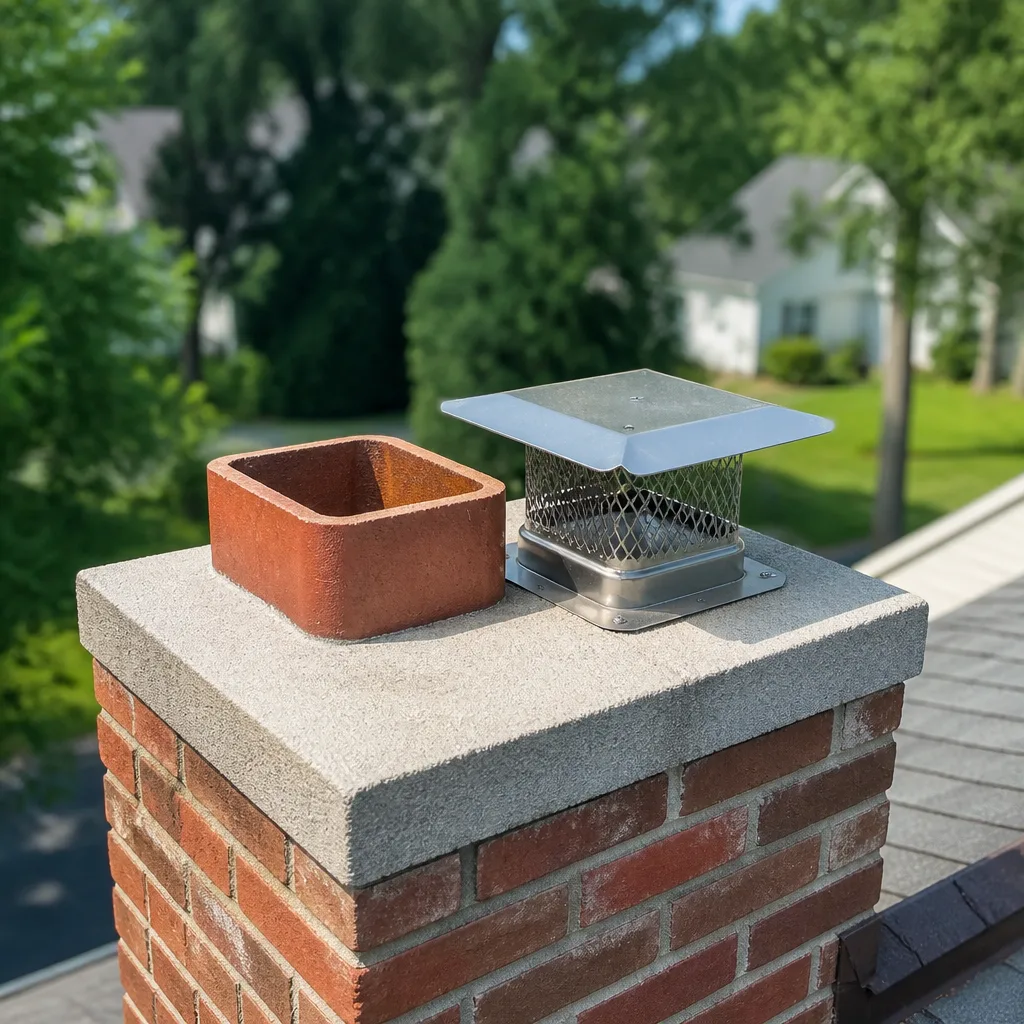
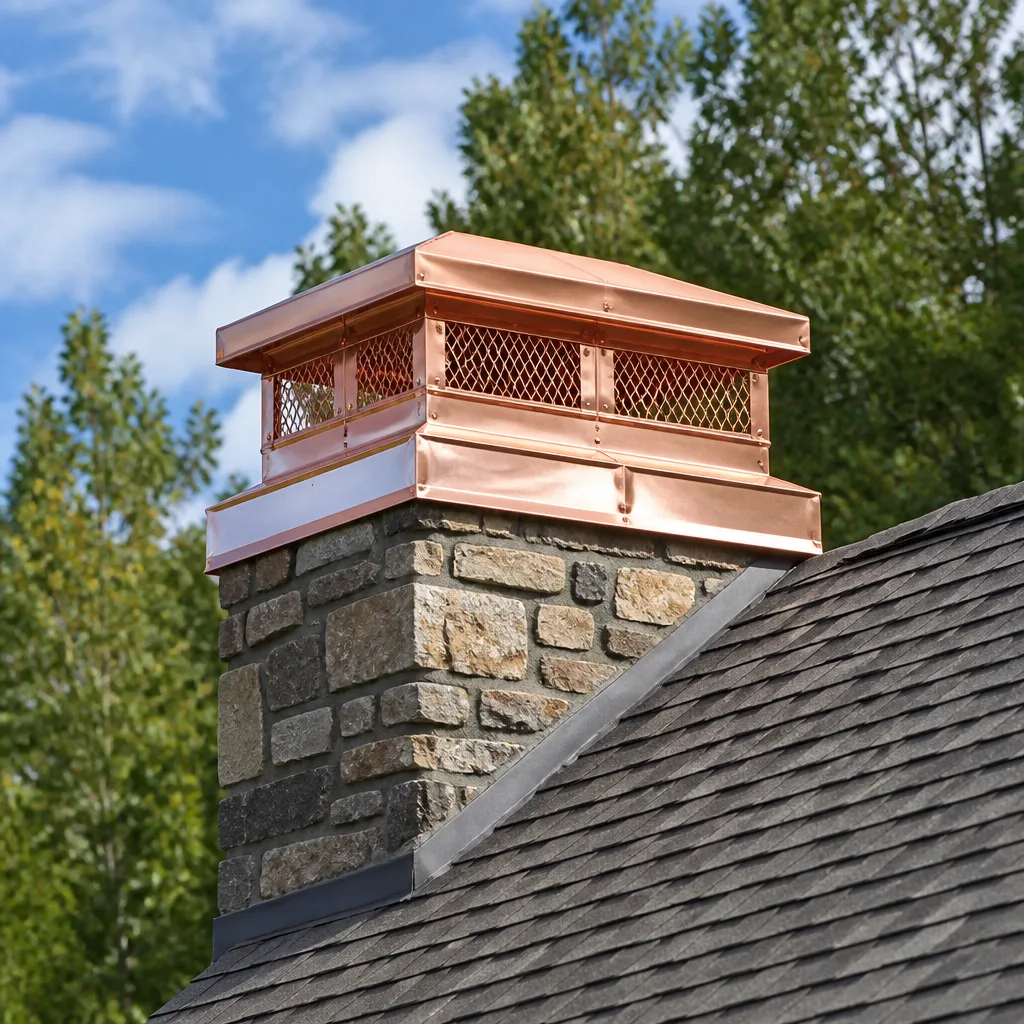
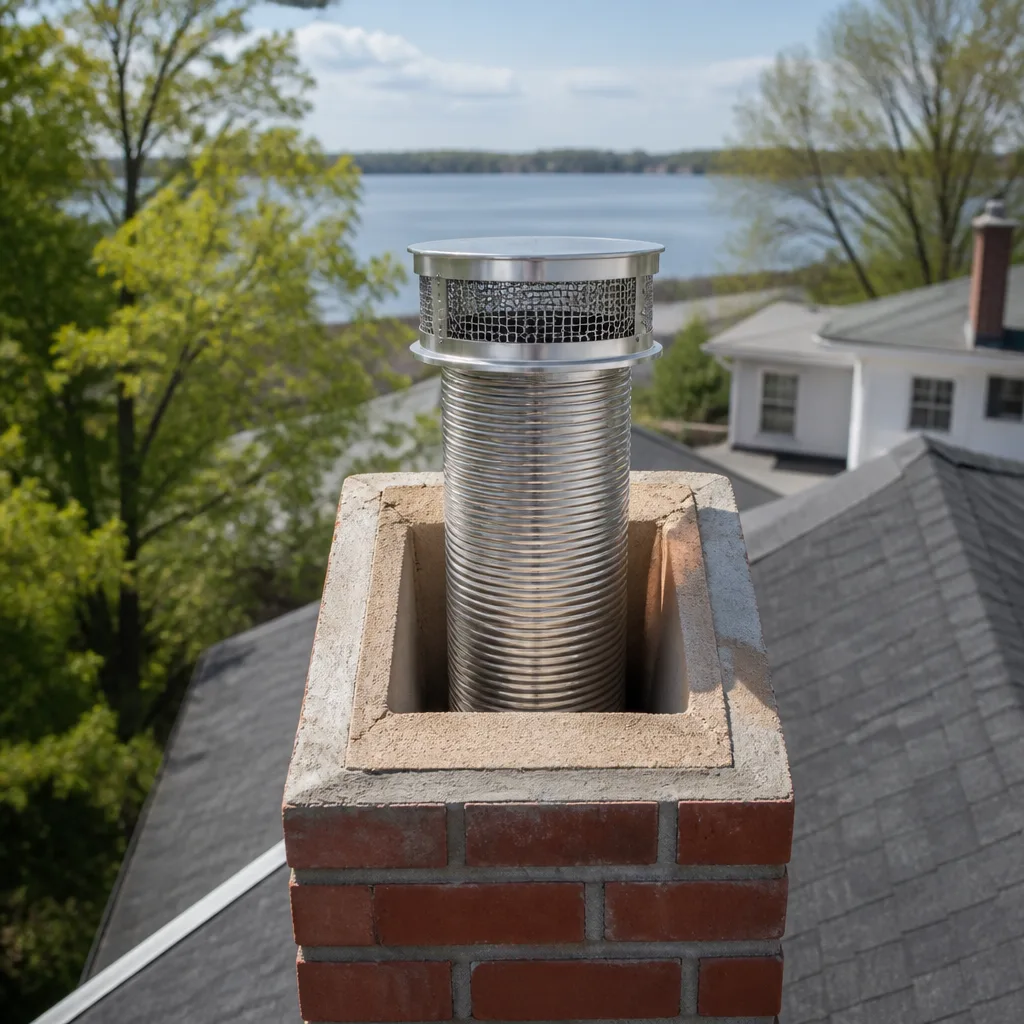
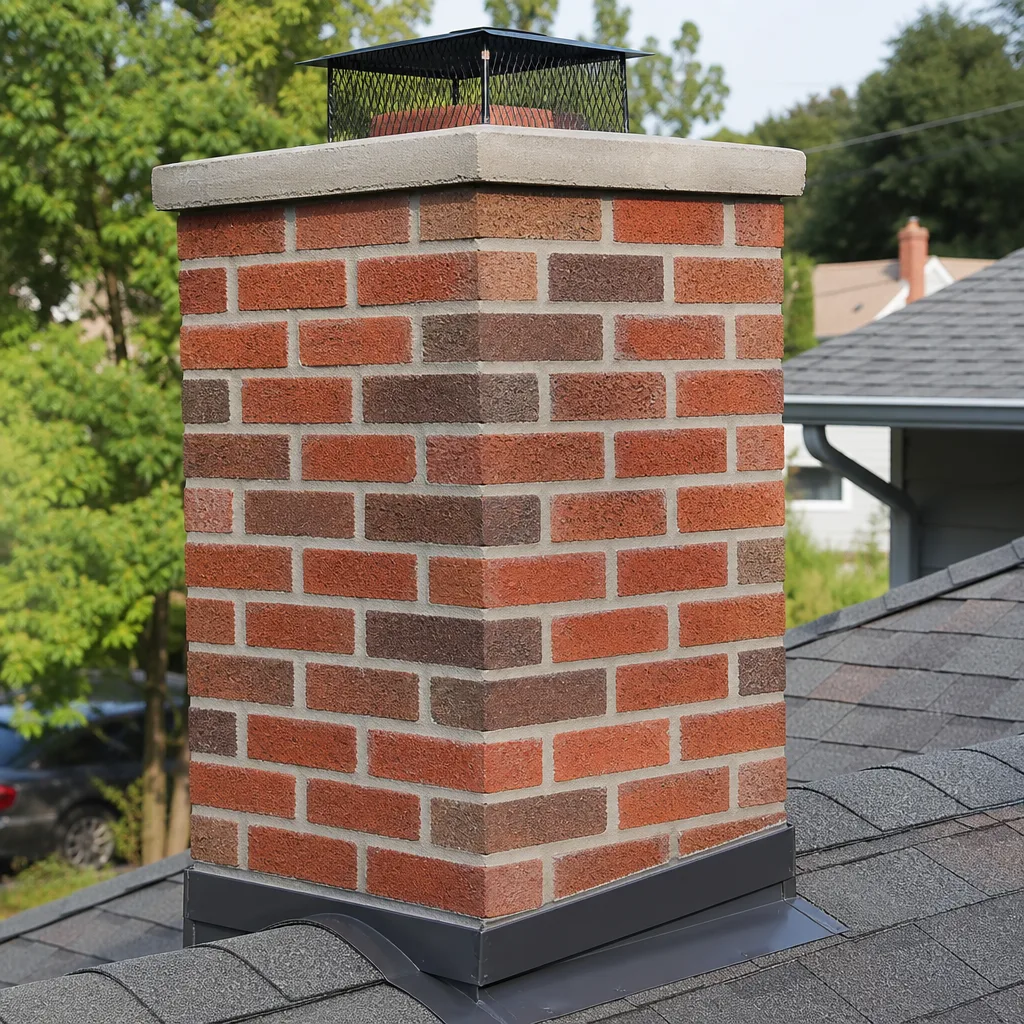
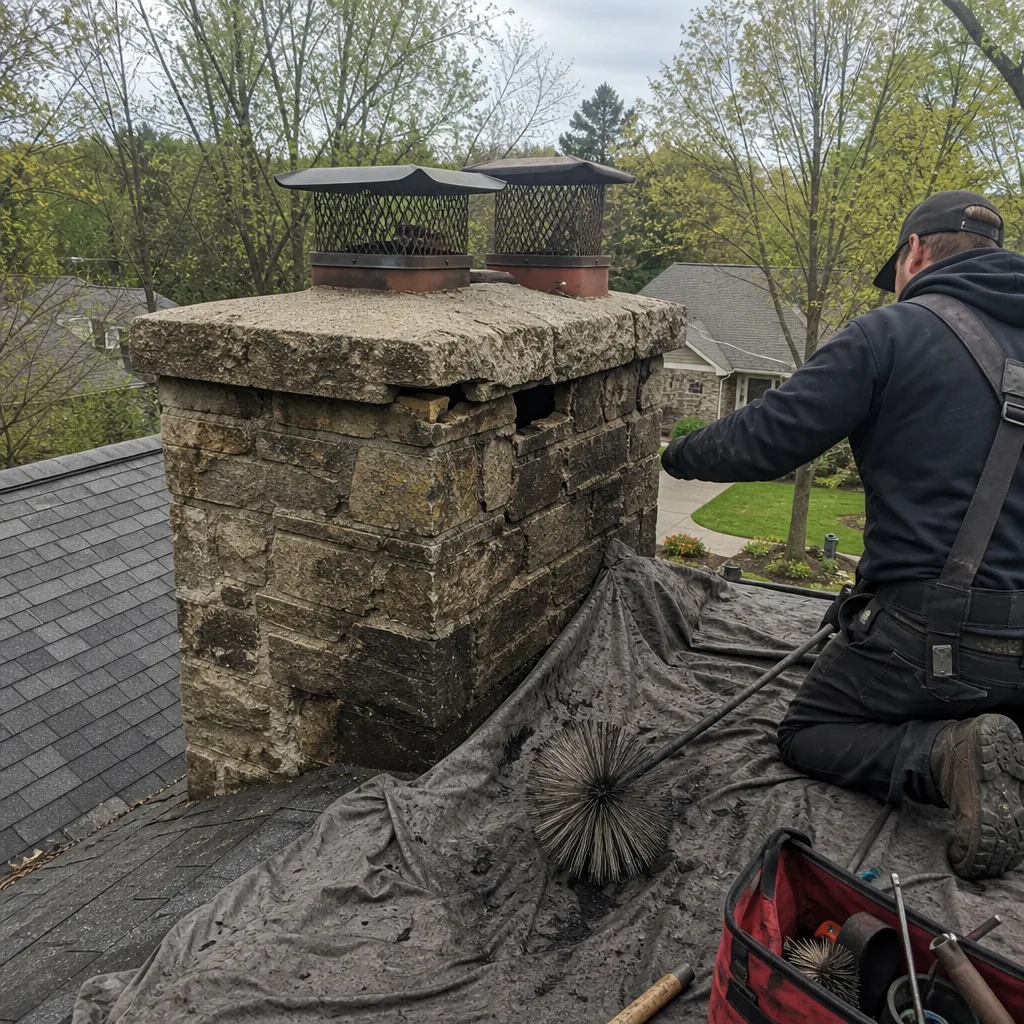 Before
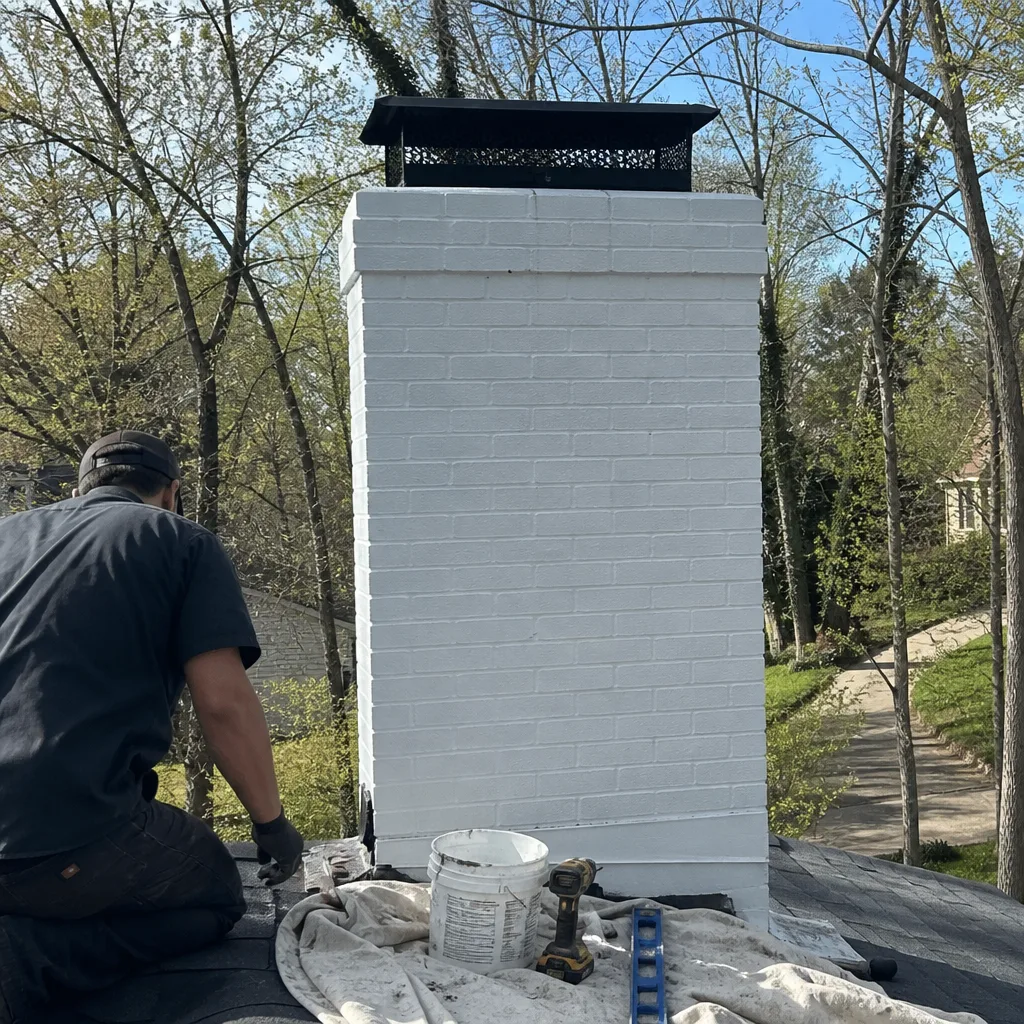 After
After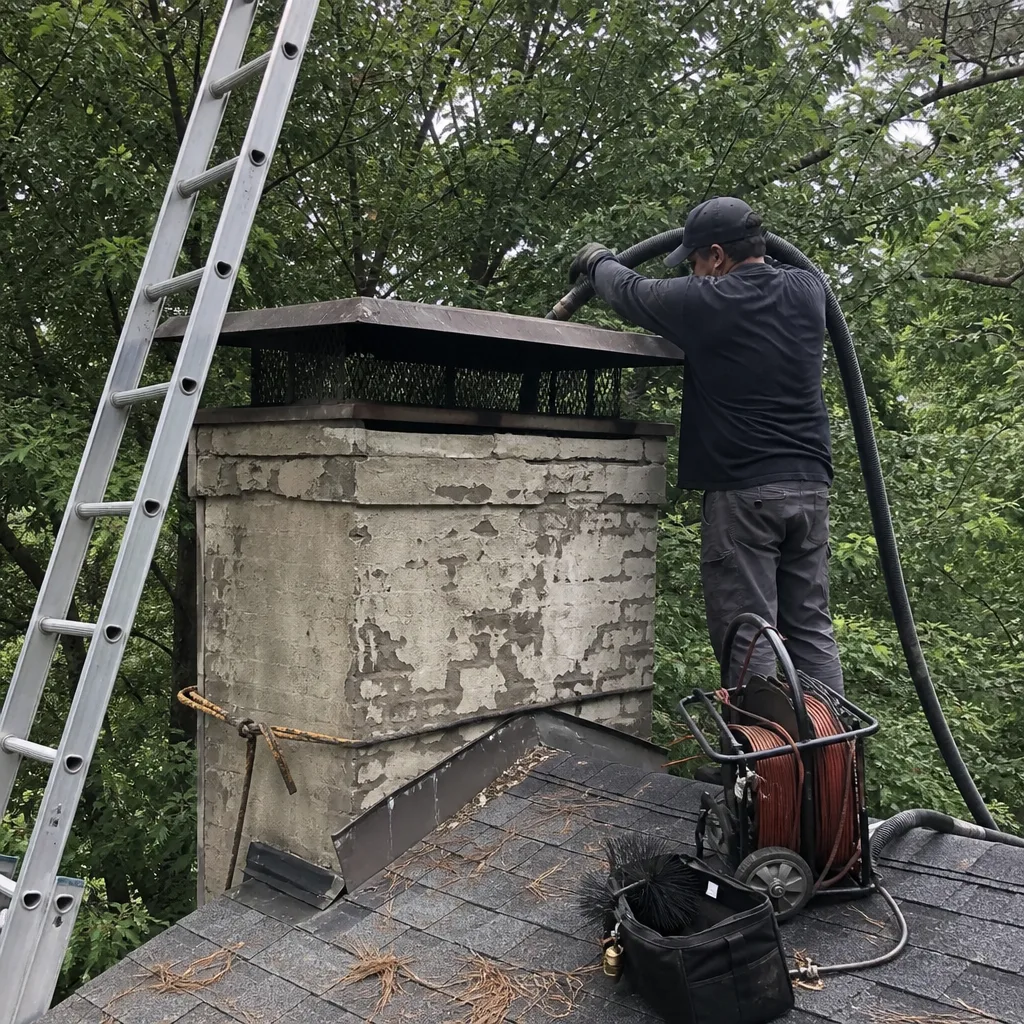 Before
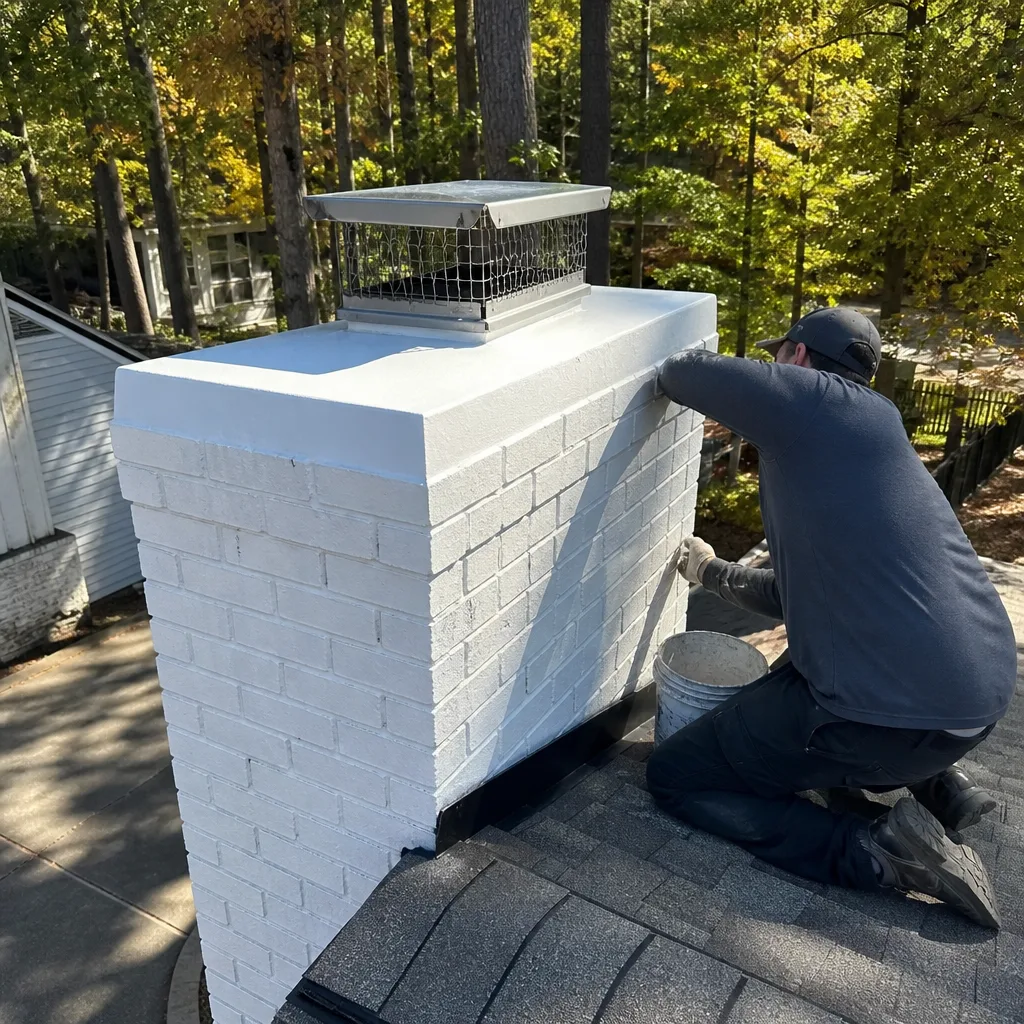 After
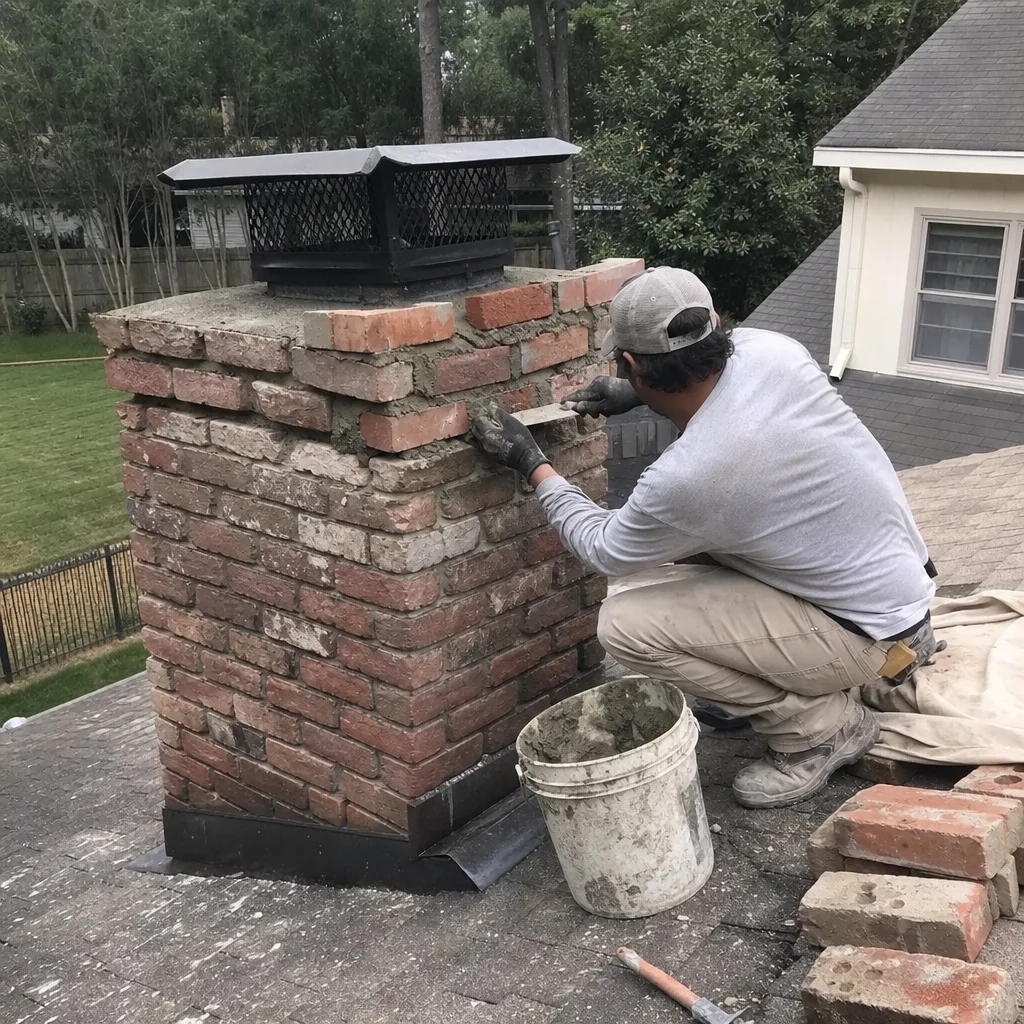
AfterMortar Repointing in Sandy Springs, GA
Mortar repointing in Sandy Springs typically runs $400 to $1,200 for a standard chimney, depending on how much joint surface needs to be addressed and how far deterioration has progressed, as outlined in our How Much Does Chimney Repair Cost? (2026 Price Guide) - Sandy Springs, GA. Most jobs are completed in a single visit, and every one of them starts with a written price before any work begins.
If you’ve noticed crumbling or recessed mortar joints between your chimney’s bricks, that’s not cosmetic wear – it’s a drainage and structural problem. Water finds the path of least resistance, and in Sandy Springs, where we cycle through humid summers, hard freeze-thaw episodes in January and February, and occasional storm surges off the Chattahoochee corridor, mortar joints that are even slightly compromised take on water at an accelerating rate. Repointing removes the deteriorated material to a specified depth, then packs the joints with fresh mortar matched to the original mix in strength and flexibility.
At Emberly Chimney Cleaners Sandy Springs, we tie every repointing job into a full Chimney Repair in Sandy Springs evaluation so nothing gets missed. Corrine Halstead built this practice around the principle that a camera down the flue and a written scope on the table come before anyone picks up a tool. Call us at (470) 480-0885 – a live person picks up, any hour.
When You Need Mortar Repointing
- Visibly recessed or crumbling joints. If you can press your finger into a joint or see mortar powder collecting on the crown or chase cover, the joint has lost enough density that water infiltration is already happening – not just a risk.
- Efflorescence (white mineral staining) on the brick face. That chalky white residue is dissolved salt being carried out by water moving through failing joints. It shows up often on chimneys on the north and east faces of Sandy Springs homes, where morning humidity stays longest.
- Interior water stains near the firebox or on ceiling drywall. We trace a lot of leak calls in neighborhoods like Dunwoody-adjacent Sandy Springs and Glenridge back to mortar joint failure rather than the flashing – and the fix is far less expensive than a flashing tear-off if caught early.
- Spalling bricks. Spalling – where the brick face flakes or pops off – is often downstream of mortar failure. Once water saturates a joint and freezes, it expands and puts lateral pressure on the brick face itself. Repointing the joints stops that cycle before it spreads.
- A chimney that hasn’t been evaluated since your purchase. Sandy Springs has a large inventory of 1970s and 1980s ranch and split-level homes. If you bought between 2015 and 2025 and the disclosure packet didn’t include a Level 2 inspection report with photos, the mortar condition is genuinely unknown.
- Post-storm debris impact or settlement cracks. After significant wind events – the kind that come through the Perimeter area from spring derecho lines – mortar joints can crack along the bond line without the brick itself showing damage. It’s subtle and easy to overlook without close inspection.
Our Mortar Repointing Process
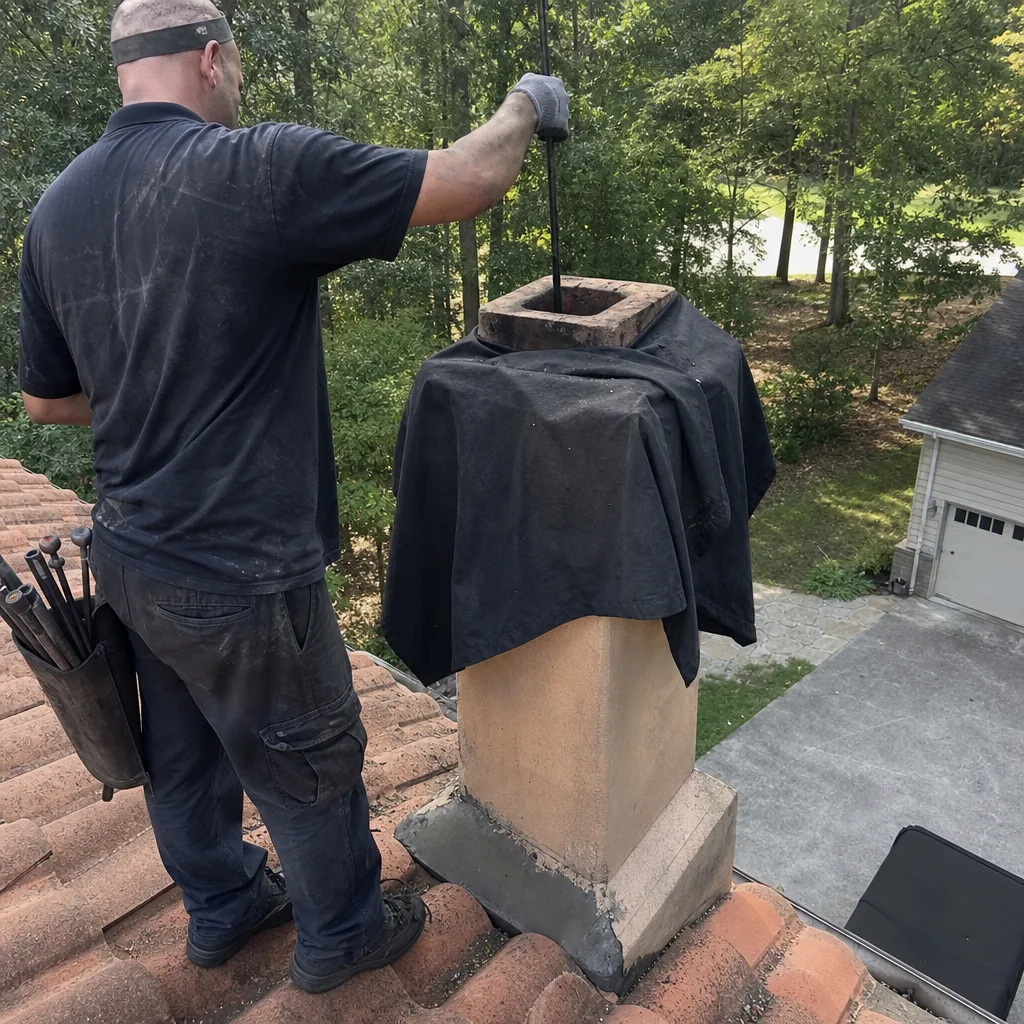
- Camera-scan inspection and joint mapping. Before any mortar is touched, we run a documented Level 2 inspection (NFPA 211 standard) and photograph the full joint surface. We note which sections are active failures, which are surface-only wear, and which are sound. This mapping determines the scope – and the written price you receive before we proceed. Clause 4 of the Haven Standard requires that photo record on every visit; it’s not optional.
- Written scope and price delivery. You get a line-item written quote: linear feet to be repointed, depth of cut, mortar specification, and any related findings (crown, cap, flashing condition). Haven Standard Clause 1 – have it in writing – means no surprises on the invoice.
- Joint cutting and preparation. We remove deteriorated mortar to a minimum depth of 3/4 inch, typically using an angle grinder or oscillating tool depending on joint width and accessibility. Cutting too shallow is the most common reason repointing fails prematurely; we don’t leave material that won’t bond.
- Joint cleaning and wetting. Cut joints are vacuumed and brushed clear of dust and loose aggregate, then dampened before packing. Dry masonry pulls moisture out of fresh mortar too fast, which causes shrinkage cracks within weeks – a failure mode we see regularly when inspecting work done by general contractors who don’t specialize in chimney masonry.
- Mortar packing and tooling. We pack mortar in lifts for deeper joints, pressing each layer firmly to eliminate voids. The joint is then tooled to match the original profile – concave, flush, or weathered as appropriate – so water sheds correctly rather than pooling on the ledge.
- Final documentation and walkthrough. After the mortar has been tooled and surface cleaned, we photograph the completed work and add it to the job record. You walk away with before-and-after photos, the written scope that was agreed to, and the 365-Day Done Right Promise in writing – if anything done under our scope fails within that period, we make it right at no additional charge.
BeforeAfterMortar Repointing Pricing in Sandy Springs
Mortar repointing in Sandy Springs runs in a fairly predictable range once you know what’s actually failing. The variables are linear footage of deteriorated joint, how deep the cuts need to go, chimney height and roof pitch (which affects staging time), and whether the crown or cap needs attention at the same time.
| Scope | Typical Price Range |
|---|---|
| Spot repointing – isolated section, single face | $400 – $600 |
| Full chimney repointing – single-story home, standard stack | $650 – $900 |
| Full repointing – two-story or extended stack with staging | $900 – $1,200 |
| Repointing combined with crown repair or cap replacement | $1,100 – $1,800 |
These ranges reflect the Sandy Springs market as of 2025-2026. Pricing in affluent inner suburbs like Sandy Springs, Buckhead-adjacent, and the Glenridge area tends to be comparable – labor rates are similar, and material costs through our supplier network (which includes Olympia Chimney and Copperfield through Haven’s buying network) are kept as consistent as possible across the region.
A few things that move cost upward: chimneys with very wide rubbed joints require more mortar volume and more tooling time; chimneys where multiple cycles of freeze-thaw have pushed deterioration below the surface require deeper cuts; and any chimney where a previous contractor used a mortar mix that was too hard for the brick (a Type S or N situation mismatch) sometimes requires careful joint opening to avoid damaging the brick face itself.
We offer a free second opinion on any written estimate you’ve already received. Bring us the quote – we’ll tell you exactly what we agree with, what we’d scope differently, and what our price would be. No pressure, written before we start.
Call (470) 480-0885 to schedule an inspection and get a written repointing estimate the same day.
Why Mortar Fails Faster in Sandy Springs Than You’d Expect
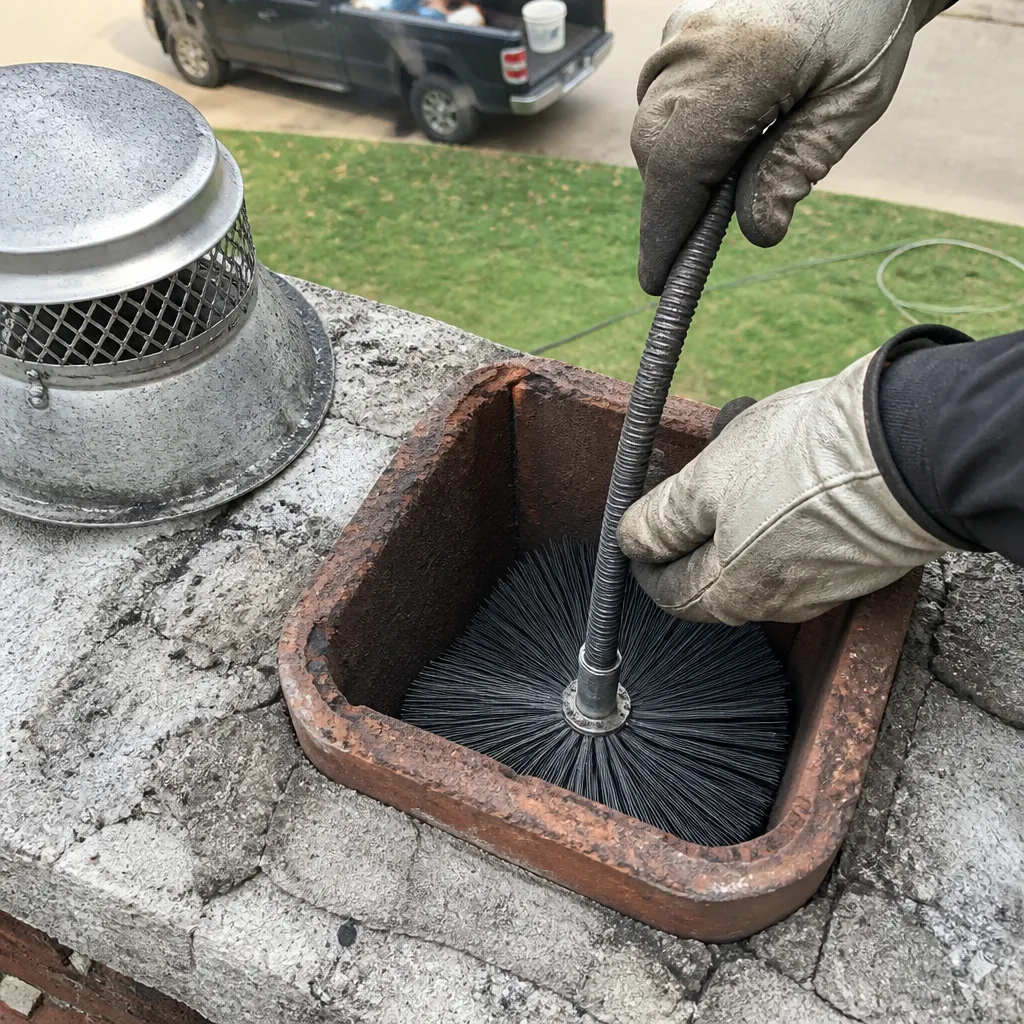
Sandy Springs sits at an elevation and vegetation density that keeps relative humidity elevated for more of the year than most of metro Atlanta. The tree canopy along the Chattahoochee National Recreation Area border and through neighborhoods like Heards Ferry and Hammond Drive creates shade conditions that slow drying on north-facing masonry. Mortar joints that stay damp for extended periods – days at a time through fall and winter – break down faster than joints on exposed urban chimneys.
The local soil chemistry also matters. Sandy Springs has a mix of red Georgia clay and amended suburban soils. When gutters run poorly or grade slopes toward the foundation, capillary moisture moves up through brick courses and exits at the joint surface, accelerating sulfate attack on mortar binders. It’s a slow process, but on chimneys built before 1990, it’s often already well along by the time a homeowner notices anything.
Since 2009, our team has inspected and documented more than 38,000 chimneys – a number that includes a substantial portion of the Sandy Springs housing stock. The pattern is consistent: homes built in the 1975-1990 window with original mortar joints and no documented repointing in their history almost always show measurable deterioration by the time they’re 35 to 40 years old. That covers a large share of homes currently on the market and recently sold in this area.
Repointing vs. Full Chimney Rebuild: How We Help You Decide
Repointing is the right call when the brick itself is structurally sound – face intact, no horizontal cracking through the masonry unit, no significant lean or separation. If joints are failing but bricks are solid, repointing stops the progression and restores watertightness for another 20 to 30 years with good mortar and reasonable maintenance.
A rebuild becomes necessary when:
- Brick faces are spalling extensively and the units themselves are losing structural integrity
- There’s visible leaning, separation from the house, or horizontal cracking that suggests foundation movement
- The chimney has been repointed multiple times and the mortar-to-brick bond is no longer reliable
- The interior flue liner is compromised in a way that requires dismantling the stack to address
We won’t recommend a rebuild when repointing is sufficient – and we won’t recommend repointing when the brick condition makes it a short-term patch on a longer-term problem. The camera scan and written scope make that distinction visible and documentable. You see the photos, you understand what was found, and the written price reflects exactly what the condition calls for.
For full context on how repointing fits into broader masonry repair options, the Chimney Repair in Sandy Springs page covers crown repair, tuckpointing, and full rebuild scopes in detail.
The Haven Standard Applied to Repointing Jobs
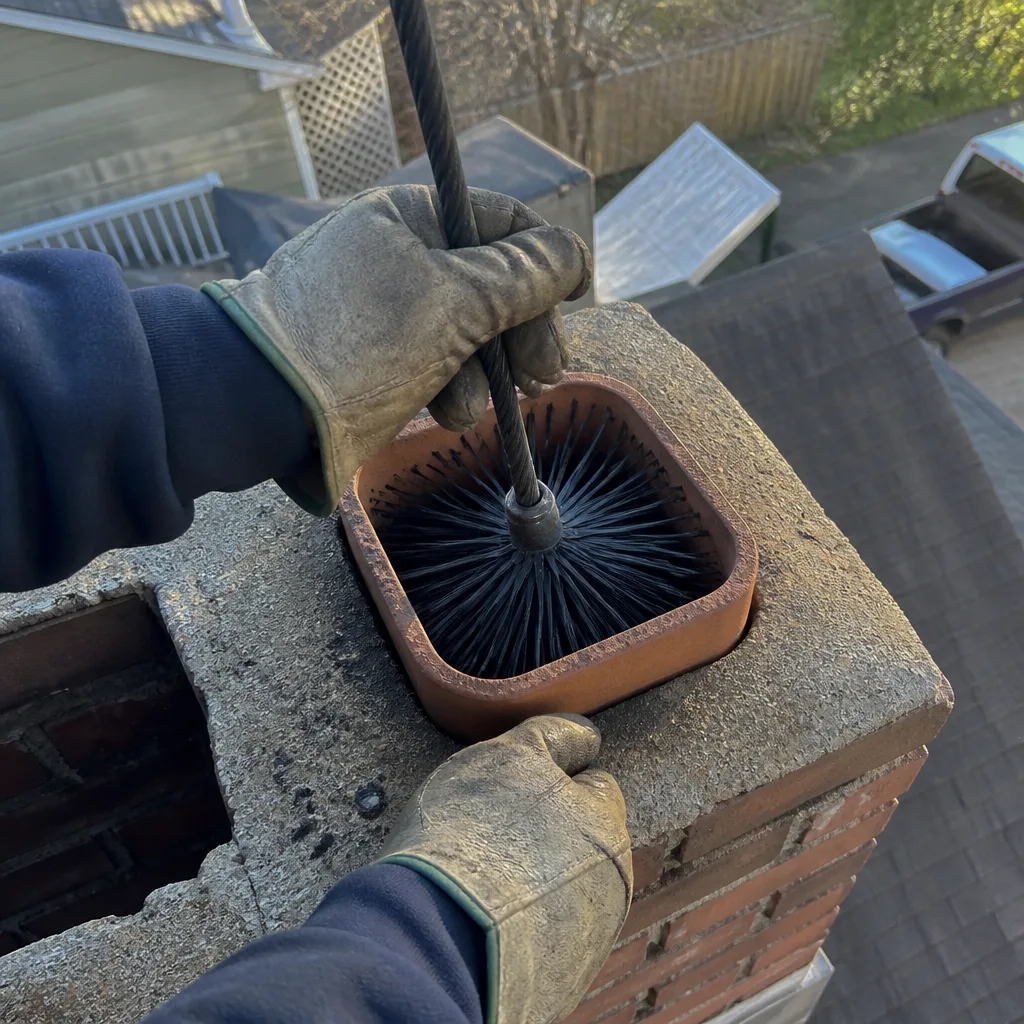
Every repointing job at Emberly Chimney Cleaners Sandy Springs runs under the same documentation discipline we apply to inspections and liner work. Clause 1 of the Haven Standard requires a written price and written scope before work starts – not a verbal estimate, not a number on a whiteboard. You have it on paper (or email) before anyone mixes mortar.
Clause 4 requires a documented photo record on completion. For repointing, that means before-and-after shots of each face worked, with enough resolution to show joint depth and tooling profile. That record goes in your job file. If you ever sell the home, have an insurance claim, or simply want to know what was done and when, it’s there.
The 365-Day Done Right Promise applies to workmanship. If mortar we packed fails, cracks, or separates within 365 days of installation under normal conditions, we come back and fix it. That’s a written commitment, not a handshake.
Our technicians are background-checked and uniformed. You’ll get a text when they’re on the way. Corrine Halstead runs the operation to those standards on every job in Sandy Springs – not just the large ones.
Key Takeaways
- Mortar repointing in Sandy Springs costs $400 to $1,200 for most residential chimneys, with a written price delivered before work starts.
- Sandy Springs’ humidity, canopy shade, and Georgia clay soil conditions accelerate mortar degradation, especially on pre-1990 construction.
- Repointing is the right repair when brick units are structurally intact; a rebuild is warranted when the masonry itself is failing.
- Every job includes a camera-scan inspection, documented photo record, and the 365-Day Done Right Promise.
- We offer a free second opinion on any written estimate you’ve already received.
- Live phone support at (470) 480-0885 – someone answers, any time of day.
FAQs – Mortar Repointing in Sandy Springs
How much does mortar repointing cost in Sandy Springs, GA?
Mortar repointing in Sandy Springs runs $400 to $1,200 for most residential chimneys, depending on linear footage of deteriorated joint, chimney height, roof pitch, and whether crown or cap work is needed at the same time. Spot repairs on a single face start around $400; full-stack repointing on a two-story home with staging typically lands between $900 and $1,200. You’ll have a written line-item price before any work starts – call (470) 480-0885 to schedule a same-day estimate.
What is the difference between tuckpointing and repointing?
Repointing means removing deteriorated mortar from existing joints and replacing it with fresh mortar matched to the original mix. Tuckpointing is a specific technique where two contrasting mortars are used – a base mortar fill with a thin, contrasting-color line pressed into it – primarily for aesthetic restoration on historic masonry. For most Sandy Springs chimneys, straight repointing is what the condition calls for; tuckpointing is less common and generally more expensive. We’ll tell you which applies to your chimney and why, in writing, before we do anything.
How long does repointed mortar last?
Properly mixed and installed repointing mortar typically lasts 20 to 30 years on a chimney in a climate like Sandy Springs. The main variables are mortar mix selection (matching hardness to the brick is critical – a mortar that’s too hard causes spalling brick damage), joint depth at installation (minimum 3/4 inch for reliable adhesion), and how well the chimney crown and cap are managing water above. We document the mortar specification used in your job record so there’s no guesswork if the chimney is evaluated again in 10 or 15 years.
Can I tell if my chimney needs repointing without getting on the roof?
From the ground, you can see a few reliable indicators: white mineral staining (efflorescence) on the brick face, visible gaps or dark recesses at the joint lines visible through binoculars, mortar powder or fine debris collecting on the crown or at the base of the chimney, and water staining inside the firebox or on the ceiling near the chimney chase. That said, the only way to know the full extent is a close inspection with documentation – surface-level joint wear often hides deeper deterioration. Our inspection includes a camera scan and written findings, so you know exactly what you’re dealing with before spending anything on repair.
Schedule Your Repointing Estimate in Sandy Springs
If your chimney is showing any of the signs above – or if you simply haven’t had a documented inspection since you bought the home – call Emberly Chimney Cleaners Sandy Springs for our Chimney Repair services at (470) 480-0885. A live person answers. Corrine Halstead’s team will get you on the schedule, run a camera-scan inspection, and put a written repointing scope and price in your hands the same day. No obligation to proceed, and if you’ve already got a competitor’s written estimate, bring it – we’ll give you a free second opinion on it.
Estimates are free. The written price comes before any work starts. The 365-Day Done Right Promise covers everything we do.
Written by Corrine Halstead, Owner at Emberly Chimney Cleaners Sandy Springs, serving Sandy Springs.